Weak-to-strong generalization is the phenomenon where a strong student model trained with labels produced by a weak teacher model is able to generalize better than the teacher. In this paper, we study this phenomenon in two-layer random feature networks where the model strength is determined by its width. Using tools f...
Medical imaging models often operate as black boxes, limiting interpretability and systematic debugging. We introduce an easy-to-use, plug-and-play framework for concept-based interpretation and model refinement. By aligning a single-modality encoder to BioMedCLIP, we construct a Concept Bottleneck Model (CBM) that ena...
Samrajya Thapa, Daniel J. Quest, Timothy L. Kline et al.· 0 citations
The aim of processing and analyzing experimental data from physical experiments is to obtain physically significant information about the phenomenon under study. This goal is achieved by multi-stage processing of experimental data, during which noise associated with measurements is suppressed and the dimensionality of...
Alexander Kryukov, Julia Dubenskaya, Elena Fedotova et al.· 0 citations
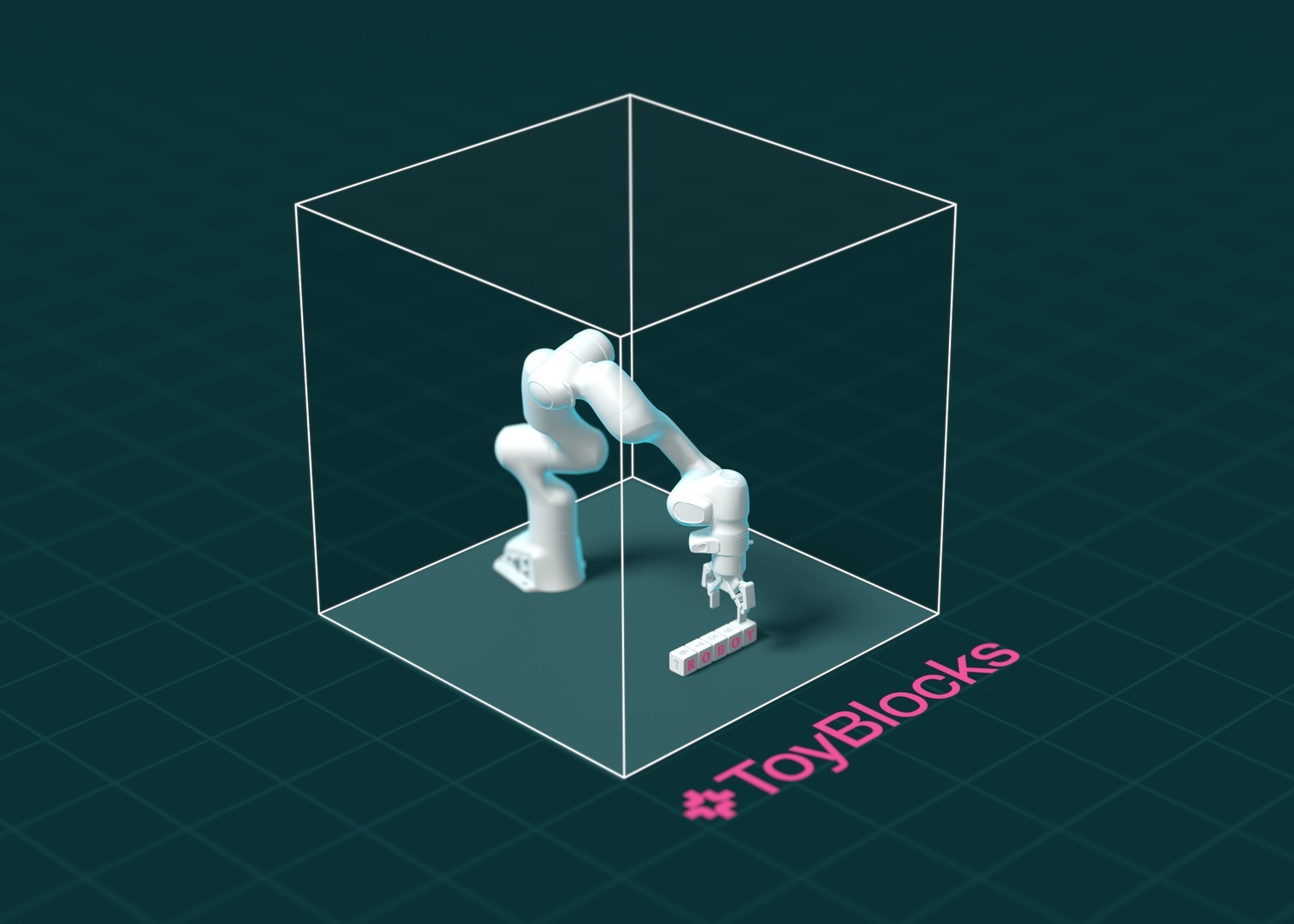
Humanoid loco-manipulation of large, heavy objects demands forceful interaction across the entire body. However, such payloads shift a humanoid's center of mass and impose sustained loads across the upper body, challenging balance and command tracking. We present HULK, a whole-body control framework for forceful loco-m...
An Dang, Arturo Flores Alvarez, Yu-Ming Chen et al.· 0 citations
Reach audiences
Advertise in front of researchers, engineers, and readers.
While vision-language-action (VLA) models have advanced rapidly, running them at every control step remains expensive. Prior work accelerates VLA inference using techniques like action chunking and visual-token pruning, typically evaluating based on latency and average task success. However, acceleration may discard in...
Rui Liu, Tong Zheng, Jin-Dong Gu et al.· 0 citations
A declared task can sometimes certify a reduced source before a downstream encoder, codebook, rate, distortion target, or optimizer is chosen. This paper studies when one such reduction preserves the complete downstream problem family, a property termed Task-Sufficient Contraction. The reduced source is fixed by the ta...
Finding low-energy configurations of interacting particles and approximating probability distributions lead to the minimization of potential-interaction energies in Wasserstein space. These energies can be nonconvex, making it important to exploit second-order information while controlling the reliability of local appr...
We study community recovery in the sparse symmetric stochastic block model with $q$ communities, average degree $d$ and signal strength $\lambda$ through statistical decision theory and Fisher information, and obtain three characterizations of the Kesten-Stigum threshold $d\lambda^2=1$ and of the information-computatio...
Regulated credit scoring requires scores monotone non-decreasing in every exposure input. Deployed pipelines -- hand-crafted monotone aggregates feeding sign-constrained gradient boosting -- already meet this by composition; the open question is what learned temporal aggregation is worth inside one. We answer on five p...
Sparse-view computed tomography (CT) reduces radiation dose and acquisition time and may mitigate motion artifacts. However, angular undersampling provides insufficient information to determine the image uniquely and stably. Limited-angle CT, arising from restricted angular coverage, produces strongly directional infor...
Honglei Brinkmann, C. Schönlieb, A. Biguri· 0 citations
Machine learning-based intrusion detection systems (IDS) are increasingly used in resource-constrained Internet of Things (IoT) environments, yet their robustness is often evaluated against static attacks rather than adversaries that adapt to detection feedback. This paper investigates adaptive port-scan evasion agains...
Logan Andrew North, Priya Sanjay Kaluskar, Shasi Kumar Ramachandran Prabhu et al.· 0 citations
This work introduces the first robotic platform for closed-loop autonomous liquid droplet navigation on an open, unconfined surface using model-based reinforcement learning and extends reinforcement-learning manipulation from rigid microrobots to deformable soft-matter systems for next-generation SDLs.
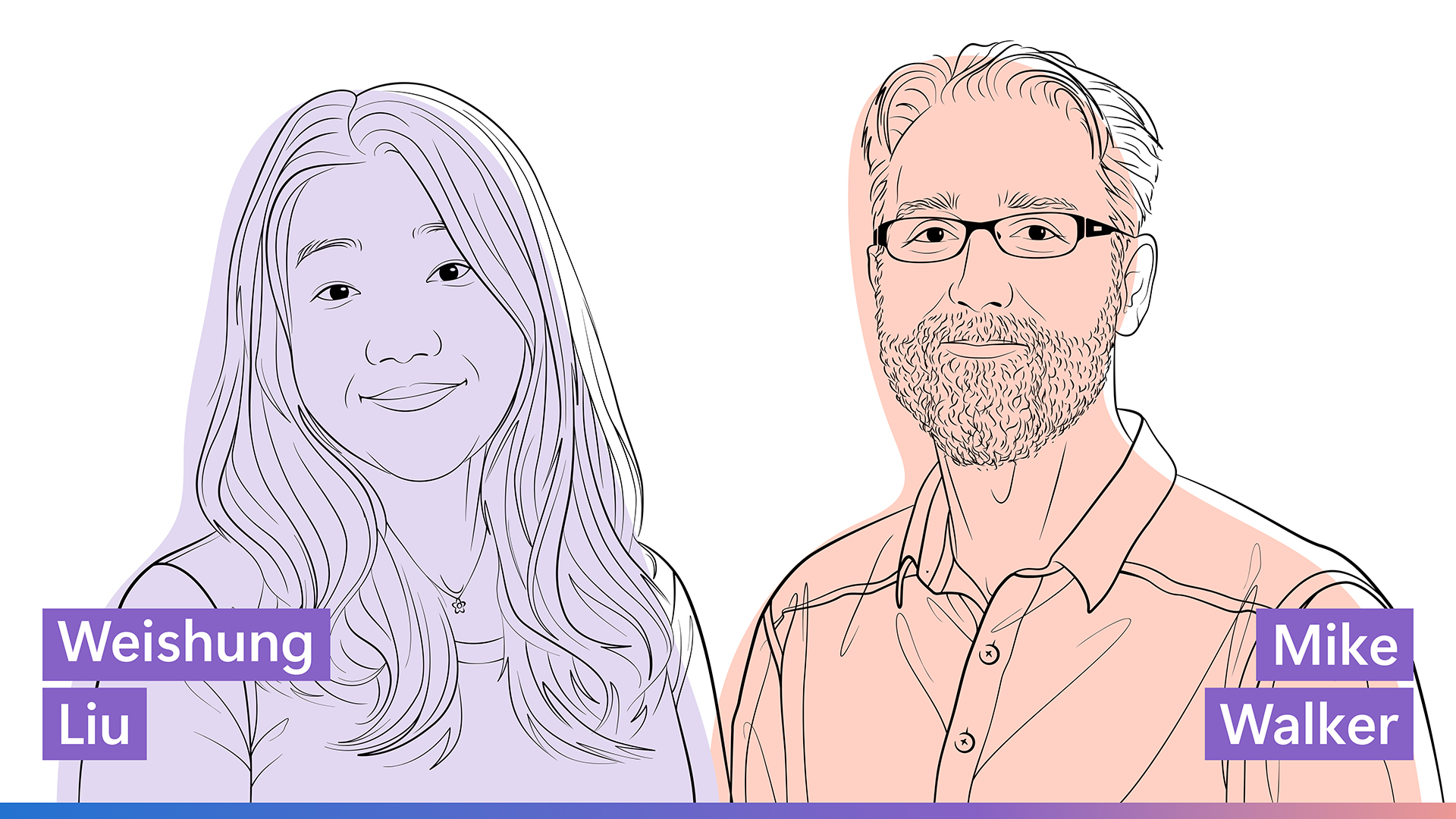
Research Manager Mike Walker reflects on a career spanning hacker culture, cybersecurity, and AI, sharing lessons about trust, teamwork, leadership, and why solving difficult problems requires curiosity, judgment, agility—and an understanding of the rules. The post Learn the rules: The hacker mindset appeared first on Microsoft Research.
Learn how Google Antigravity and our Cheminformatics Skills accelerate drug discovery workflows, search compounds, and propose novel rigidified macrocycles.
MIT News · Artificial Intelligence· news.mit.eduOct 28, 2026
Professor Paris Smaragdis develops computers with superhuman hearing for applications like speech recognition, music understanding, and environmental monitoring.
MIT News · Artificial Intelligence· news.mit.eduOct 27, 2026
Prabha Jha used her experience with MIT Open Learning’s program for senior executives to develop AI solutions for her employer, Verizon, and to write a book.