SHAP explanations are widely used in high-stakes settings to justify decisions, yet they can differ substantially across repeated runs, even when the model, the input instance, and the prediction are held fixed. Prior work has documented disagreement between explanation methods; we show that substantial disagreement ar...
Hyunseung Hwang, Seungeun Lee, Lucas Rosenblatt et al.· 0 citations
Reliable estimation of feature contributions in machine learning models is essential for transparency, algorithmic fairness, and regulatory compliance. While permutation feature importance is widely used, classical implementations rely on repeated Monte Carlo shuffling, introducing significant computational overhead an...
Decision trees are widely used in high-stakes fields like finance and healthcare due to their interpretability. This work introduces an efficient, scalable method for generating synthetic pre-training data to enable meta-learning of decision trees. Our approach samples near-optimal decision trees synthetically, creatin...
Kyaw Hpone Myint, Zhe Wu, Alexandre G. R. Day et al.· 0 citations
Machine learning models are increasingly deployed as software components that must evolve as requirements change. When specific training records or features must no longer influence a deployed model, machine unlearning aims to remove that influence without retraining from scratch. Because unlearning is often approximat...
Anna Mazhar, Sainyam Galhotra· 0 citations
Reach audiences
Advertise in front of researchers, engineers, and readers.
Connecting pretrained vision and language models usually involves projecting image features into the language model's input space. Inverse-LLaVA reverses this mapping within decoder attention: language states are projected to the visual feature dimension, and modality-specific maps produce residual query, key, and valu...
Frontier large language models (LLMs) now reach near-ceiling accuracy on standard mathematical-reasoning benchmarks and gold-medal-level performance at the International Mathematical Olympiad. As these benchmarks saturate and their items leak into training data, a high score no longer shows whether a model reasons robu...
Unsupervised domain adaptation (UDA) effectively bridges the domain gap between a labeled source domain and an unlabeled target domain, but assumes that the two domains share the same modality. Heterogeneous domain adaptation (HDA) instead handles different feature spaces across domains, yet requires labeled target sam...
Jiawen Yang, Shuhao Chen, Shengtao Zhang et al.· 0 citations
We propose a novel, flexible, and efficient framework for designing Concept Bottleneck Models (CBMs) that enables practitioners to explicitly encode and extend their prior knowledge and beliefs about the concept-concept ($C-C$) and concept-task ($C \to Y$) relationships within the model's reasoning when making predicti...
Nektarios Kalampalikis, Kavya Gupta, Georgi Vitanov et al.· 0 citations
Long-term time-series forecasting supports a wide range of applications, including weather prediction and electricity demand planning. Frequency-domain methods address this task by decomposing observations into components that describe temporal variations at different scales. However, separate representations do not by...
Zhixuan Li, Naipeng Chen, Seonghwa Choi et al.· 0 citations
Modern AI systems such as self-driving cars and game-playing agents can achieve superhuman performance, but often lack human-like generalization, interpretability, and inter-operability with human users. Inspired by the rich interactions between language and decision-making in humans, we introduce Policy Learning with...
Megha Srivastava, Cedric Colas, Dorsa Sadigh et al.· 0 citations
Recent growth in reinforcement learning (RL) has surfaced a need for diverse, specialized training environments. Hand-curated environments with fixed task and reward difficulties become ineffective signals as model performance improves, and sparse rewards over long horizons induce mode collapse on specific workflows or...
We present LiteGUI, a new framework for building lightweight GUI agents. GUI interaction poses unique challenges due to the long-horizon nature of complex tasks and the existence of multiple valid interaction paths, which are difficult for lightweight GUI agents to handle effectively. To address these challenges, LiteG...
Yubin Wu, Zicheng Cai, Liping Ning et al.· 0 citations
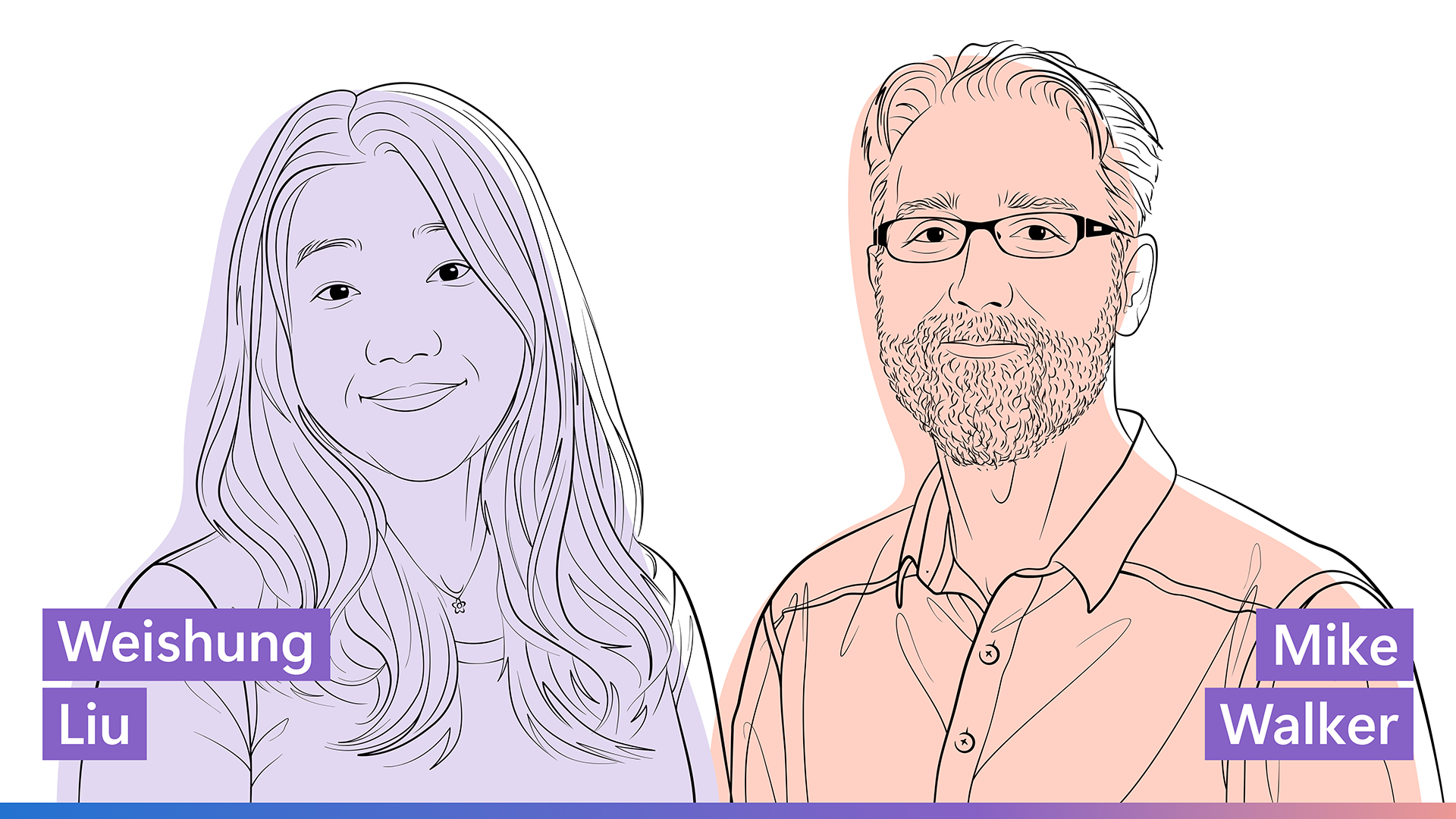
Research Manager Mike Walker reflects on a career spanning hacker culture, cybersecurity, and AI, sharing lessons about trust, teamwork, leadership, and why solving difficult problems requires curiosity, judgment, agility—and an understanding of the rules. The post Learn the rules: The hacker mindset appeared first on Microsoft Research.
Learn how Google Antigravity and our Cheminformatics Skills accelerate drug discovery workflows, search compounds, and propose novel rigidified macrocycles.
MIT News · Artificial Intelligence· news.mit.eduOct 28, 2026
Professor Paris Smaragdis develops computers with superhuman hearing for applications like speech recognition, music understanding, and environmental monitoring.
MIT News · Artificial Intelligence· news.mit.eduOct 27, 2026
Prabha Jha used her experience with MIT Open Learning’s program for senior executives to develop AI solutions for her employer, Verizon, and to write a book.
Assistant Professor Benjamin Lindquist studies how engineers deliberately injected randomness into early AI, giving rise to deep-learning models that sometimes hallucinate.
We use cookies to run the site and, with your consent, for analytics and to show ads.
See our Cookie Policy.