The Dark Forest hypothesis is usually presented as a general consequence of uncertainty, technological asymmetry and catastrophic vulnerability. This paper asks a narrower question: under which combinations of beliefs, capabilities, signalling conditions and network incentives does a Dark Forest actually emerge? A Dark...
Kwan Hong TAN· Zenodo (CERN European Organi...· 0 citations
Dark Forest arguments commonly reduce interstellar strategy to a bilateral encounter between two persistent civilisations. A galaxy, however, is an open population in which civilisations enter, disappear, form selective relationships and occupy a spatially constrained network. This paper develops a continuous-time Gala...
Kwan Hong TAN· Zenodo (CERN European Organi...· 0 citations
Dark Forest arguments commonly reduce interstellar strategy to a bilateral encounter between two persistent civilisations. A galaxy, however, is an open population in which civilisations enter, disappear, form selective relationships and occupy a spatially constrained network. This paper develops a continuous-time Gala...
Kwan Hong TAN· Zenodo (CERN European Organi...· 0 citations
A serious behavioural failure may be uncommon within a person’s history yet become the principal basis for judgments of character and future risk. This conceptual article develops the conjunctive misfortune problem: adverse conditions, culpable action, stochastic harm, categorical institutional responses, and persisten...
Kwan Hong TAN· Zenodo (CERN European Organi...· 0 citations
Reach audiences
Advertise in front of researchers, engineers, and readers.
A serious behavioural failure may be uncommon within a person’s history yet become the principal basis for judgments of character and future risk. This conceptual article develops the conjunctive misfortune problem: adverse conditions, culpable action, stochastic harm, categorical institutional responses, and persisten...
Kwan Hong TAN· Zenodo (CERN European Organi...· 0 citations
Reliability Beyond Accuracy in Crop Classification Benchmarks (Supplementary Materials)Introduction: Near-perfect crop-label accuracy can conceal uncertainty, perturbation sensitivity, and weak explanations. This study evaluates these reliability dimensions without treating benchmark classification as agronomic recomme...
Kwan Hong TAN· Zenodo (CERN European Organi...· 0 citations
This conceptual article develops a formal theory of atypical human failure in which severe life-course consequences can emerge from a conjunction of adverse conditions, a low-frequency behavioural lapse, stochastic outcome mechanics, categorical legal or institutional thresholds, and dynamically propagating collateral...
Kwan Hong TAN· Zenodo (CERN European Organi...· 0 citations
This conceptual article develops a formal theory of atypical human failure in which severe life-course consequences can emerge from a conjunction of adverse conditions, a low-frequency behavioural lapse, stochastic outcome mechanics, categorical legal or institutional thresholds, and dynamically propagating collateral...
Kwan Hong TAN· PhilPapers (PhilPapers Found...· 0 citations
Reliability Beyond Accuracy in Crop Classification Benchmarks (Supplementary Materials)Introduction: Near-perfect crop-label accuracy can conceal uncertainty, perturbation sensitivity, and weak explanations. This study evaluates these reliability dimensions without treating benchmark classification as agronomic recomme...
Kwan Hong TAN· Zenodo (CERN European Organi...· 0 citations
This paper explores the complex and often contradictory relationship between hyperconnectivity and democracy. Drawing on novel theoretical frameworks inspired by quantum mechanics, network science, and temporal dynamics, we argue that the hyperconnected world is not simply an extension of the classical political landsc...
Kwan Hong TAN· Zenodo (CERN European Organi...· 0 citations
This paper explores the complex and often contradictory relationship between hyperconnectivity and democracy. Drawing on novel theoretical frameworks inspired by quantum mechanics, network science, and temporal dynamics, we argue that the hyperconnected world is not simply an extension of the classical political landsc...
Kwan Hong TAN· PhilPapers (PhilPapers Found...· 0 citations
The emergence of ChatGPT and similar large language models has precipitated fundamental questions about the nature and distribution of epistemic authority in contemporary knowledge systems. This comprehensive analysis examines whether ChatGPT undermines human epistemic authority through a multi-dimensional theoretical...
Kwan Hong TAN· Zenodo (CERN European Organi...· 0 citations
Assistant Professor Pat Pataranutaporn describes a new interface that lets everyday users glimpse inside an AI's neural network before their chatbot ever says a word.
Microsoft Research Blog· microsoft.comJul 13, 2026
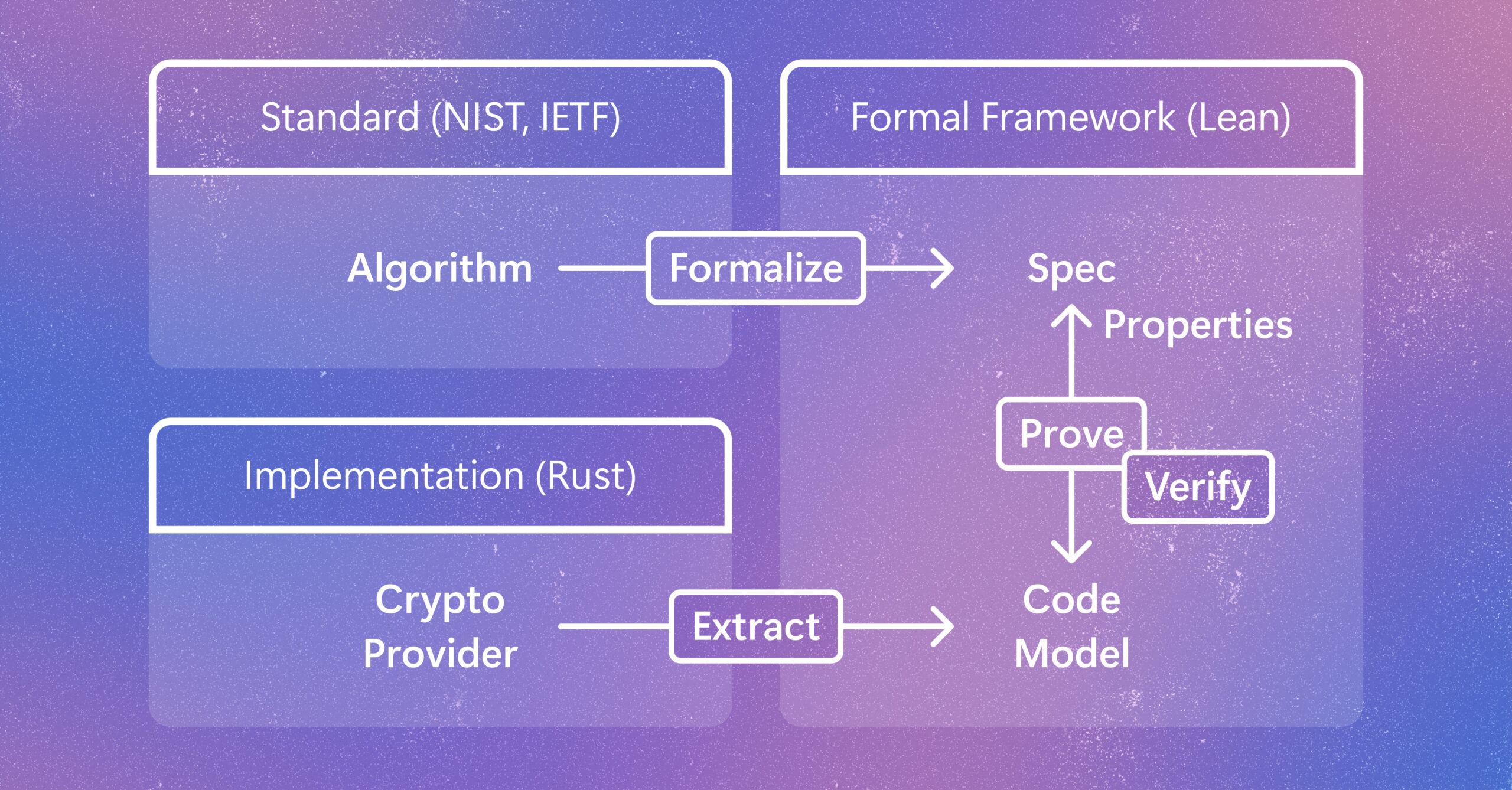
Cryptographic code supports vital protections in modern computing systems. Learn how a new method helps verify code as developers write it while preserving speed and adaptability as it gets implemented and evolves. The post Verifying Rust cryptography in SymCrypt, from standards to code appeared first on Microsoft Research.
MIT News · Artificial Intelligence· news.mit.eduJul 6, 2026
PhD student Rachel Sava, winner of the Envisioning the Future of Computing Prize, explores transformative improvements and dystopian risks of neural technology.