From Digital Transformation to Responsible AI Governance: Public-Facing AI Ethics Readiness in the Kurdistan Region
Umran Abdullah Haje, Akam Aziz Abdulrahman, Halgurd Rasul Ahmed
· Research Square · 0 citations
Category
2,720 papers
Artificial Intelligence (AI) is becoming ubiquitous in our everyday lives. In the United States, AI has increasingly been recognized as an important part of computer science (CS) standards for elementary school students. Prior research work has shown that AI-related content can be taught at upper elementary grade level...
The article offers a conceptual framework and analytic repertoire for an emerging field of ethnographic inquiry rather than a completed ethnography of AI guruship, and examines how generative interaction and recombination rework these inherited guru logics, while letting these forms scale and personalise in novel ways.
Earthquake physics-based simulations have revealed their accuracy limit in high-fidelity broadband strong ground motion scenario prediction. Earlier attempts leveraging AI tried to fill the gap between the low-frequency high-fidelity numerical simulation and the high-frequency accuracy and realism demanded in earthquak...
Reach audiences
Advertise in front of researchers, engineers, and readers.
A proposed ten-step numerical procedure for assessing the richness of textual prompts submitted to text-to-image generative AI tools within an architectural design studio is introduced to guide prompt learning instruction in AI-integrated design studios.
Mental health interventions use therapeutic techniques to support emotional well-being, often leveraging emerging technologies to improve accessibility and effectiveness. In recent years, tools such as VR and AI have been increasingly used to create immersive and adaptive therapeutic experiences. This paper presents...
A polarized AI regulatory landscape across health-related journals is revealed, wherein institutions either maintain a complete policy vacuum or implement comprehensive frameworks.
The historical evolution of computational antibody engineering is presented, from early structure-based design strategies to modern AI-driven approaches, while highlighting the major computational tools, publicly available databases, current limitations, and future directions of the field.
The findings reveal that generative AI and conversational agents are increasingly becoming integral components in language education, utilised by educators to offer personalised feedback, adaptive practice, and student engagement and motivation.
It is argued that generative AI can function as a dialogic interlocutor within a productive third space, but only when deployed with critical pedagogical intent, and proposed pedagogical approaches that foster critical AI literacy and preserve the multiplicity of human–AI collaborative possibilities are proposed.
We’re on a journey to advance and democratize artificial intelligence through open source and open science.
Professor Ali Jadbabaie describes how AI, digital transformation, climate change, and complex geopolitics are forcing engineers and policymakers to rethink how infrastructure is designed, built, and managed.
Prabha Jha used her experience with MIT Open Learning’s program for senior executives to develop AI solutions for her employer, Verizon, and to write a book.
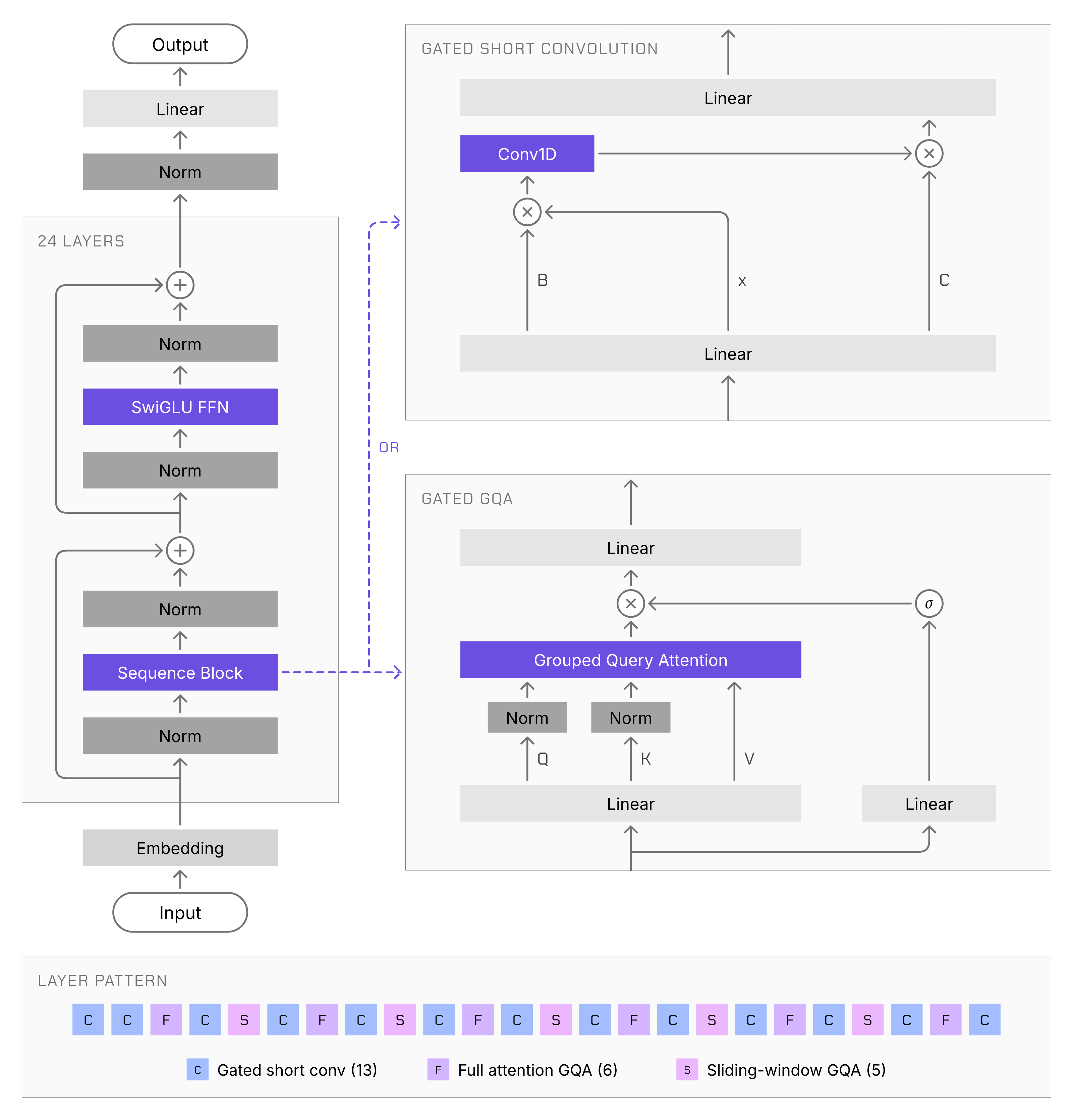
A Blog post by Liquid AI on Hugging Face
In Compton Lecture, the distinguished legal scholar warns of potential “loss of the Enlightenment” while suggesting ways innovations can meet our civic and cultural needs.
Generative AI
We use cookies to run the site and, with your consent, for analytics and to show ads. See our Cookie Policy.