This Zenodo record is a permanently preserved version of a Structured PREreview. You can view the complete PREreview at https://prereview.org/reviews/22674732. Does the introduction explain the objective of the research presented in the preprint? Yes The introduction clearly identifies the problem of manual batch-data...
Mir Mohammed Abid Ali· Zenodo (CERN European Organi...· 0 citations
The proliferation of generative AI (Gen AI) tools (e.g., ChatGPT, Gemini, Claude) across society has led to advancements in various settings with reported benefits for individual productivity and collective problem-solving. The easy adoption of this technology has led to questions about over-reliance impacting individu...
Findings show that without feminist-centered governance, deepfake ecologies will continue reinforcing gendered inequalities, undermining democratic participation and normalizing digital sexual violence, and a roadmap for feminist AI governance, structural accountability, and culture-changing interventions is proposed.
Abdul Wahab, Aisha Anees Malik, Rabbia Aslam et al.· Foresight· 0 citations
Examining how generative AI is experienced by journalists and teachers in primary schools in Croatia within the contemporary information ecosystem suggests that generative AI does not necessarily replace professional expertise but instead redistributes professional responsibilities towards activities requiring human ju...
B. Felger· Journalism and Media· 0 citations
Reach audiences
Advertise in front of researchers, engineers, and readers.
This MIT-licensed software archive supports the preprint “Memory Kinetics and State-Dependent Contact in Finite Stochastic Predictors” by Satoshi Kawasaki, Independent Researcher. It contains the Python source required to replay the finite Markov mechanism comparisons, preserved historical helper code, the portable rep...
It is argued that generative AI does not make human beings smarter as such; its epistemic significance depends on how human–AI interaction is structured and normatively governed.
This study extends the Stability Substitution Effect (SSE) to autonomous AI systems and proposes the concept of Autonomous Stability Substitution Effect (Autonomous SSE). The central argument is that Autonomous Completion and Autonomous Core Preservation are not equivalent. A system may continue to produce a stable and...
誠樹 星野· Zenodo (CERN European Organi...· 0 citations
Generative artificial intelligence (GenAI) can support engineering problem solving, but whether AI-assisted practice transfers to independent performance after the tool is removed remains unclear. This multicentre controlled trial evaluated a traceable five-stage GenAI-assisted learning configuration in agricultural en...
Generative artificial intelligence (AI) is increasingly used in travel planning, yet limited research has examined how travelers evaluate AI-generated travel recommendations as an information source. This study examines travelers’ evaluations and behavioral intentions toward such recommendations, extending and contextu...
Cathrine Linnes, Giulio Ronzoni, Jerome Agrusa et al.· Tourism and Hospitality· 0 citations
Generative artificial intelligence is rapidly expanding the supply of aesthetically sophisticated images, prose, styles, atmospheres, and other symbolic forms. This development does not eliminate scarcity from aesthetic and cultural life, but it raises a political-economic question concerning where scarcity, differenti...
Generative AI (GenAI) tools have been adopted across all levels of computer science education, from K-12 through graduate study, offering learners opportunities to improve learning efficiency and support creative problem solving. However, this rapid adoption has outpaced critical evaluation: students demonstrate high a...
Wilson Feraldo, Sasmoko Sasmoko, Arao Ternorio Alves dos Santos et al.· Mendeley Data· 0 citations
Assistant Professor Benjamin Lindquist studies how engineers deliberately injected randomness into early AI, giving rise to deep-learning models that sometimes hallucinate.
Microsoft Research Blog· microsoft.comOct 22, 2026
Flint-interactive gives AI agents a language for creating interactive visualizations. Click a chart, filter data, highlight related content, and explore beyond the view the author originally chose. The post Flint-interactive: A language for creating interactive data visualizations appeared first on Microsoft Research.
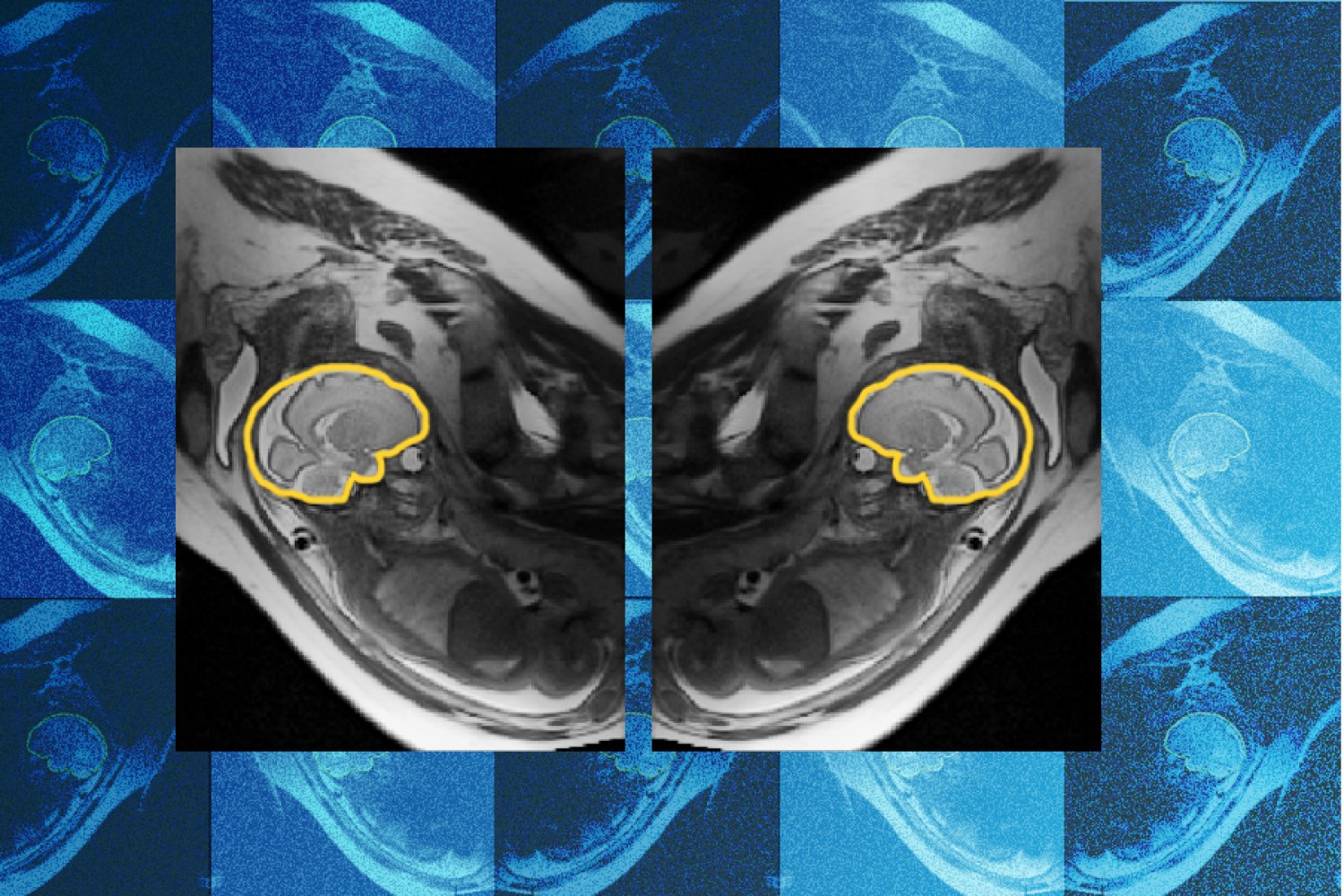
A model developed by researchers at MIT and Boston Children's Hospital adjusts scans on the fly to track fetal movement, potentially sparing families repeat hospital visits.
MIT News · Artificial Intelligence· news.mit.eduOct 18, 2026