DGRL designs a novel mechanism to realize distributed inference and training of GNNs, making it possible to generate site-wise deployment policies and drastically improve scalability for coupled decision-making, and exhibits superior scalability compared to federated learning.
Li-Xing Chen, Zhong-Qi Miao, Yang Bai et al.· IEEE transactions on compute...· 0 citations
Utilizing federated learning to fine-tune large language models on sensitive private data while achieving strong privacy protection without sacrificing model utility remains a fundamental challenge. Although parameter-efficient fine-tuning methods such as LoRA significantly reduce communication overhead, integrating th...
Bayesian inference is a predictive act. This book builds it from three ideas: de Finetti supplies the structure, writing exchangeable beliefs as mixtures of independent laws; Sanov supplies the asymptotics, the exponential concentration of empirical measures at a rate given by the Kullback Leibler divergence; and Bayes...
Nick Polson, Vadim Sokolov· Zenodo (CERN European Organi...· 0 citations
Federated learning has emerged as a privacy-preserving paradigm that collaboratively trains a model without sharing raw data. However, federated learning remains highly vulnerable to abnormal or malicious participants. Differential privacy techniques are widely adopted to safeguard client data during federated optimiza...
Anuja Kunjumon, Sunitha Edacheril Viswanathan, Jyothisha J. Nair· Journal of Cybersecurity and...· 0 citations
Reach audiences
Advertise in front of researchers, engineers, and readers.
The increasing development of autonomous Internet interaction systems, generative artificial intelligence, and heterogeneous digital capability orchestration creates new opportunities for completing complex user tasks through coordinated interactions with multiple websites, APIs, AI models, and third-party services. Ho...
Jincheng Zhang· Zenodo (CERN European Organi...· 0 citations
Byzantine-robust federated learning (FL) typically suppresses suspicious contributions only after clients transmit high-dimensional updates. We instead ask which clients should be admitted to full-update aggregation in the first place. We propose variational quantum trust-aware selection (VQTAS), a two-stage framework...
The increasing decentralization of data across organizations, edge devices, institutions and cyber-physical systems creates significant opportunities for collaborative machine learning while simultaneously limiting centralized data sharing because of privacy, ownership, security and governance constraints. Conventional...
Mahendran Vasagam· Zenodo (CERN European Organi...· 0 citations
Multi-view clustering is a fundamental unsupervised learning paradigm designed to partition multi-view data into disjoint clusters. In real-world scenarios, however, multi-view data are often distributed across various devices, institutions, or edge nodes, motivating the development of federated multi-view clustering....
Yangchun Li, Danfeng Yan, Pu Wang· Journal on Information Secur...· 0 citations
ABSTRACT Introduction Healthcare systems aim for continuous improvement to ensure excellent clinical outcomes, including optimized quality of life. This relies on accurate data and evaluation patient‐centered as well as biomedical outcomes. This data increasingly arises from real‐world data (RWD). We are using this dat...
Dan Stark, Oana Lindner, Simone Hanebaum et al.· Learning Health Systems· 0 citations
In the last couple of years, the field of medical science and research has evolved at a very high speed in terms of diagnosis and treatment. Nevertheless, there is still an issue with the early diagnosis of rare neurodegenerative diseases such as Amyotrophic Lateral Sclerosis (ALS) also referred to as the Lou Gehrig Di...
By studying the computational foundations of language learning, Associate Professor Jacob Andreas builds intelligent systems that can communicate effectively with humans.
MIT News · Artificial Intelligence· news.mit.eduNov 17, 2026
AI coding agents are increasingly help developers fix bugs and build features largely on their own, but every interaction with their models consumes tokens. In each session, an agent sends instructions, tool descriptions, and session history to its model. Most efforts to reduce this cost focus on individual tasks. Yet developers return to the same […] The post TokenEconomizer: Learning from Experience to Make AI Coding Agents More Efficient appeared first on Microsoft Research.
MIT News · Artificial Intelligence· news.mit.eduNov 9, 2026
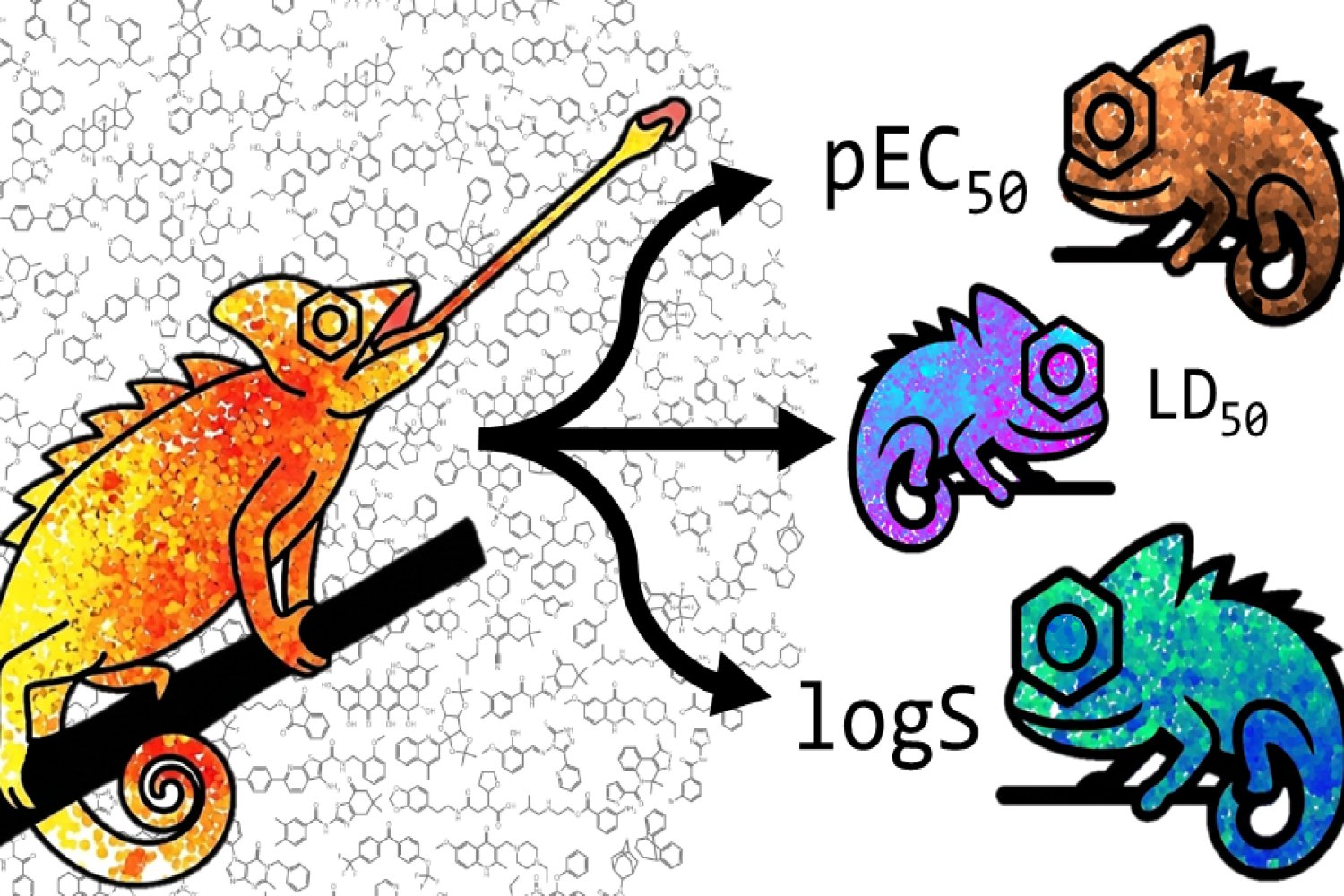
A machine-learning approach called CheMeleon provides a practical way to develop new drugs or other molecules with much less detailed, expensive experimentation.
We use cookies to run the site and, with your consent, for analytics and to show ads.
See our Cookie Policy.