This work proposes a calibration-free procedure for the estimation of contact surface normals using Universal Photometric Stereo neural networks, and demonstrates that with sufficient illumination settings surface normals could be estimated using a model trained solely on synthetic data.
The thermal behavior of wood is a critical factor in advanced material assembly. However, pixel-level thermal analysis remains fundamentally constrained by the low resolution and noise inherent to infrared thermography. To address this, we introduce an end-to-end computational framework that synthesizes high-resolution...
Multiple instance learning (MIL) is widely used in computational pathology because it enables weakly supervised analysis of whole-slide images (WSIs) without requiring patch-level annotations. In attention-based MIL, instances with high attention scores are often interpreted as diagnostically important regions and used...
Noriaki Hashimoto, Shuichi Nishino, Teruyuki Katsuoka et al.· 0 citations
Face Image Quality Assessment determines the suitability of captured face images for automated face recognition (FR), a critical capability for reliable biometric systems. Existing state-of-the-art FR-integrated FIQA methods suffer from temporal instability: as the feature space evolves during training, single-epoch qu...
Guray Ozgur, Tahar Chettaoui, Eduarda Caldeira et al.· IEEE Transactions on Biometr...· 0 citations
Reach audiences
Advertise in front of researchers, engineers, and readers.
The findings suggest that multimodal EM reflects a behavioral shift rather than a general loss of capability, extending beyond text to the visual modality.
Shun-Chang Liu, Lukas Fluri, Xin Chen et al.· 0 citations
Joint-embedding self-supervised learning typically combines an invariance objective across augmented views with additional mechanisms to prevent representational collapse. These objectives are often applied after a projection head, while downstream tasks use the backbone representation before the projector. We find tha...
Berker Demirel, Cl\'ementine Domin\'e, Valentino Maiorca et al.· 0 citations
The integration of artificial intelligence into computer-aided design frameworks has sparked a shift in the design of analog integrated circuits (ICs), transitioning the field from using manual and algorithmic-based solutions to adopting automated and intelligent paradigms. In this scenario, the GDSII file represents t...
Abril Cano Castro, Giuseppe Chiari, Michele Piccoli et al.· 0 citations
Adjoint Guidance Flow is proposed, which is a deterministic optimal control problem, whose optimal guidance is a costate that carries the terminal critic gradient back through the remaining flow, and regress the guidance network onto this costate while keeping both the VLA and critic frozen.
Jeongsol Kim, Youngjun Jun, Kyumin Choi et al.· 0 citations
Financial candlestick forecasting is fundamental to quantitative investment, yet it remains exceptionally challenging due to extremely low signal-to-noise ratios and vast heterogeneity across markets and instruments. Existing approaches have largely attempted to introduce deep learning to capture hidden temporal featur...
Sampling latency compounds in diffusion workflows, where users generate and discard many candidates before keeping one. Surprisingly, the poor outputs of standard few-step samplers do not reflect a lack of reconstruction capacity: by optimizing only the initial noise, frozen 3-4-step samplers can closely reproduce thei...
Some of the first results showing that efficient to compute and accurate relaxations of the geodesic Sinkhorn-based solutions of the Optimal Transport problem can be derived by applying fast TFI methods are provided.
Millend Roy, Soham Samal, Ivan Zelich et al.· 0 citations
A nascent family of methods that forgoes the policy gradient and reweights a supervised regression instead has garnered momentum in reinforcement learning for diffusion and flow models. DiffusionNFT, FlowAWR, and RAM are representative regimes with contrasting motivations. It is yet opaque what, if anything, they share...
Exploring how generative AI could make machine vision more accessible to businesses. The post GenEye in a Box: Making Machine Vision Something You Can Just Ask For appeared first on GPT-Lab.
Jennifer Neville did not want to go into computer science—but that’s exactly where she landed. Neville discusses the starts and stops that led to her professional sweet spot and her work identifying “surprising failures” making it hard for AI to handle complexity. The post What AI gets wrong and what failure teaches us appeared first on Microsoft Research.
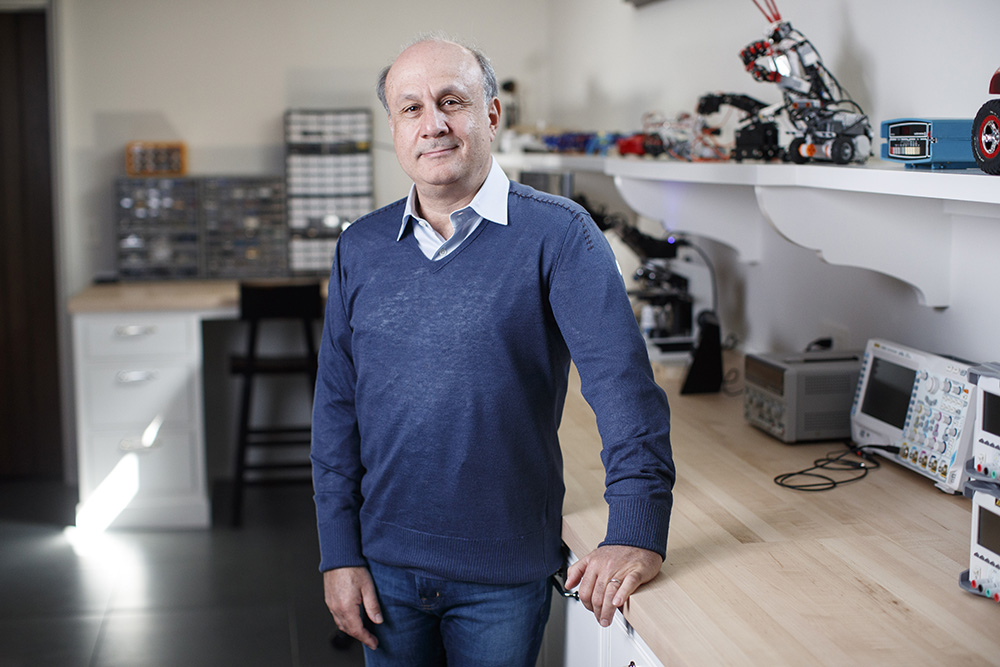
Computer scientist, entrepreneur, and philanthropist will collaborate with the MIT Schwarzman College of Computing to advance AI and scientific discovery.