Some of the first results showing that efficient to compute and accurate relaxations of the geodesic Sinkhorn-based solutions of the Optimal Transport problem can be derived by applying fast TFI methods are provided.
Abstract
We present a new class of near-linear algorithms for efficiently integrating general tensor fields defined on trees with distance dependent kernels, the Structure-Adaptive Tree Field Integrators (STAD-TFIs). STAD-TFIs exploit the tree's underlying structure through decompositions built around path backbones and single vertex separators, and use two-dimensional fast Fourier transforms to compute interactions jointly. By exploiting this structural information, STAD-TFIs achieve more computationally efficient integration than their regular efficient tree field integrators (TFI) counterparts. We provide a detailed theoretical analysis of our proposed approach and complement it with an exhaustive empirical evaluation, ranging from speed tests on synthetic trees, through accelerated Sinkhorn-based relaxations of the Optimal Transport algorithms on real meshes, to Topological Attention Transformers for vision tasks. To the best of our knowledge, we provide some of the first results showing that efficient to compute and accurate relaxations of the geodesic Sinkhorn-based solutions of the Optimal Transport problem can be derived by applying fast TFI methods.
Two lightweight, training-free algorithms are proposed, CAT-OV and CAT-OT that adapt step-sizes at inference time based on a novel connection between Flow Matching sampling and gradient flow that outperform existing step-size heuristics in image quality metrics across four text- to-image Flow Matching models.
Qinchan Li, Pedro Cisneros-Velarde, Ke-Ru Fu et al.· 0 citations
This paper presents a high-order rank-adaptive implicit integrator for the tensor solution of high-dimensional diffusion equations. We extend the 3D version of this method from the Tucker decomposition to higher dimensions using the hierarchical Tucker (HT) decomposition, since the storage complexity for the Tucker dec...
This work constructs a cube-to-target map by composing a Gaussian base transformation (the component-wise inverse Gaussian CDF) with an Euler-discretized probability flow ODE, and establishes conditions for diffusion probability-flow transport under mild bounded-derivative assumptions on the learned vector field.
Persistent homology (PH) is a frequently used tool for extracting and preserving topological information from image data, particularly in image segmentation, where preservation of topological structures is important. However, despite its general applicability across dimensionality, domains, and target structures, the r...
Alexander H. Berger, Marco Fontana, Daniel Rueckert et al.· 0 citations
Abstract.
In this paper, we present an [Formula: see text]-version time-stepping spectral Monte Carlo method for solving semilinear parabolic equations. The key innovation lies in constructing an exponentially accurate stochastic algorithm that integrates a residual iteration scheme on Gauss-type nodes in both tempora...
Jia-Ying Feng, Zhi-Yuan Hui, Chang-Tao Sheng et al.· SIAM Journal on Numerical An...· 0 citations
Abstract.
Sum-of-exponentials (SoE) expansions provide an efficient strategy for performing some matrix transforms. In this paper, we show that they can also serve as a valuable way to compute structured approximations to some kernel matrices. We first illustrate that some existing fast transforms (Hilbert, Gauss, etc...
Chen-Yang Cao, J. Xia· SIAM Journal on Matrix Analy...· 0 citations
Exploring how generative AI could make machine vision more accessible to businesses. The post GenEye in a Box: Making Machine Vision Something You Can Just Ask For appeared first on GPT-Lab.
Microsoft Research Blog· microsoft.comAug 11, 2026
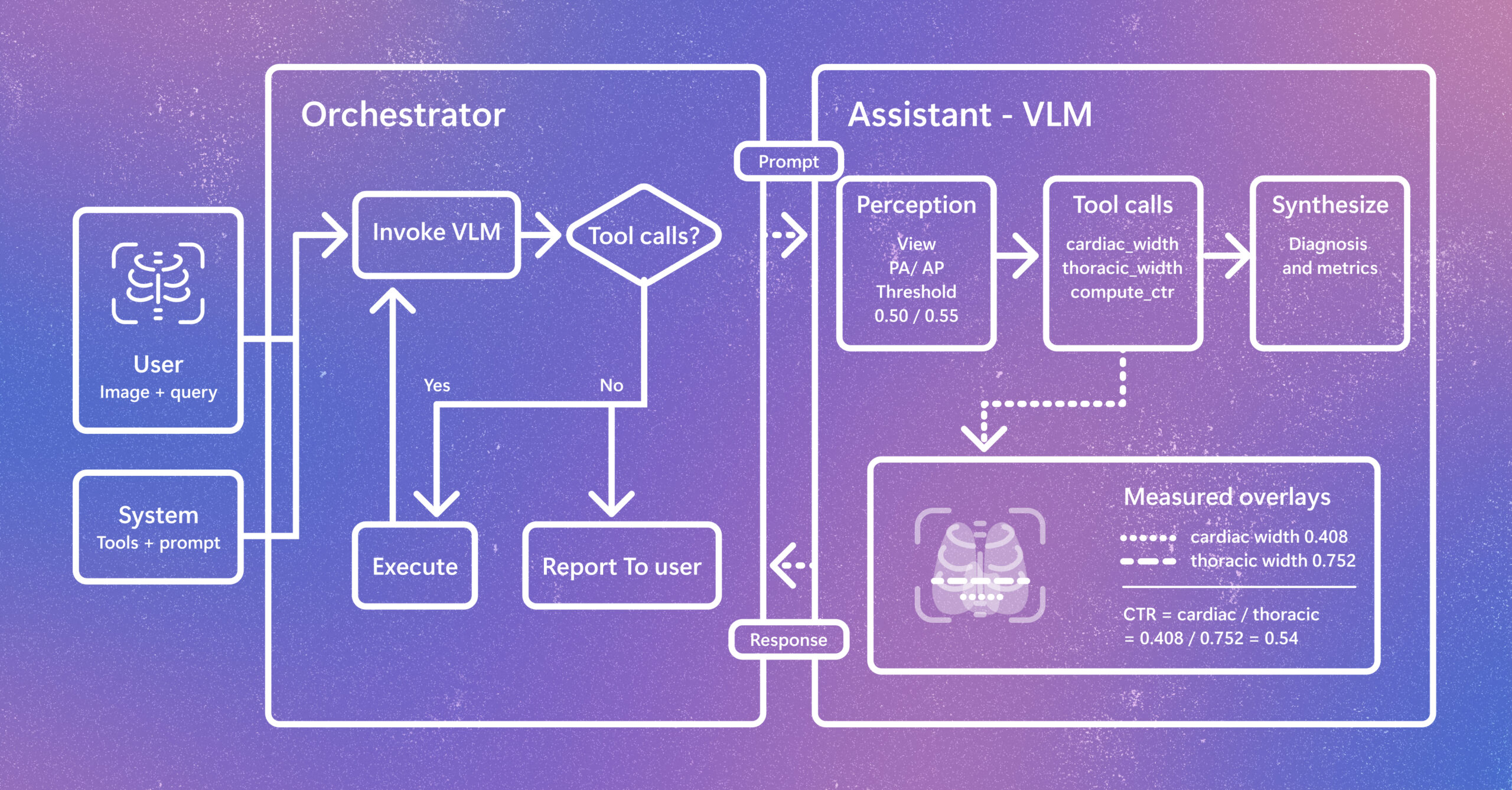
Radiology AI is evolving beyond report generation. CARE-X explores a unified approach that combines flexible reasoning, calibrated predictions, and measurement-based tools for chest X-ray interpretation. The post Introducing CARE-X: Towards Clinically Useful Radiology VLMs with Auxiliary Supervision, Reward-Aligned Learning, and Tool-Augmented Measurement appeared first on Microsoft Research.
Students in MIT’s Concourse program delve deeply into the human condition, debate challenging questions, and learn to develop judgment about issues that can’t be quantified.
We use cookies to run the site and, with your consent, for analytics and to show ads.
See our Cookie Policy.