This work introduces SACReg, a spectral anti-collapse regularizer motivated by an analysis of $\lambda$-balance, which captures the relative scale of weight matrices across layers, and proposes $\lambda$-JEPA, which improves over LeJEPA and VISReg on ImageNet-1k classification and in average linear-probe transfer performance across eight downstream image datasets.
Abstract
Joint-embedding self-supervised learning typically combines an invariance objective across augmented views with additional mechanisms to prevent representational collapse. These objectives are often applied after a projection head, while downstream tasks use the backbone representation before the projector. We find that this mismatch does not necessarily prevent dimensional collapse in the backbone, which can retain low effective rank and potentially limit downstream transfer. To address this, we introduce SACReg, a spectral anti-collapse regularizer motivated by an analysis of $\lambda$-balance, which captures the relative scale of weight matrices across layers. In a two-layer linear network, we show that (i) $\lambda$-balance prevents collapse, and (ii) our regularizer applied to the backbone induces $\lambda$-balance. In the nonlinear case, this regularizer leads to anti-collapse as well and, in realistic architectures on ImageNet100, it empirically increases the representations'ranks. We apply SACReg to JEPA and propose $\lambda$-JEPA, which improves over LeJEPA and VISReg on ImageNet-1k classification and in average linear-probe transfer performance across eight downstream image datasets. On video self-supervised learning, $\lambda$-JEPA improves over LeVJEPA and V-JEPA 2 on the Something-Something-v2 and Kinetics-400 benchmarks. Code is available at https://github.com/berkerdemirel/lambda-jepa.

It is found that Llama 3 delivers comparable quality to leading language models such as GPT-4 on a plethora of tasks, and performs competitively with the state-of-the-art on image, video, and speech recognition tasks.
This paper investigates developing real-world perception for active agents, proposes Gibson Environment for this purpose, and showcases a set of perceptual tasks learned therein.
F. Xia, Amir Zamir, Zhi-Yang He et al.· 2018 IEEE/CVF Conference on...· 1,069 citations· ⚡112
This publication proposes a definition and a classification of agile software development approaches and analyses ten software development methods that can be characterized as being "agile" against the defined criterion.
P. Abrahamsson, O. Salo, Jussi Ronkainen et al.· arXiv.org· 727 citations· ⚡54
The study shows that agile practices improve both informal and formal communication, but indicates that, in larger development situations involving multiple external stakeholders, a mismatch of adequate communication mechanisms can sometimes even hinder the communication.
M. Pikkarainen, Jukka Haikara, O. Salo et al.· Empirical Software Engineeri...· 401 citations· ⚡48
The results indicate that software engineering work practices are chosen opportunistically, adapted and configured to provide value under the constrains imposed by the startup context.
Nicolò Paternoster, Carmine Giardino, M. Unterkalmsteiner et al.· Information and Software Tec...· 394 citations· ⚡54
Related blog posts
MIT News · Artificial Intelligence· news.mit.eduOct 28, 2026
Professor Paris Smaragdis develops computers with superhuman hearing for applications like speech recognition, music understanding, and environmental monitoring.
Exploring how generative AI could make machine vision more accessible to businesses. The post GenEye in a Box: Making Machine Vision Something You Can Just Ask For appeared first on GPT-Lab.
Microsoft Research Blog· microsoft.comAug 11, 2026
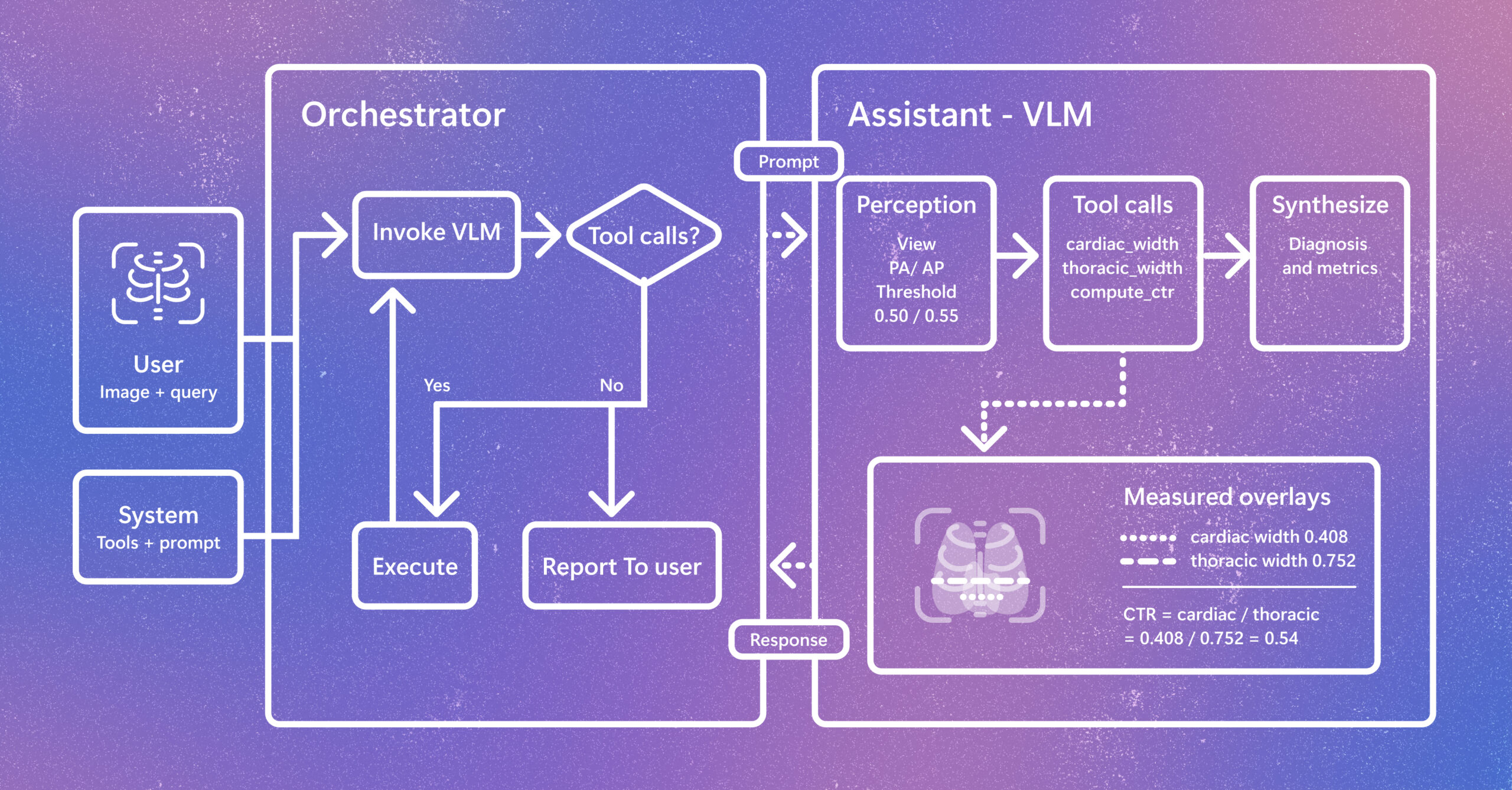
Radiology AI is evolving beyond report generation. CARE-X explores a unified approach that combines flexible reasoning, calibrated predictions, and measurement-based tools for chest X-ray interpretation. The post Introducing CARE-X: Towards Clinically Useful Radiology VLMs with Auxiliary Supervision, Reward-Aligned Learning, and Tool-Augmented Measurement appeared first on Microsoft Research.