This work proposes a cognitive-inspired, multi-agent framework that operationalizes Conceptual Blending Theory (CBT) through a novel Schema Grammar ("G"), providing a rigorous foundation for cross-domain logic re-instantiation.
Yu Xu, Yuxin Zhang, Juan Cao et al.· arXiv.org· 4 citations
WorldMind is introduced, a framework that autonomously constructs a symbolic World Knowledge Repository by synthesizing environmental feedback that unifies Process Experience to enforce physical feasibility via prediction errors and Goal Experience to guide task optimality through successful trajectories.
Baochang Ren, Yunzhi Yao, Rui Sun et al.· arXiv.org· 3 citations· ⚡1
Riverbank erosion is a serious environmental problem in Bangladesh, causing land loss, damage to infrastructure, and displacement of local communities. Manual analysis of satellite images is often slow and difficult to apply consistently across large river networks. This study uses a parameter-efficient adaptation of t...
M. Rafat, Akif Islam, Mohd Ruhul Ameen et al.· 2026 International Conferenc...· 0 citations
OceanGym is introduced, the first comprehensive benchmark for ocean underwater embodied agents, designed to advance AI in one of the most demanding real-world environments, and reveals substantial gaps between state-of-the-art MLLM-driven agents and human experts.
Yida Xue, Mingjun Mao, Xiangyuan Ru et al.· 0 citations
Reach audiences
Advertise in front of researchers, engineers, and readers.
The TaSe (Talk in Pieces, See in Whole) framework is introduced with three main contributions: a hierarchical synthetic captioning dataset spanning three tiers from category names to descriptive sentences; the three-component disentanglement module guided by a novel disentanglement loss function, transforms text embedd...
Sojung An, Kwanyong Park, Yong Jae Lee et al.· 0 citations
Evaluating nine closed-source model routes from Anthropic, Google, and OpenAI on TallyBench and CompareBench reveals strong overall performance but persistent failures in counting, spatial reasoning, geometric comparison, and temporal ordering.
Empirically, PRISM reduces the end-to-end time for data selection and model tuning to just 30% of conventional pipelines, and achieves this efficiency while simultaneously enhancing performance, surpassing models fine-tuned on the full dataset across eight multimodal and three language understanding benchmarks.
Jinhe Bi, Yifan Wang, Danqi Yan et al.· arXiv.org· 73 citations· ⚡4
This work proposes Short-Films 20K (SF20K), the largest publicly available movie dataset, and accompanies this dataset with SF20K-Test, a manual, open-ended question answering benchmark, showing that instruction tuning on the large-scale dataset substantially improves model performance.
Ridouane Ghermi, Xi Wang, Vicky Kalogeiton et al.· International Journal of Com...· 11 citations· ⚡1
This survey reviews representative Transformer-based autonomous driving models and organizes them by task role, sensing configuration, and architectural design and analyzes how efficiency constraints reshaping model design choices in practice affects deployability, robustness, and safety.
Evaluation of a video authoring pipeline featuring two layers of structured refusal shows that both layers independently improve the same instructional dimensions, suggesting that thoughtful resistance and generative AI are not opposites but partners.
Yearim Kim, In-Chang Baek, Nojun Kwak· 0 citations
Doc-CoB (Chain-of-Boxes), a simple-yet-effective framework that integrates coarse-to-fine layout-aware visual reasoning into multimodal large language models, and introduces two reasoning tasks for box recognition and box reasoning.
This work repurposes pretrained video generative models as a unified and data-efficient framework for geometry estimation, formulated innovatively as a next-frames prediction task, and inherits naturally structured knowledge and richer priors from the video model, enabling more data efficient and effective learning of...
Haosen Yang, Ji-Fei Song, Zhensong Zhang et al.· 1 citation
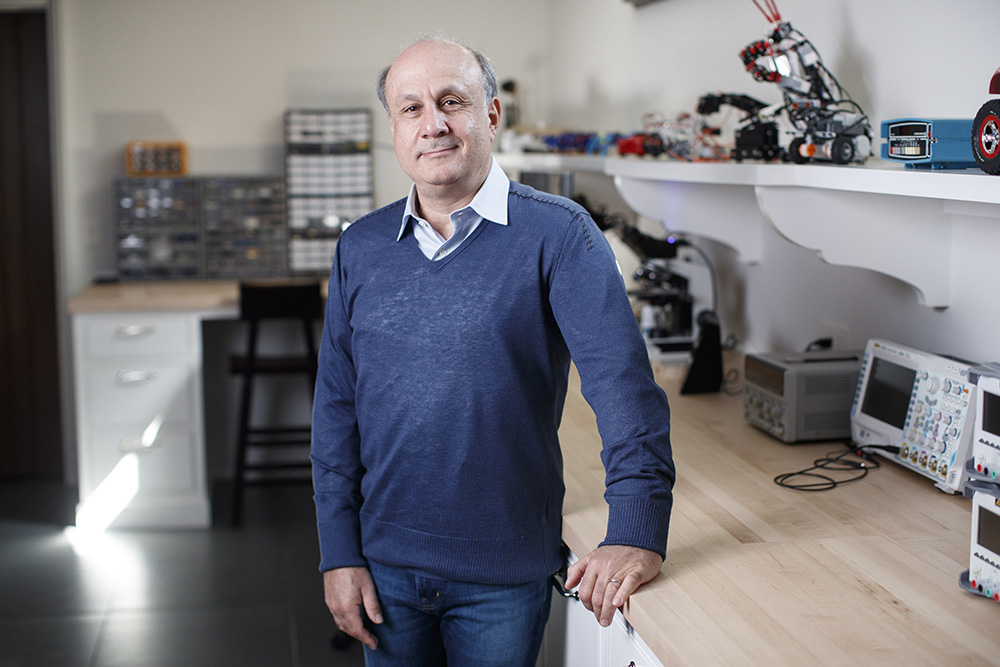
Professor Paris Smaragdis develops computers with superhuman hearing for applications like speech recognition, music understanding, and environmental monitoring.
Exploring how generative AI could make machine vision more accessible to businesses. The post GenEye in a Box: Making Machine Vision Something You Can Just Ask For appeared first on GPT-Lab.
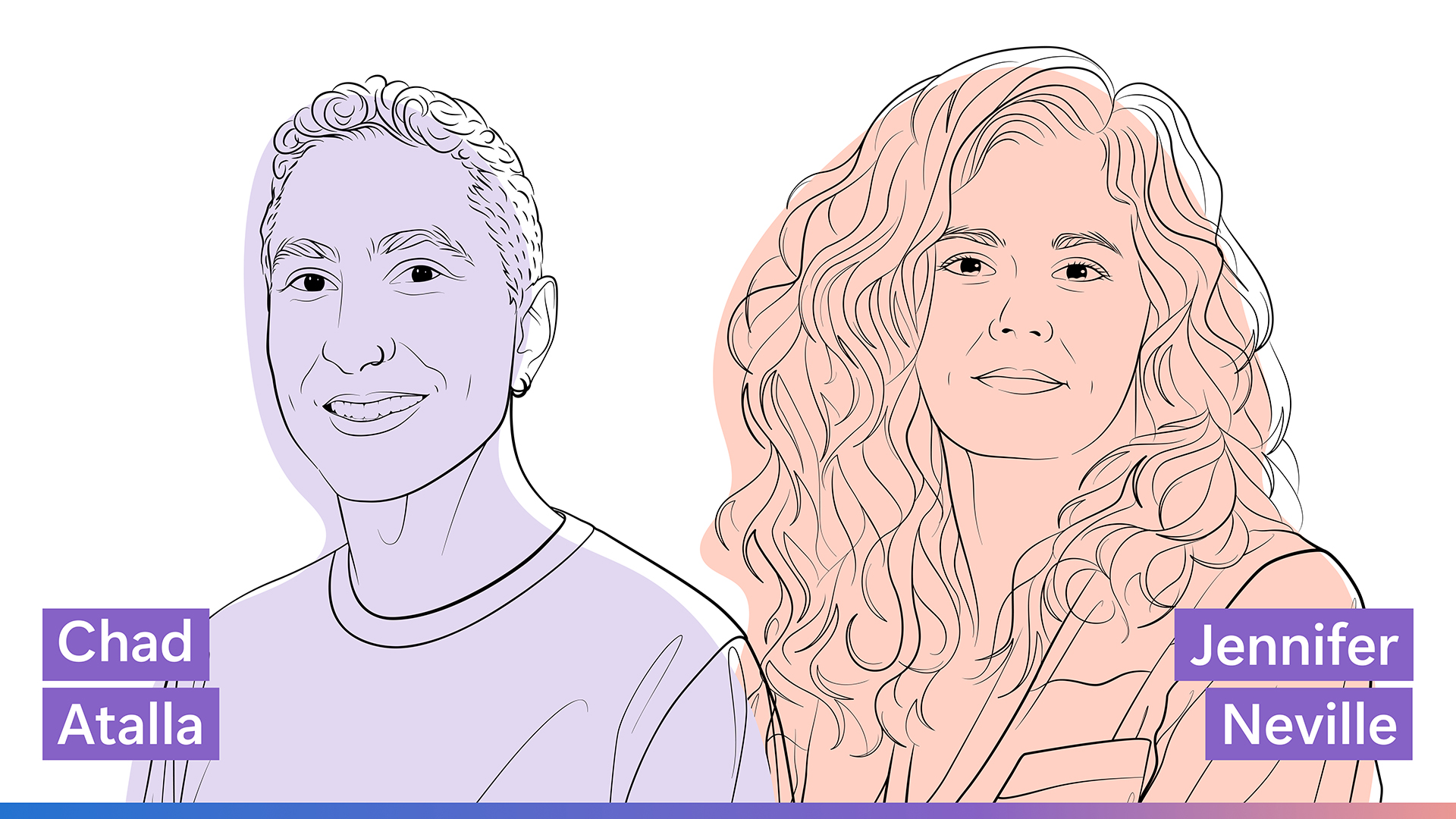
Jennifer Neville did not want to go into computer science—but that’s exactly where she landed. Neville discusses the starts and stops that led to her professional sweet spot and her work identifying “surprising failures” making it hard for AI to handle complexity. The post What AI gets wrong and what failure teaches us appeared first on Microsoft Research.
Computer scientist, entrepreneur, and philanthropist will collaborate with the MIT Schwarzman College of Computing to advance AI and scientific discovery.
We use cookies to run the site and, with your consent, for analytics and to show ads.
See our Cookie Policy.