This paper systematically investigate the memorization behaviors of RF through the test statistics of Membership Inference Attacks (MIA), culminating in a complexity-calibrated metric that successfully decouples intrinsic image spatial complexity from genuine memorization signals.
Mingxing Rao, Daniel Moyer· arXiv.org· 0 citations
MUSE (Multimodal Unified Safety Evaluation), an open-source, browser-based, run-centric platform for multimodal safety evaluation, demonstrates the value of run-centric, fine-grained evaluation for characterizing multimodal safety behavior beyond a single binary success metric.
FACET proposes an efficient replay-free task-conditioned feature consistency loss, aiming to mitigate catastrophic forgetting of the learned mixture distribution in the adapter's feature space, and demonstrates robust scalability.
This paper presents a comparative study of segmentation architectures, ranging from convolutional backbones to vision transformers, applied to the B.O.V.I.D. dataset, a corpus of high-resolution bovid dental photographs paired with hand-made segmentation masks not originally designed for ML-based training, and evaluate...
Keith G. Mills, Evan B. Sanders, Gregory J. Matthews et al.· 0 citations
Reach audiences
Advertise in front of researchers, engineers, and readers.
This work removes a model's camera input and replaces it with memories from prior drives at the same location, suggesting that a high NAVSIM score does not require a planner to react to the current traffic scene and should be treated with caution.
Christian Löwens, Thorben Funke, Alexandru Condurache· 0 citations
MIOH provides a controlled framework for analyzing multi-image object hallucination and serves as a critical evaluation tool for developing more reliable multimodal AI systems.
Joonki Min, Chaeyun Kim, H. Choi et al.· 1 citation
This study presents the first application of Grassmann-Plucker (GP) token mixing to computer vision and introduces two extensions for image classification: the Quantum-inspired Grassmann-Plucker (QGP) head and the Hybrid Quantum Machine Learning Grassmann-Plucker (HQML-GP) head.
Kooroush Farahkhah, Umut Lagap, Taha Rezaei et al.· 0 citations
Rapid mineral characterization is essential for applications ranging from mineral exploration to industrial ore processing. To this end, Hyperspectral Imaging (HSI) has emerged as a promising sensing modality thanks to its fine spectral resolution, enabling mineral discrimination in both close-range and remote sensing...
Eleftheria Tetoula-Tsonga, George Arvanitakis, Theodoros Giannakas Institute of Communication et al.· 0 citations
VisER is proposed, a training-free two-sided metric for object-level hallucination detection that improves AUROC and AUPR over a range of baselines and measures whether object-context compatibility is backed by object-specific evidence from image tokens.
Afsaneh Hasanebrahimi, Hanxun Huang, Christopher Leckie et al.· 0 citations
MineAmongUs is introduced, a 3D multimodal Among Us sandbox where imposter agents must deceive crewmates through joint verbal and non-verbal action, and ARIA is proposed, a configurable VLM-agent harness that exposes five cognitive-component ablation axes and opens a new path for embodied VLM-agent alignment research.
Jaewoo Ahn, Junseo Kim, Hyunseo Kim et al.· 0 citations
This work proposes a decompose-before-reconstruct approach, which significantly improves mesh fidelity and novel-view synthesis and novel-view synthesis, while supporting object-wise modifiability and interactivity.
Minhas Kamal, Hiranya Garbha Kumar, Mahedi Kamal et al.· 0 citations
Motus2 is presented, a self-evolving general world model for dexterous manipulation that combines egocentric data scaling and closed-loop general world model scaling to provide a general path toward self-evolving dexterous manipulation.
Hong-Zhe Bi, Zikun Zhou, Yihao Tang et al.· 7 citations
Exploring how generative AI could make machine vision more accessible to businesses. The post GenEye in a Box: Making Machine Vision Something You Can Just Ask For appeared first on GPT-Lab.
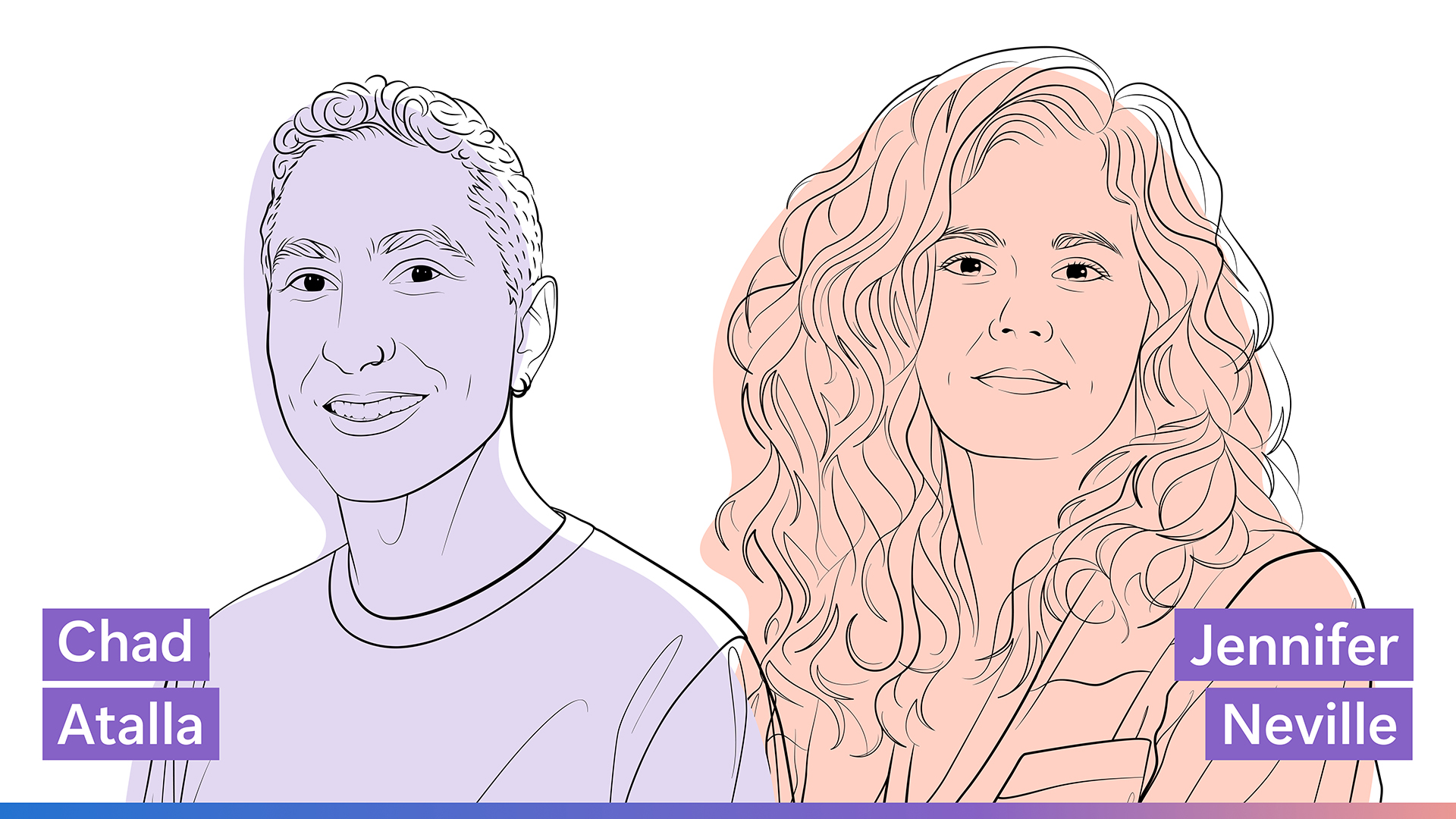
Jennifer Neville did not want to go into computer science—but that’s exactly where she landed. Neville discusses the starts and stops that led to her professional sweet spot and her work identifying “surprising failures” making it hard for AI to handle complexity. The post What AI gets wrong and what failure teaches us appeared first on Microsoft Research.
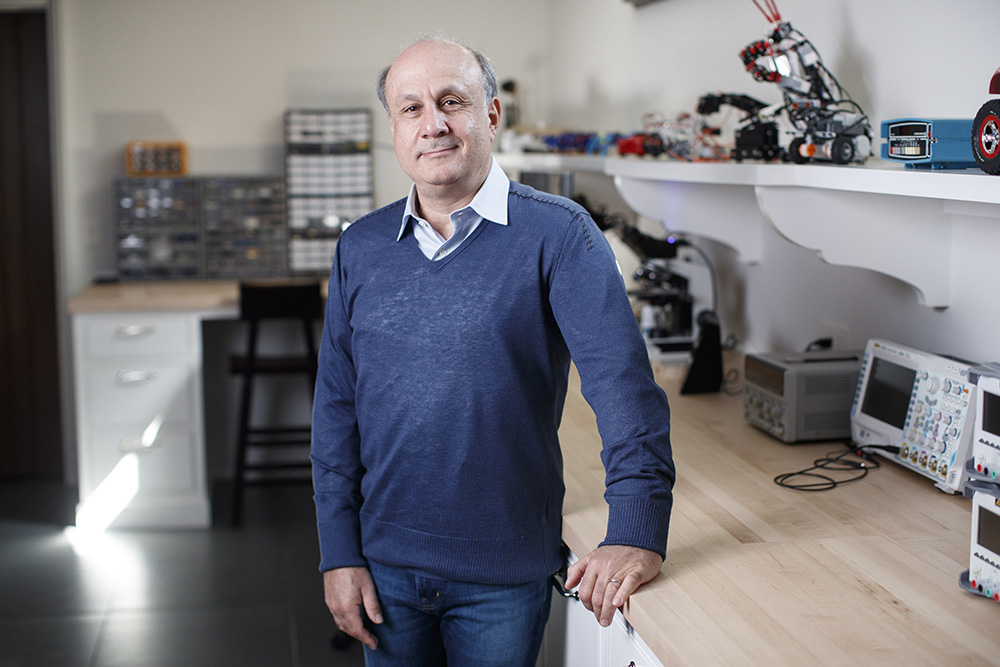
Computer scientist, entrepreneur, and philanthropist will collaborate with the MIT Schwarzman College of Computing to advance AI and scientific discovery.