PAVA pairs a forget loss with a visual-attribute anchor that preserves image-grounded behavior by distilling the model's own pre-unlearning answers from the forget images alone and gives the strongest forget-retain trade-off among forget-set-only methods and remains competitive with retain-based baselines.
Kangwook Ko, Jaehyuk Jang, Wonjun Lee et al.· 1 citation
MTPaperBananaBench, a benchmark for multi-turn diagram generation containing 292 images annotated with 3,518 user requirements, is presented and PaperBanana-Interact, a multi-agent system that refines diagrams via an internal critique-and-refine loop is introduced.
Xue-Qing Wu, Ashwin Balasubramanian, Bing-Xuan Li et al.· 0 citations
Large language models are increasingly deployed in Arabic-speaking markets, yet standard benchmarks overwhelmingly reward Modern Standard Arabic (MSA) fluency while leaving dialectal and culturally grounded competence unmeasured. This gap is consequential: everyday Arabic is largely dialectal, and dialect encodes socia...
Ghassan Al-Sumaidaee, Sajjad Abdoli, Ahmed Rashad et al.· 0 citations
Chain-of-thought (CoT) reasoning has dramatically improved large language models (LLMs) by allowing them to decompose problems into intermediate steps. While CoT is widely effective for linguistic tasks, text-only CoT forces models to serialize visual problems into awkward prose. Although architectural solutions exist...
Tsung-Han Wu, Heekyung Lee, An-Ya Ji et al.· 0 citations
Reach audiences
Advertise in front of researchers, engineers, and readers.
ReVA is proposed, a region-aware VQA model that employs a frozen CLIP ViT-L/14 Vision Transformer (ViT) and a Qwen2.5-7B-Instruct large language model (LLM) connected through a dual bridge that aligns both whole-image and region-level representations with the LLM's embedding space.
This work ground perceptual memory in the model, decomposing recall into two subproblems: a vision-language model grounds the referent in context (what and where), and a dedicated encoder extracts an identity key (who), stored as one inline token read by attention at generation with no external round-trip.
LUCAID is an agentic AI system for precision lung cancer pathology that combines diagnostic reasoning with nine modules that cover the full routine workflow, from quality control, tumor detection and segmentation, histological subtyping, tumor microenvironment profiling, tumor cellularity quantification, and predictive...
M. Eich, K. Standvoss, Timo Milbich et al.· 0 citations
The core design principle of DELE-w0.5 is to model how the physical world changes under robot actions, rather than how its visual appearance evolves frame by frame, which enables cheaper training and low-latency inference.
Fenghao Lei, Zhixiong Huang, Long Yang et al.· 2 citations
A scheme to train a better transformation for a given image dataset is developed, using isometric tensor networks, inspired by quantum many-body theory, to parameterize the basis, and train it with Riemannian optimization.
Shiwen An, Zhongyi Ni, Huanhai Zhou et al.· 0 citations
The results show that RegionFM maintains performance comparable to less interpretable fine-tuning approaches while providing anatomically grounded explanations, and better aligns model explanations with anatomy-based clinical reasoning while maintaining competitive predictive performance.
A central lesson is to validate uncertainty in the region, and against the error target, for which it will be used, to validate uncertainty in the region, and against the error target, for which it will be used.
FracEvent, an event simulator that models this pixel-level lifecycle with fractional-relaxation voltage dynamics, improves the temporal structure of generated events and achieves stronger downstream-transfer results than competing simulator baselines, showing its practical value for event-camera simulation.
Exploring how generative AI could make machine vision more accessible to businesses. The post GenEye in a Box: Making Machine Vision Something You Can Just Ask For appeared first on GPT-Lab.
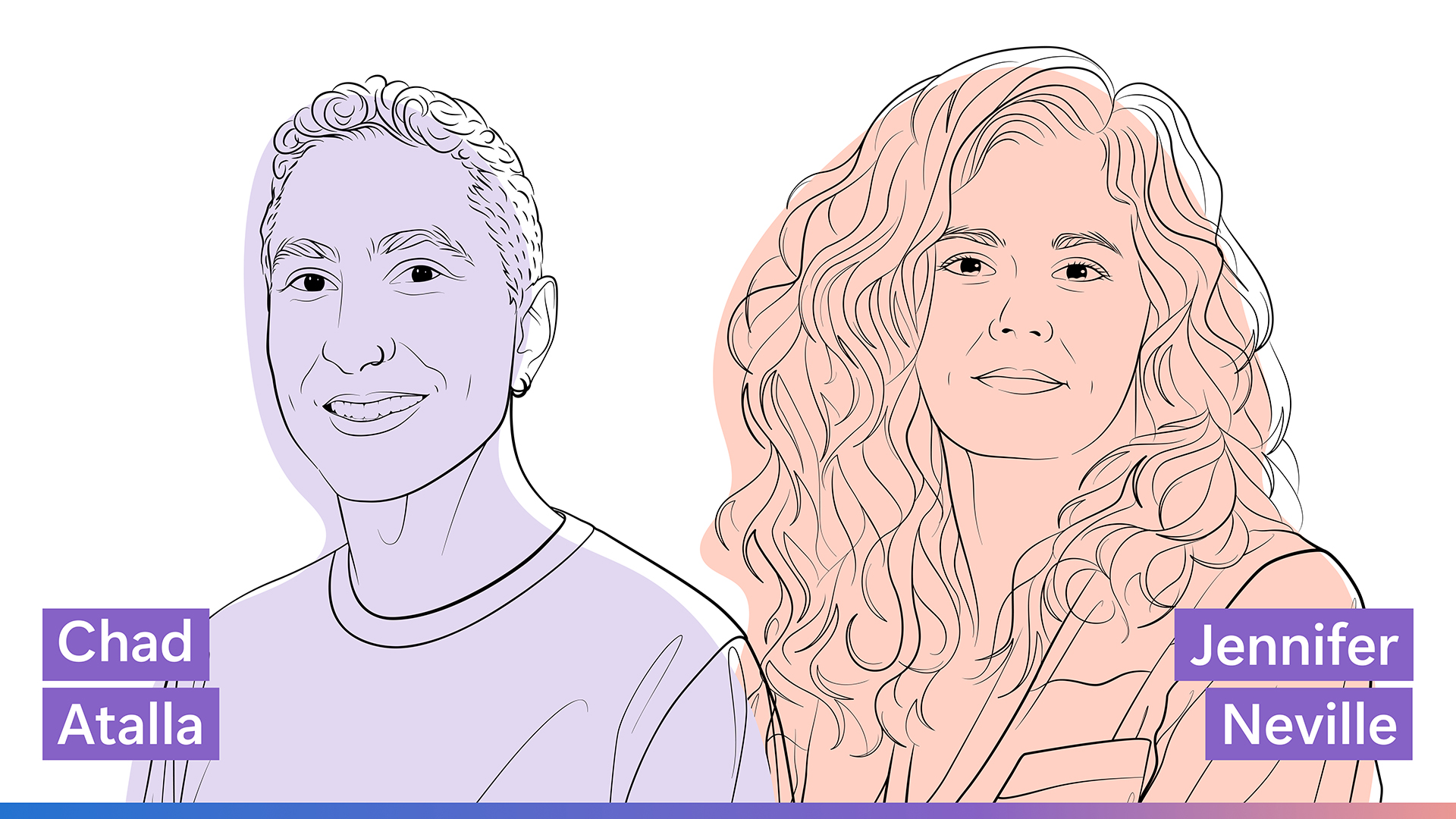
Jennifer Neville did not want to go into computer science—but that’s exactly where she landed. Neville discusses the starts and stops that led to her professional sweet spot and her work identifying “surprising failures” making it hard for AI to handle complexity. The post What AI gets wrong and what failure teaches us appeared first on Microsoft Research.
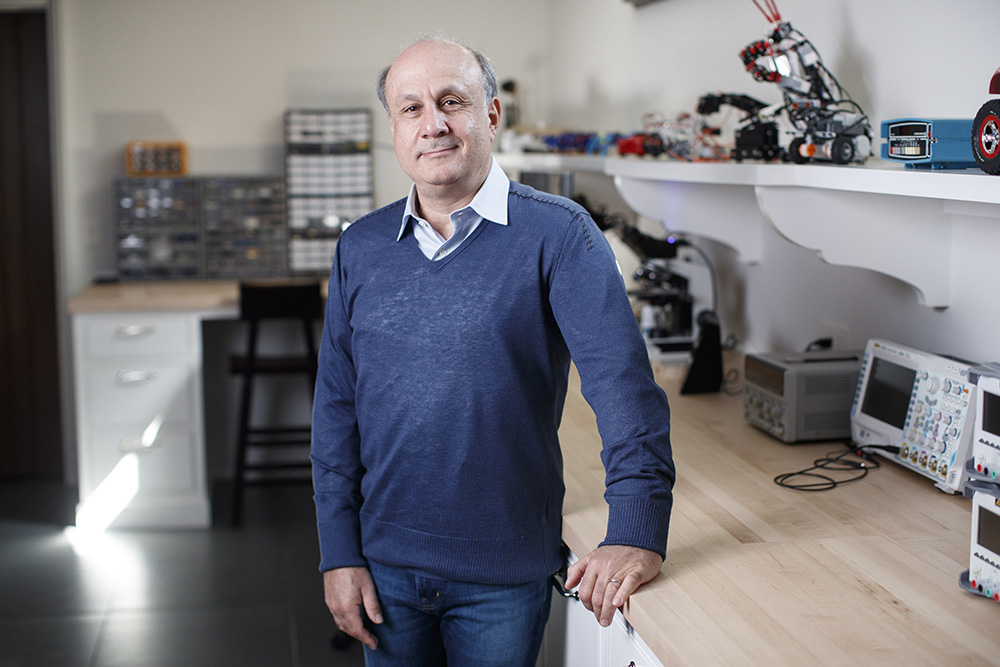
Computer scientist, entrepreneur, and philanthropist will collaborate with the MIT Schwarzman College of Computing to advance AI and scientific discovery.