ReasoningBank: Enabling agents to learn from experience
Generative AI
More from the blog
How Much Memory Does Your Agent Actually Need?
A Blog post by IBM Research on Hugging Face

When AI art has no author: Study finds generated images often can’t be traced to training data
A new method for surgically removing training examples from a model reveals that as datasets grow, the link between what a model learns and what it produces dissolves.
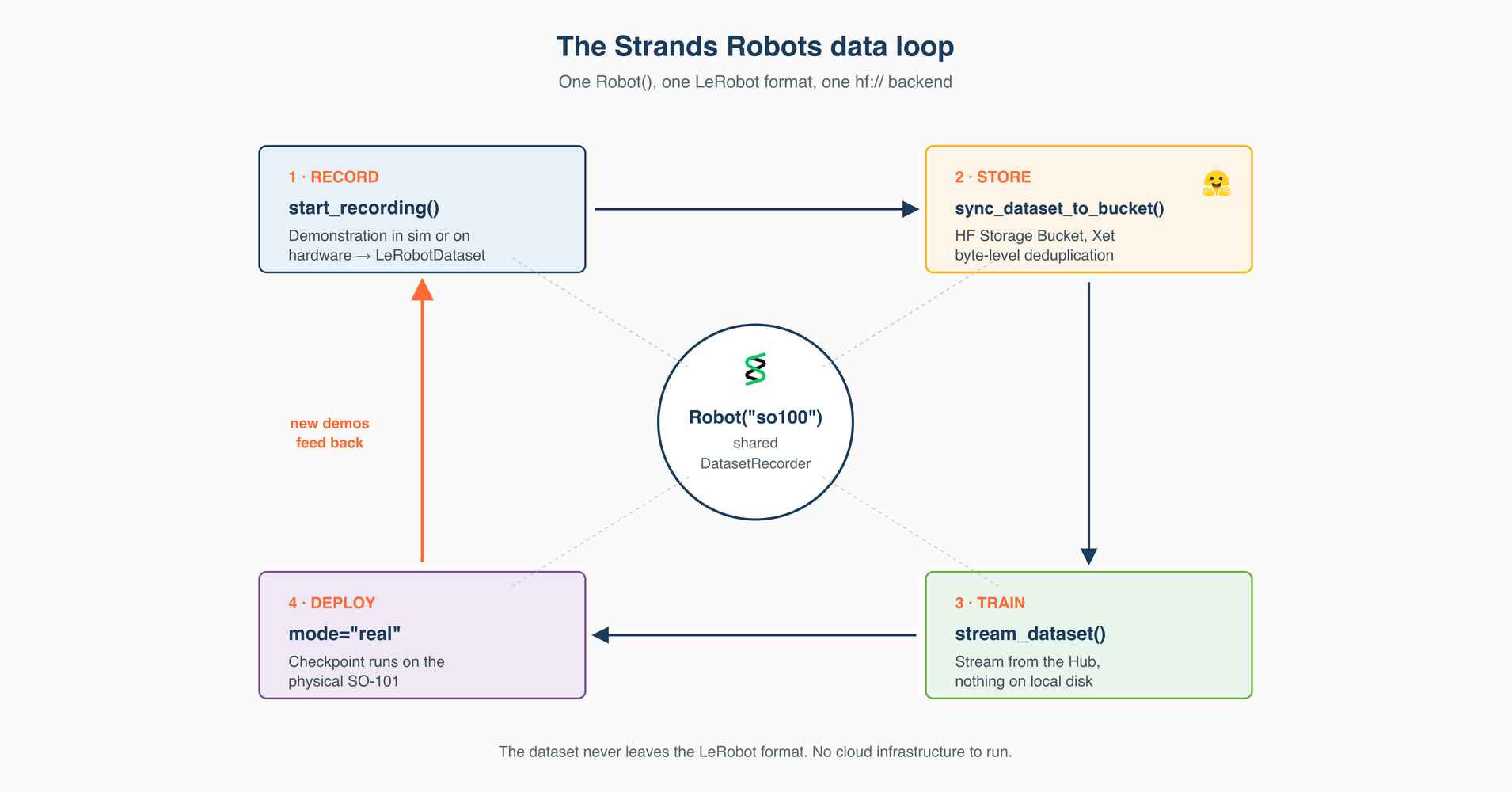
Record, train, and deploy from one place with Strands Agents, LeRobot, and Hugging Face Storage Buckets
A Blog post by Amazon on Hugging Face

Introducing Gemini 3.7 Flash
Gemini 3.7 Flash is our most intelligent workhorse model yet for coding and agents.
Related papers
An explainable generative AI framework for detecting low-rate API-based DDoS attacks in cloud environments
Anomaly detection method for satellite networks based on adaptive federated learning driven by deep reinforcement learning
Artificial Intelligence for Real-Time Cyber Threat Classification and Emerging Threat Detection: A Structured Review of Methods, Datasets, Challenges, and Research Directions
The reviewed literature indicates that AI-based methodologies often demonstrate superior detection capabilities for intricate and previously unseen attack patterns compared to traditional methods; however, direct performance comparisons are complicated due to discrepancies in datasets, experimental designs, and evaluation protocols.
Adaptive Repayment Optimisation for SME Lending: A Stochastic Programming Framework with Generative AI Explanation
The Adaptive Repayment Optimisation Engine is introduced, a novel framework that applies constrained stochastic optimisation to the design of loan repayment schedules for small and medium-sized enterprises (SMEs) and contributes to the operations research literature by bridging stochastic programming, explainable AI, and financial regulation in a novel application domain.