Comparison of Therapist‐Guided Versus Self‐Guided Internet‐Based Stress Inoculation Therapy (ISIT) on Psychological Distress Symptoms in Women After Miscarriage in Iran: A Study Protocol of a Randomized Clinical Trial
Aug 2026· Health Science Reports· Vol 9· 0 citations· 35 references
Medicine
TL;DR
The positive results of ISIT counseling on psychological distress symptoms and reducing perinatal grief during follow-ups conducted immediately post-intervention and 3 months after the intervention suggest that it will be useful for managing the complications of spontaneous abortion.
Abstract
ABSTRACT Background and Aims Miscarriage can lead to various psychological consequences such as grief, anxiety, depression, and psychological distress. Although women who experience a miscarriage may not have formed a bond with their unborn child, the intensity of grief following an abortion does not significantly differ from the loss of other first‐degree relatives. The present study will be conducted to compare therapist‐guided versus self‐guided internet‐based stress inoculation therapy (ISIT) on psychological distress symptoms in women after miscarriage. Methods This study will be a randomized clinical trial with two parallel groups, conducted on 100 women with a history of miscarriage who are referred to prenatal clinics of educational hospitals affiliated with Babol University of Medical Sciences. Participants will be randomly assigned to two intervention groups. The first group will receive therapist‐guided intervention (50 participants), consisting of 6 sessions of ISIT along with 20–25 min of weekly online counseling. The second group will receive a self‐guided intervention (50 participants), consisting of only 6 sessions of ISIT without therapist guidance. The content of the SIT sessions includes techniques such as relaxation, cognitive restructuring, conceptualization, problem‐solving, exercises, cognitive‐behavioral methods, and stress coping. Data will be collected using demographic‐reproductive characteristics questionnaires, brief symptom inventory‐18 (BSI‐18), and Perinatal Grief Scale at three time intervals: before the intervention, immediately after the intervention, and 3 months after the intervention. Data analysis will be performed using independent t‐tests, Chi‐square tests, and repeated measures analysis of variance with SPSS software version 23. Results It is expected that the study will yield anticipated outcomes in reducing psychological distress symptoms among women following a spontaneous abortion. It is also anticipated that counseling based on this model will reduce perinatal grief during follow‐ups conducted immediately post‐intervention and 3 months after the intervention concludes. Conclusion The positive results of ISIT counseling on psychological distress symptoms and reducing perinatal grief during follow‐ups conducted immediately post‐intervention and 3 months after the intervention suggest that it will be useful for managing the complications of spontaneous abortion. Trial Registration: This trial is prospectively registered on August 25, 2025, at the Iranian Registry of Clinical Trials (IRCT20230130057274N6).

Background: Schema therapy has been proposed as an integrative intervention that targets both emotional symptoms and maladaptive behavioral patterns; however, empirical evidence of its effectiveness for these outcomes remains limited. Objectives: This study aimed to evaluate the effectiveness of a schema therapy-based...
Roghayeh Tezval, Tahereh Hamzehpoor Haghighi, Z. Mirpour· Journal of Health Reports an...· 0 citations
If effective, the 3D Program may serve as a scalable, cost-efficient adjunct to routine care for women with depressive symptoms in public health systems, while biomarker findings may lay the groundwork for future trials examining predictors of response.
N. Angarita-Osorio, A. García-Estela, L. Terraneo et al.· JMIR Research Protocols· 0 citations
Purpose: This study aimed to compare the effectiveness of Intensive Short-Term Dynamic Psychotherapy (ISTDP) and Acceptance and Commitment Therapy (ACT) on reducing psychological distress and enhancing ego strength in women victims of domestic violence. Methods and Materials: This quasi-experimental study employed a pr...
Sahar Shokohifar, Hossein Mahdian, M. Motlagh· The Iranian Journal of Neuro...· 0 citations
This study shows that the combined intervention of acceptance and commitment based on compassion (ACT-CFT) can be used as an effective treatment method to reduce internalized shame and improve psychological complications caused by hormone therapy in infertile women.
Sanaz Pourgoli, Maryam Dehghan, Kamran Pourmohammad Ghouchani et al.· Health Psychology and Behavi...· 0 citations
The aim of the present study was to examine and compare the effectiveness of Compassion-Focused Therapy (CFT) and Mindfulness-Based Cognitive Therapy (MBCT) on self-esteem in female breadwinner mothers. This applied study employed an experimental method with a pretest–posttest design and a three-month follow-up, includ...
Shiva Parsamanesh, Reza Khakpour, Rahim Davari· Mental Health and Lifestyle...· 0 citations
To increase emotional self-regulation and reduce attitudes toward extramarital relationships in vulnerable groups, including marginalized infertile women can be used the emotion-focused therapy.
Mona Fadaei, Bahman Akbari, L. Moghtader· Psychology of Motivation, Be...· 0 citations
Related blog posts
Microsoft Research Blog· microsoft.comNov 12, 2026
What's new in research at Microsoft? Host Anson Ho explores the latest, including AI-powered universal translation, a breakthrough in a 31-year-old mathematics challenge, and advances making AI coding agents faster and more efficient. The post Microsoft Research Focus – Edition #98 appeared first on Microsoft Research.
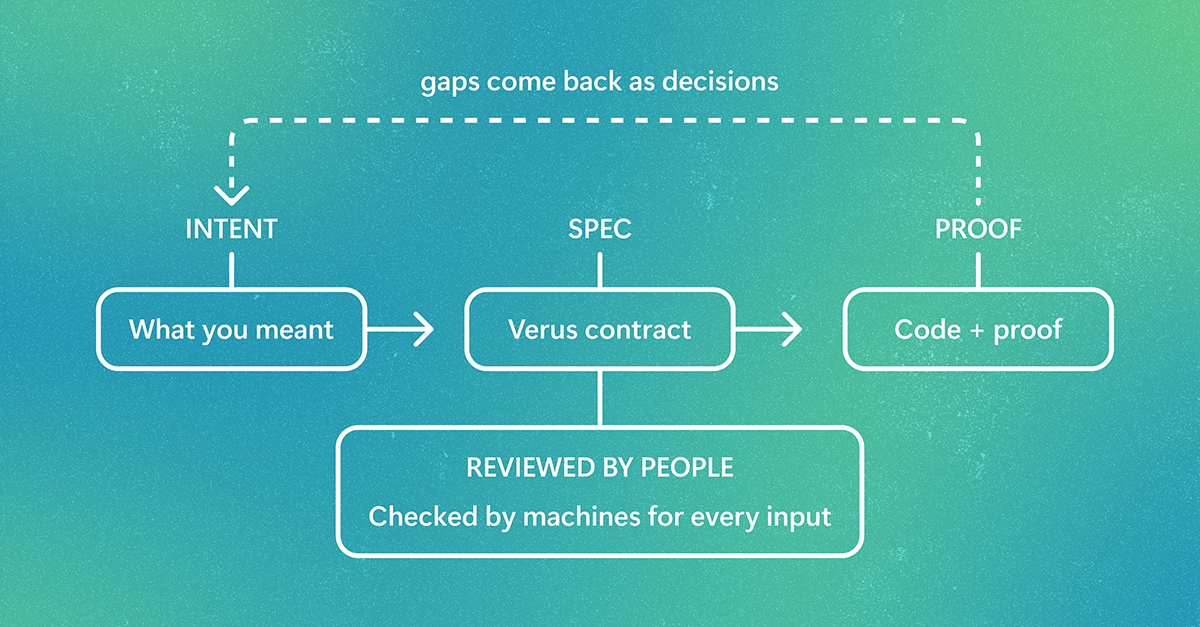
AI agents can generate code at a scale that’s hard for humans to review line-by-line. PDD Kit helps ensure the code is doing what the developer intended by creating formal specifications and testing against them. It converts developer intent into a Verus specification, proves AI-generated code meets it for every input, and uses tests where proofs aren't practical. Developers review intent, not every line. The post Formally verifying agent-written full-stack web apps with PDD Kit appeared first o…