Skip to content
#software testing Open access

From code to natural language: MErlin – a multi-omics toolkit for bacterial epigenomics delivered as Claude agent skill

Unknown authors
Sep 2026 · bioRxiv · 0 citations · 16 references
Biology

TL;DR

MErlin (Methylation-driven Expression & Regulation Linkage in Interacting Nuclear-domains), a multi-omics toolkit comprising seventeen composable modules, from basecalled modBAM files to ranked gene-level evidence and a self-contained HTML report is presented.

Abstract

Interpreting a bacterial methylome is a multi-omics problem. It requires integrating modified-base calls with genome annotation, motif inventories, methyltransferase genotypes, transcript abundance, replichore position and, increasingly, chromosome conformation. These data types are commonly generated in incompatible formats, use inconsistent sequence and gene identifiers, and originate from different analytical workflows. Relevant algorithms are available but assembling them into a coherent and statistically defensible analysis remains a substantial data-integration and interface problem. We present MErlin (Methylation-driven Expression & Regulation Linkage in Interacting Nuclear-domains), a multi-omics toolkit comprising seventeen composable modules, from basecalled modBAM files to ranked gene-level evidence and a self-contained HTML report. MErlin is distributed both as a conventional Python package and as an agent skill: a structured, version-controlled layer of procedural knowledge that enables a compatible large language model (LLM) assistant to select and operate the audited package without generating a new analysis implementation for each request. This design treats natural language as an interface to fixed analytical operations rather than as a substitute for tested scientific software. The skill encodes module-selection rules, mandatory preflight checks, questions that require human input, design-to-inference constraints, and interpretation guidance. We describe MErlin’s architecture and statistics, validate it against a synthetic dataset with planted ground truth, and illustrate the conversational interface on a real methylome–transcriptome comparison in Pseudoalteromonas haloplanktis TAC125. MErlin is open source and available at https://github.com/IacopoPasseri/MErlin.


Read PDF

Similar papers

#computer vision Review Sep 2017

Agile Software Development Methods: Review and Analysis

This publication proposes a definition and a classification of agile software development approaches and analyses ten software development methods that can be characterized as being "agile" against the defined criterion.

P. Abrahamsson, O. Salo, Jussi Ronkainen et al. · 727 citations · ⚡54
#computer vision Jun 2008

The impact of agile practices on communication in software development

The study shows that agile practices improve both informal and formal communication, but indicates that, in larger development situations involving multiple external stakeholders, a mismatch of adequate communication mechanisms can sometimes even hinder the communication.

M. Pikkarainen, Jukka Haikara, O. Salo et al. · 401 citations · ⚡48
#machine learning Review Open access Oct 2014

Software development in startup companies: A systematic mapping study

The results indicate that software engineering work practices are chosen opportunistically, adapted and configured to provide value under the constrains imposed by the startup context.

Nicolò Paternoster, Carmine Giardino, M. Unterkalmsteiner et al. · 394 citations · ⚡54
#computer vision Review Mar 2008

Agile methods in European embedded software development organisations: a survey on the actual use and usefulness of Extreme Programming and Scrum

The results show that the embedded industry has been able to apply agile methods in its development processes and that the appreciation of the agile methods and their individual practices appears to increase once adopted and applied in practice.

O. Salo, P. Abrahamsson · 238 citations · ⚡9
#computer vision Open access Jul 2017

What happens when software developers are (un)happy

Consequences of happiness and unhappiness that are beneficial and detrimental for developers' mental well-being, the software development process, and the produced artifacts are found.

D. Graziotin, Fabian Fagerholm, Xiaofeng Wang et al. · 236 citations · ⚡13
#computer vision Open access Oct 2004

Mobile-D: an agile approach for mobile application development

The Mobile-D approach is briefly outlined here and the experiences gained from four case studies are discussed, which helped develop an agile development approach for mobile application development.

P. Abrahamsson, Antti Hanhineva, H. Hulkko et al. · 225 citations · ⚡18

Related blog posts

GPT-Lab Sep 17, 2026

Beyond Prompt Engineering: The Role of Tacit Knowledge in Software Engineering

AI is making software generation faster, but speed does not remove the need for expertise. As more work is delegated to AI, tacit knowledge may become one of the most important human advantages in software engineering. The post Beyond Prompt Engineering: The Role of Tacit Knowledge in Software Engineering appeared first on GPT-Lab.

MIT News · Artificial Intelligence Aug 17, 2026

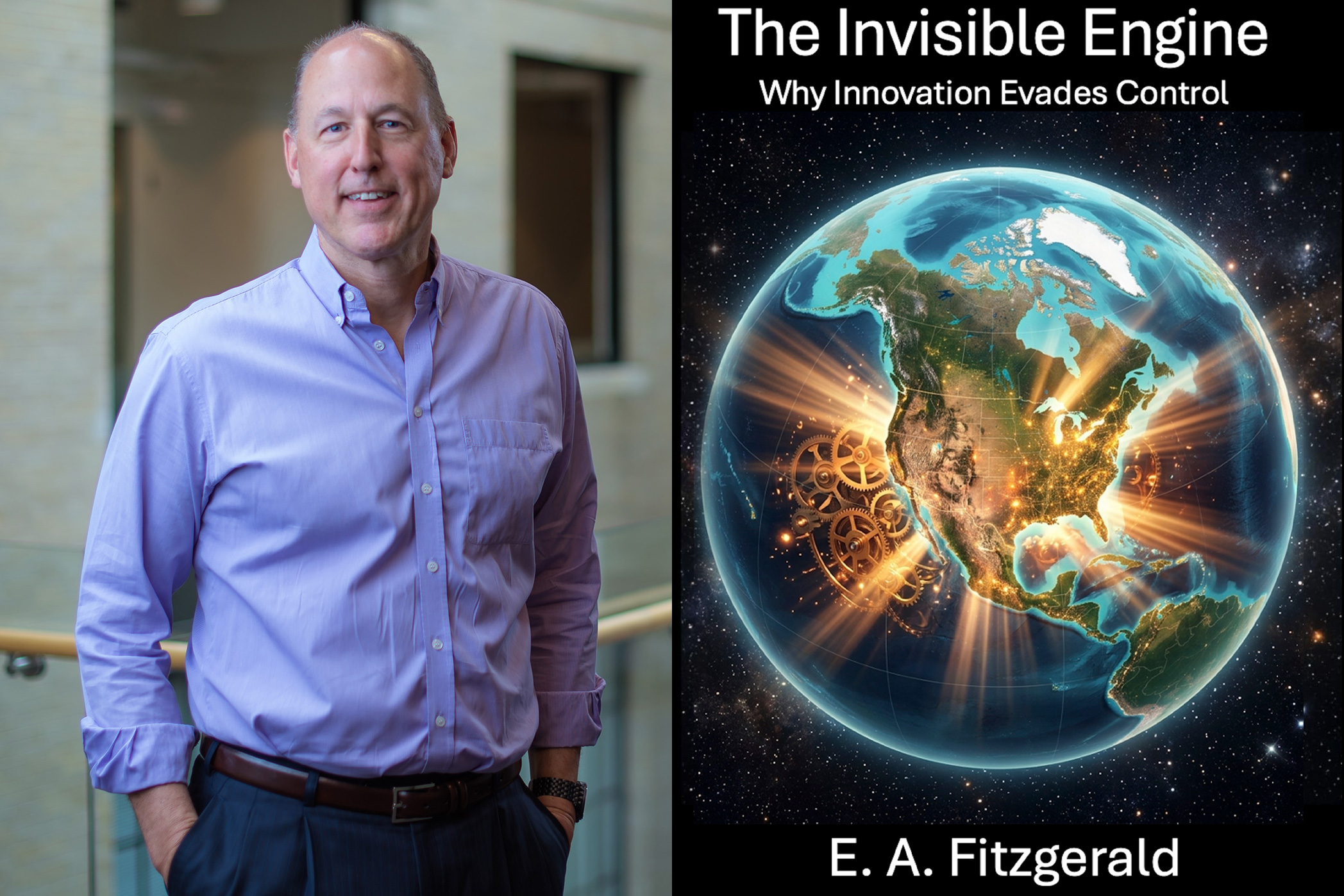
Q&A: Rethinking how innovation happens

In his latest book, Professor Eugene Fitzgerald examines the forces that turn breakthroughs into value — and why innovation resists simple formulas.

Microsoft Research Blog Aug 12, 2026

MindTopo reveals VLMs’ spatial reasoning abilities

A path, a fence, a knot. MindTopo sets a new benchmark for testing how AI understands topological relationships and highlights new opportunities to strengthen spatial reasoning and planning. The post MindTopo reveals VLMs’ spatial reasoning abilities appeared first on Microsoft Research.

We use cookies to run the site and, with your consent, for analytics and to show ads. See our Cookie Policy.