Skip to content

Game-Master LLMs for Task-Based Role-Play: Supporting the Acquisition of Idiomatic Language in L2 Learning

Nov 2025 · 0 citations · 45 references
Computer Science

TL;DR

An LLM-powered, task-based role-playing game in which a GPT-4o-based Game Master guides learners through an immersive, three-phase spoken narrative highlighting the potential of narrative-driven LLM interactions in vocabulary acquisition is designed and evaluated.

Abstract

Natural and idiomatic expressions are essential for fluent, everyday communication, yet many second-language learners struggle to acquire and spontaneously use casual slang despite strong formal proficiency. To address this gap, we designed and evaluated an LLM-powered, task-based role-playing game in which a GPT-4o-based Game Master guides learners through an immersive, three-phase spoken narrative. After selecting five unfamiliar slang phrases to practice, participants engage in open-ended dialogue with non-player characters; the Game Master naturally incorporates the target phrases in rich semantic contexts (implicit input enhancement) while a dedicated Practice Box provides real-time explicit tracking and encouragement. Post-session, learners receive multi-level formative feedback analyzing the entire interaction. We evaluated the system in a between-subjects study with 14 international graduate students, randomly assigned to either the RPG condition or a control condition consisting of a traditional AI-led virtual classroom. Results from an immediate post-test show that the RPG group achieved greater gains in both comprehension of the target phrases and their accurate, contextual use in sentences. A one-week delayed post-test further demonstrates that these gains are retained over time, with the RPG group showing a 21-27% improvement, indicating the effectiveness of our approach in supporting longer-term learning. Qualitative survey responses assessing engagement and perceived effectiveness further indicate that the game-based approach provided more practice opportunities and a more natural learning experience. These findings highlight the potential of narrative-driven LLM interactions in vocabulary acquisition.

View source

Similar papers

#computer vision Review Sep 2017

Agile Software Development Methods: Review and Analysis

This publication proposes a definition and a classification of agile software development approaches and analyses ten software development methods that can be characterized as being "agile" against the defined criterion.

P. Abrahamsson, O. Salo, Jussi Ronkainen et al. · 727 citations · ⚡54
#computer vision Jun 2008

The impact of agile practices on communication in software development

The study shows that agile practices improve both informal and formal communication, but indicates that, in larger development situations involving multiple external stakeholders, a mismatch of adequate communication mechanisms can sometimes even hinder the communication.

M. Pikkarainen, Jukka Haikara, O. Salo et al. · 401 citations · ⚡48
#machine learning Review Open access Oct 2014

Software development in startup companies: A systematic mapping study

The results indicate that software engineering work practices are chosen opportunistically, adapted and configured to provide value under the constrains imposed by the startup context.

Nicolò Paternoster, Carmine Giardino, M. Unterkalmsteiner et al. · 394 citations · ⚡54

Related blog posts

MIT News · Artificial Intelligence Oct 28, 2026

Making machines that can listen

Professor Paris Smaragdis develops computers with superhuman hearing for applications like speech recognition, music understanding, and environmental monitoring.

MIT News · Artificial Intelligence Oct 23, 2026

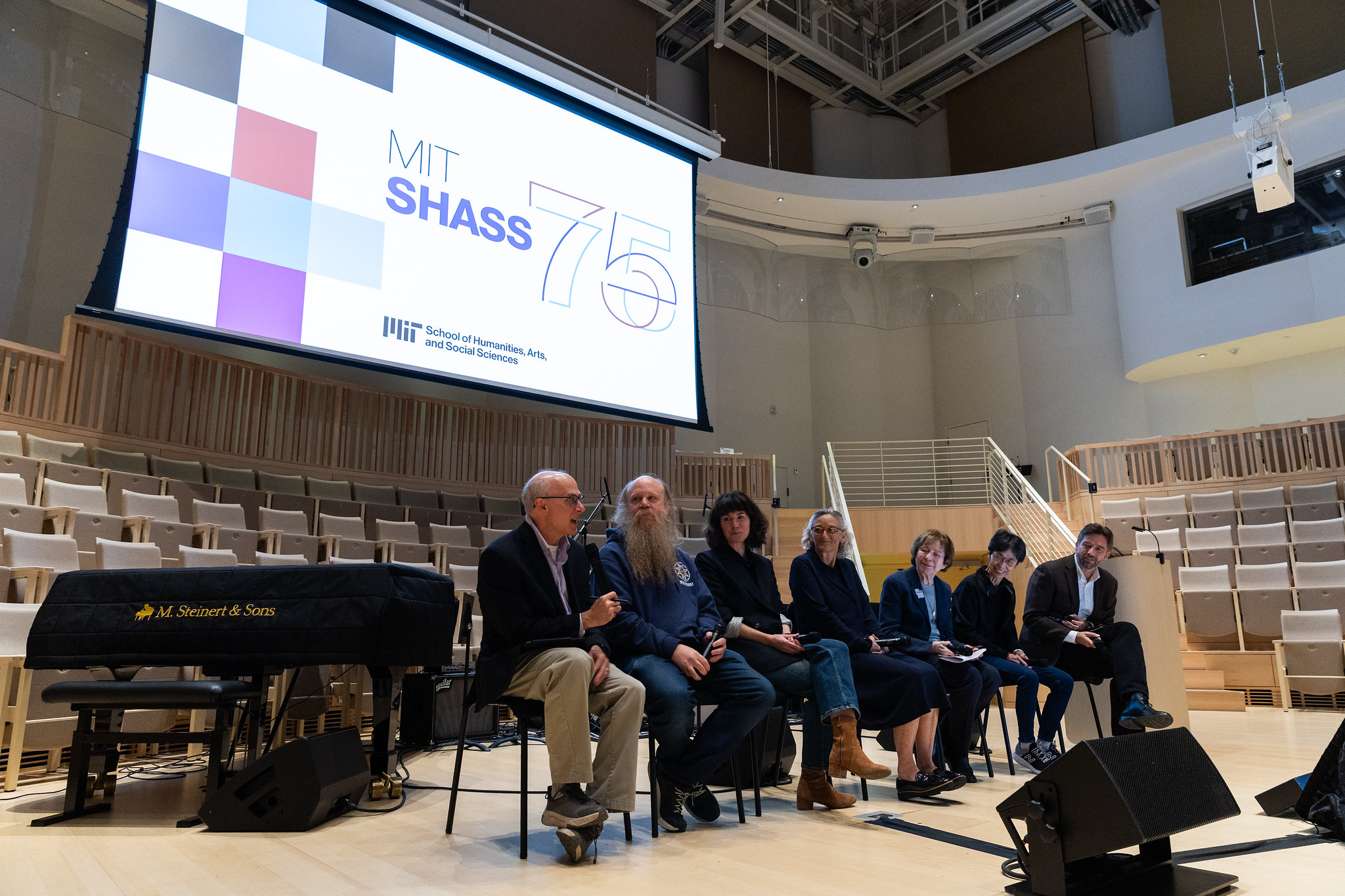
Reinforcing the value of human understanding at MIT

During the School of Humanities, Arts, and Social Sciences’ 75th Anniversary Symposium, President Sally Kornbluth said “MIT has never needed your particular insight and guidance more than we do now.”

MIT News · Artificial Intelligence Oct 23, 2026

Q&A: How AI came to model the “messy” human mind

Assistant Professor Benjamin Lindquist studies how engineers deliberately injected randomness into early AI, giving rise to deep-learning models that sometimes hallucinate.

We use cookies to run the site and, with your consent, for analytics and to show ads. See our Cookie Policy.