Sep 2026· Italian National Conference on Sensors· 0 citations· 21 references
TL;DR
This paper proposes SEELE, a Lyapunov-guided online control algorithm that represents accumulated budget pressure with two virtual queues and converts the long-term constrained problem into lightweight per-slot decisions, and provides steady-state QoE statistically comparable to a pretrained PPO policy while significantly reducing synchronization violations and improving composition stability.
Abstract
Immersive media services increasingly rely on edge-cloud rendering to deliver interactive visual content under dynamic network, computing, and mobility conditions. Rendering an entire scene as a single service couples interaction-sensitive foreground content with context-oriented background content, making it difficult to jointly control latency, quality, synchronization, and migration overhead. This paper studies sense-driven edge-cloud foreground–background split rendering for immersive media services. We formulate an online decision problem in which foreground and background rendering layers can be independently controlled under long-term system and migration cost budgets. The formulation turns structural scene separation into a coupled layer-state control problem by preserving asymmetric QoE roles and a common composition requirement. We propose SEELE, a Lyapunov-guided online control algorithm that represents accumulated budget pressure with two virtual queues and converts the long-term constrained problem into lightweight per-slot decisions. The resulting per-slot rule balances immediate QoE loss against queue-weighted system and migration costs. Under sustained resource and network stress, SEELE provides steady-state QoE statistically comparable to a pretrained PPO policy while significantly reducing synchronization violations and improving composition stability. It also improves steady-state QoE and system debt over deterministic and QoE-prioritized baselines. A prototype implementation and controlled characterization further validate split-stream deployment, runtime observability, practical control hooks, and the latency–capacity tradeoff of layered rendering.
This publication proposes a definition and a classification of agile software development approaches and analyses ten software development methods that can be characterized as being "agile" against the defined criterion.
P. Abrahamsson, O. Salo, Jussi Ronkainen et al.· arXiv.org· 727 citations· ⚡54
The study shows that agile practices improve both informal and formal communication, but indicates that, in larger development situations involving multiple external stakeholders, a mismatch of adequate communication mechanisms can sometimes even hinder the communication.
M. Pikkarainen, Jukka Haikara, O. Salo et al.· Empirical Software Engineeri...· 401 citations· ⚡48
The results indicate that software engineering work practices are chosen opportunistically, adapted and configured to provide value under the constrains imposed by the startup context.
Nicolò Paternoster, Carmine Giardino, M. Unterkalmsteiner et al.· Information and Software Tec...· 394 citations· ⚡54
The perception of the impact of agile methods is predominantly positive, and several challenge areas were discovered, but based on this study, agile methods are here to stay.
M. Laanti, O. Salo, P. Abrahamsson· Information and Software Tec...· 260 citations· ⚡20
AI is making software generation faster, but speed does not remove the need for expertise. As more work is delegated to AI, tacit knowledge may become one of the most important human advantages in software engineering. The post Beyond Prompt Engineering: The Role of Tacit Knowledge in Software Engineering appeared first on GPT-Lab.
MIT News · Artificial Intelligence· news.mit.eduSep 9, 2026
A weeklong summer workshop brought higher education faculty to campus to explore how AI and machine learning materials can be adapted for their classrooms.
MIT News · Artificial Intelligence· news.mit.eduSep 2, 2026
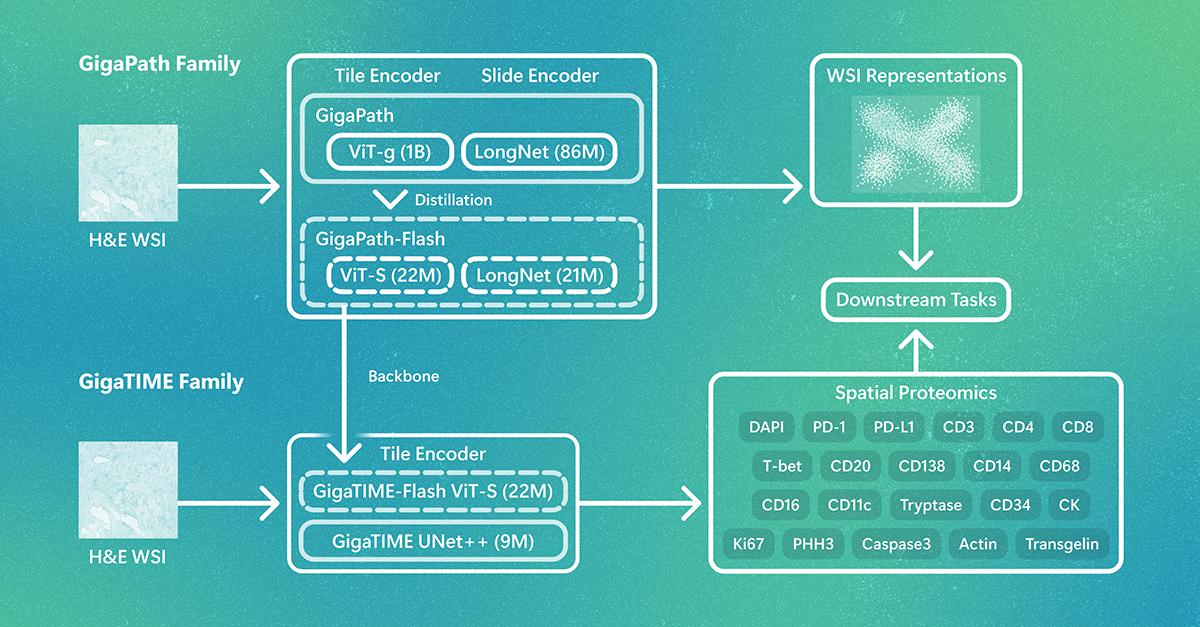
What if pathology foundation models could do more with less? GigaPath-Flash and GigaTIME-Flash cut computational demands while maintaining strong performance, opening the door to larger studies and broader exploration. The post GigaPath-Flash and GigaTIME-Flash: Toward population-scale discovery with efficient pathology foundation models appeared first on Microsoft Research.
We use cookies to run the site and, with your consent, for analytics and to show ads.
See our Cookie Policy.