Skip to content

GameWAM: A World Action Model for Video Games

Aug 2026 · 0 citations · 54 references
Computer Science

TL;DR

This work introduces GameWAM, to its knowledge the first WAM for native closed-loop gameplay and GUI control and uncovers Low-Frequency Action Source Imprinting (LASI), in which low-frequency components of the sampled action source systematically steer coarse generated camera motion under fixed conditioning, revealing a source-sensitivity failure mode in generative control.

Abstract

Modern video games combine first-person perception, rapid visual changes, persistent world state, and heterogeneous native controls. Existing game agents map visual and task context directly to actions but lack explicit world dynamics modeling, whereas interactive game world models predict visual futures from supplied actions but do not serve as task policies. World-Action Models (WAMs) unify these objectives, but remain largely unexplored under the dynamics and open-ended interaction of video games. We introduce GameWAM, to our knowledge the first WAM for native closed-loop gameplay and GUI control. GameWAM jointly generates future visual observations and executable keyboard-mouse trajectories through parallel visual and action generative processes with block-causal conditioning and flow matching. To support joint world-action learning, we construct synchronized gameplay and GUI trajectories. To handle heterogeneous native control, GameWAM predicts a gameplay/GUI mode per action step and generates actions with mode-specific prediction distributions and continuous-action normalization. For long-horizon interaction, block-cycle control coordinates prediction, execution, and temporal context: it predicts beyond the committed horizon, executes short action blocks, replans from new observations, and hierarchically structures context from fine-grained within-cycle history to persistent cross-cycle history. Experiments demonstrate competitive task success with fewer executed native actions than the compared agents. We further uncover Low-Frequency Action Source Imprinting (LASI), in which low-frequency components of the sampled action source systematically steer coarse generated camera motion under fixed conditioning, revealing a source-sensitivity failure mode in generative control. Project page is available at https://yunncheng.github.io/GameWAM/.


View source

Similar papers

Preprint Sep 2026

GameDirector: Decoupling Gameplay Logic from Rendering for Player-Configurable Game World Models

Recent game world models support realistic visual simulation and interactive gameplay based on player inputs. However, they typically learn environment dynamics from pixel-level supervision, jointly modeling perception, memory, state transitions, and rendering within a single end-to-end framework. While this design ena...

Zi-Jun Lin, Zhi-Yang Deng, Yu-Zhe Wu et al. · 1 citation
Preprint Aug 2026

WorldMind: Decoupled Game World Model for State-Aware NPC Behavior

Game world models have recently demonstrated promising capabilities in generating visually coherent and action-controllable gameplay videos. However, non-player character (NPC) behavior in existing models is either implicitly entangled with video generation or explicitly prescribed through external control signals. Con...

Zhi-Yang Deng, Bo-Ran Zhang, Dan Chen et al. · 3 citations
Preprint Aug 2026

Magpie: Real-Time World Renderer for Interactive Games

Magpie provides a system-level implementation path for applying generative models to real-time game rendering, and preserves gameplay designability and reproducibility, and reduces the dependence of early game prototypes on complete visual assets.

Xiao-Yu Zhan, Xin-Yu Wang, Xiao-Hong Zhang et al. · 2 citations
#artificial intelligence Preprint Sep 2026

Valerant: An Automatic Navigable Game Map Generator via Action-Conditioned World Model Exploration

World Action Models (WAMs) couple predictive world modeling with action generation, allowing anticipated future states to guide agent behavior. Although WAMs are rapidly advancing embodied AI, general-purpose counterparts remain largely unexplored in games. Existing game-oriented approaches often combine action-conditi...

Yi-Ran Qiao, Feng Wang, Jing Ma · 0 citations
#artificial intelligence Preprint Sep 2026

GameHorizon Suite: Multi-Horizon Data and Evaluation in Gameplay

The GameHorizon Suite, a unified data and evaluation suite that measures gameplay capabilities at different horizons for diverse model families, can provide a standardized yardstick for evaluating gameplay capabilities across horizons and model families.

Yi-Ran Wang, Xingyilang Yin, Junfu Pu et al. · 0 citations
Preprint Aug 2026

Game2World Engine: Unlocking In-the-Wild Gameplay Videos for World Model Training

Video games provide a scalable source of training data for video world models, offering diverse environments, complex interactions, and abundant in-the-wild gameplay videos. However, raw gameplay footage entangles the game world with screen-space interfaces, introducing game-specific biases and irrelevant dynamics that...

Wenxuan Shen, Dongna Jin, Dongping Chen · 0 citations

Related blog posts

MIT News · Artificial Intelligence Oct 28, 2026

Making machines that can listen

Professor Paris Smaragdis develops computers with superhuman hearing for applications like speech recognition, music understanding, and environmental monitoring.

Microsoft Research Blog Aug 11, 2026

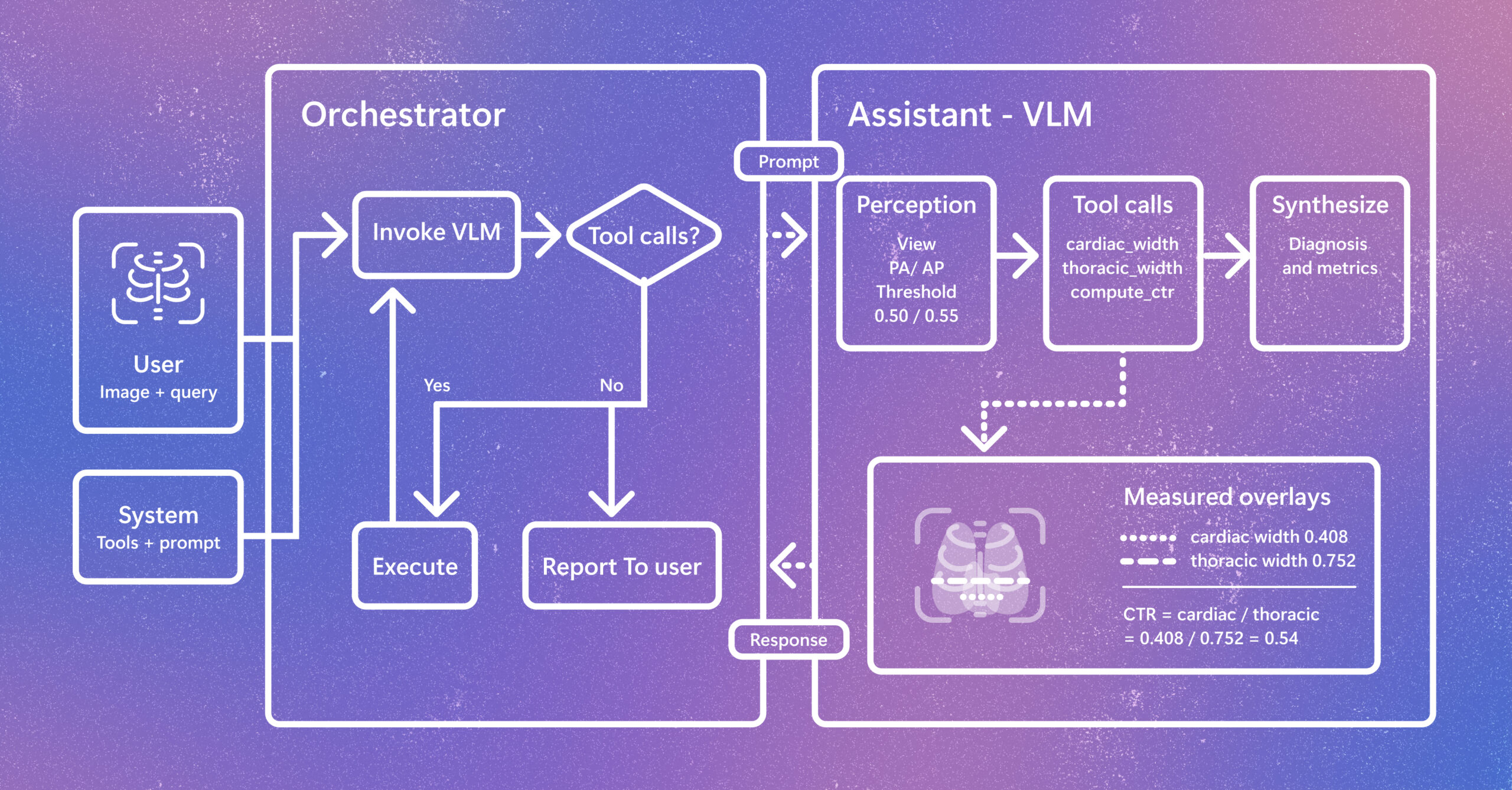
Introducing CARE-X: Towards Clinically Useful Radiology VLMs with Auxiliary Supervision, Reward-Aligned Learning, and Tool-Augmented Measurement

Radiology AI is evolving beyond report generation. CARE-X explores a unified approach that combines flexible reasoning, calibrated predictions, and measurement-based tools for chest X-ray interpretation. The post Introducing CARE-X: Towards Clinically Useful Radiology VLMs with Auxiliary Supervision, Reward-Aligned Learning, and Tool-Augmented Measurement appeared first on Microsoft Research.

We use cookies to run the site and, with your consent, for analytics and to show ads. See our Cookie Policy.