An Edge-Computing UAV Architecture for GPS-Denied Structural Inspection in Reinforced-Concrete Environments: A Prototype-Based Proof-of-Concept Evaluation
While there are evident advantages to deploying UAVs for structural inspection applications within reinforced-concrete structures where human access may be hazardous or restricted, UAV deployment is still inhibited within structures due to a lack of GPS, payload and power limitations, signal attenuation, limited transmission opportunities, and low bandwidth for communication. Within the confines of the present project, a low-cost two-layer six-rotor architecture was developed; a single Pixhawk PX4 manages stabilized flight, while a Raspberry Pi 4 manages mission-level operations. The complete prototype integrated a relative-pose/nearby-object estimator, hybrid 433 MHz and Wi-Fi/MQTT communications, avionics-side energy management, mission continuity via SQLite, and human-in-the-loop fail-safe support. Prototype experiments revealed reduced horizontal drift compared to both tested comparison configurations, continued operation under constrained communication conditions, and a 62.0% reduction in avionics-side power consumption, excluding propulsion. This was followed by a complementary PX4–Gazebo evaluation probing horizontal and vertical proximity responses, six-sector LiDAR processing, and stale-data watchdog functionality. Across 45 repeated simulation runs and 3000 retained sector-level observations, no simulated collisions occurred during the horizontal-approach, vertical-proximity, or watchdog tests. No false sector assignments were observed, and the overall mean absolute error was 0.0285 m. From this limited demonstration, the architecture appears satisfactory at the prototype and simulated-subsystem levels. Further physical testing will be needed prior to operational deployment.
This publication proposes a definition and a classification of agile software development approaches and analyses ten software development methods that can be characterized as being "agile" against the defined criterion.
P. Abrahamsson, O. Salo, Jussi Ronkainen et al.· arXiv.org· 727 citations· ⚡54
The study shows that agile practices improve both informal and formal communication, but indicates that, in larger development situations involving multiple external stakeholders, a mismatch of adequate communication mechanisms can sometimes even hinder the communication.
M. Pikkarainen, Jukka Haikara, O. Salo et al.· Empirical Software Engineeri...· 401 citations· ⚡48
The results indicate that software engineering work practices are chosen opportunistically, adapted and configured to provide value under the constrains imposed by the startup context.
Nicolò Paternoster, Carmine Giardino, M. Unterkalmsteiner et al.· Information and Software Tec...· 394 citations· ⚡54
The perception of the impact of agile methods is predominantly positive, and several challenge areas were discovered, but based on this study, agile methods are here to stay.
M. Laanti, O. Salo, P. Abrahamsson· Information and Software Tec...· 260 citations· ⚡20
AI is making software generation faster, but speed does not remove the need for expertise. As more work is delegated to AI, tacit knowledge may become one of the most important human advantages in software engineering. The post Beyond Prompt Engineering: The Role of Tacit Knowledge in Software Engineering appeared first on GPT-Lab.
MIT News · Artificial Intelligence· news.mit.eduSep 9, 2026
A weeklong summer workshop brought higher education faculty to campus to explore how AI and machine learning materials can be adapted for their classrooms.
MIT News · Artificial Intelligence· news.mit.eduSep 2, 2026
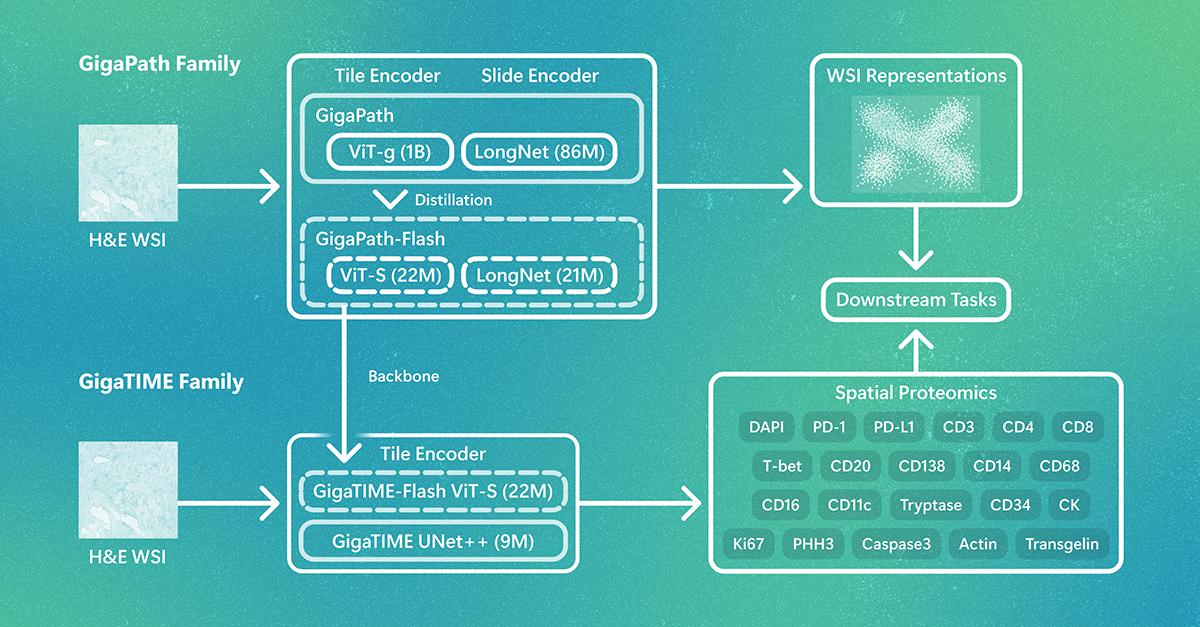
What if pathology foundation models could do more with less? GigaPath-Flash and GigaTIME-Flash cut computational demands while maintaining strong performance, opening the door to larger studies and broader exploration. The post GigaPath-Flash and GigaTIME-Flash: Toward population-scale discovery with efficient pathology foundation models appeared first on Microsoft Research.
We use cookies to run the site and, with your consent, for analytics and to show ads.
See our Cookie Policy.