Skip to content
#edge computing Open access

Picking Point Localization and Path Planning for Hotan Rose Based on a Lightweight Segmentation Model

Sep 2026 · Agronomy · 0 citations · 20 references
Smart Agriculture and AI

Abstract

The Hotan rose, a high-value specialty crop cultivated in Xinjiang, exhibits pronouncedly non-uniform flowering phenology, which has historically necessitated labor-intensive manual harvesting. To date, however, no integrated framework has been reported that concurrently addresses lightweight visual perception, precise picking-point localization, and three-dimensional path planning for this specific crop. In this study, we develop L-SOP, an end-to-end continuous picking methodology tailored to the unique requirements of Hotan rose harvesting. At the perception stage, we introduce YOLOv11n-LPD-Seg, a lightweight segmentation model that incorporates a joint compression strategy combining global pruning with channel-wise distillation (CWD). This design improves the mAP@0.5 values for flowers and buds by 0.1 and 0.7 percentage points, respectively. It also reduces the model size from 6.1 MB to 2.4 MB, representing a 60.7% reduction, and decreases the computational cost from 10.2 GFLOPs to 6.8 GFLOPs, representing a 33.3% reduction. For picking point localization, we develop the MGRO-Loc algorithm, which integrates multiple geometric constraints to achieve accurate spatial positioning. The algorithm achieves mean absolute errors of 2.33 mm under indoor conditions and 2.84 mm under outdoor conditions. For path planning, we propose the OG-LKH algorithm, which replaces the conventional orthogonal polyline distance metric with an oblique gate-shaped distance measure and incorporates a multi-start strategy and a gate-aware heuristic search. Compared with the standard LKH algorithm, OG-LKH reduces the average path length by 23.5% while maintaining a computation time of 0.0117 s. Even in high-density scenarios involving 36 waypoints, its computation time is only 0.0387 s on edge-computing devices. These three modules work synergistically to form a complete solution for selective continuous rose picking. The proposed framework can be deployed on edge devices, providing a viable technological pathway toward efficient autonomous harvesting of Hotan rose flower and bud.

Read PDF

Similar papers

#computer vision Review Sep 2017

Agile Software Development Methods: Review and Analysis

This publication proposes a definition and a classification of agile software development approaches and analyses ten software development methods that can be characterized as being "agile" against the defined criterion.

P. Abrahamsson, O. Salo, Jussi Ronkainen et al. · 727 citations · ⚡54
#computer vision Jun 2008

The impact of agile practices on communication in software development

The study shows that agile practices improve both informal and formal communication, but indicates that, in larger development situations involving multiple external stakeholders, a mismatch of adequate communication mechanisms can sometimes even hinder the communication.

M. Pikkarainen, Jukka Haikara, O. Salo et al. · 401 citations · ⚡48
#machine learning Review Open access Oct 2014

Software development in startup companies: A systematic mapping study

The results indicate that software engineering work practices are chosen opportunistically, adapted and configured to provide value under the constrains imposed by the startup context.

Nicolò Paternoster, Carmine Giardino, M. Unterkalmsteiner et al. · 394 citations · ⚡54

Related blog posts

GPT-Lab Sep 17, 2026

Beyond Prompt Engineering: The Role of Tacit Knowledge in Software Engineering

AI is making software generation faster, but speed does not remove the need for expertise. As more work is delegated to AI, tacit knowledge may become one of the most important human advantages in software engineering. The post Beyond Prompt Engineering: The Role of Tacit Knowledge in Software Engineering appeared first on GPT-Lab.

Microsoft Research Blog Aug 31, 2026

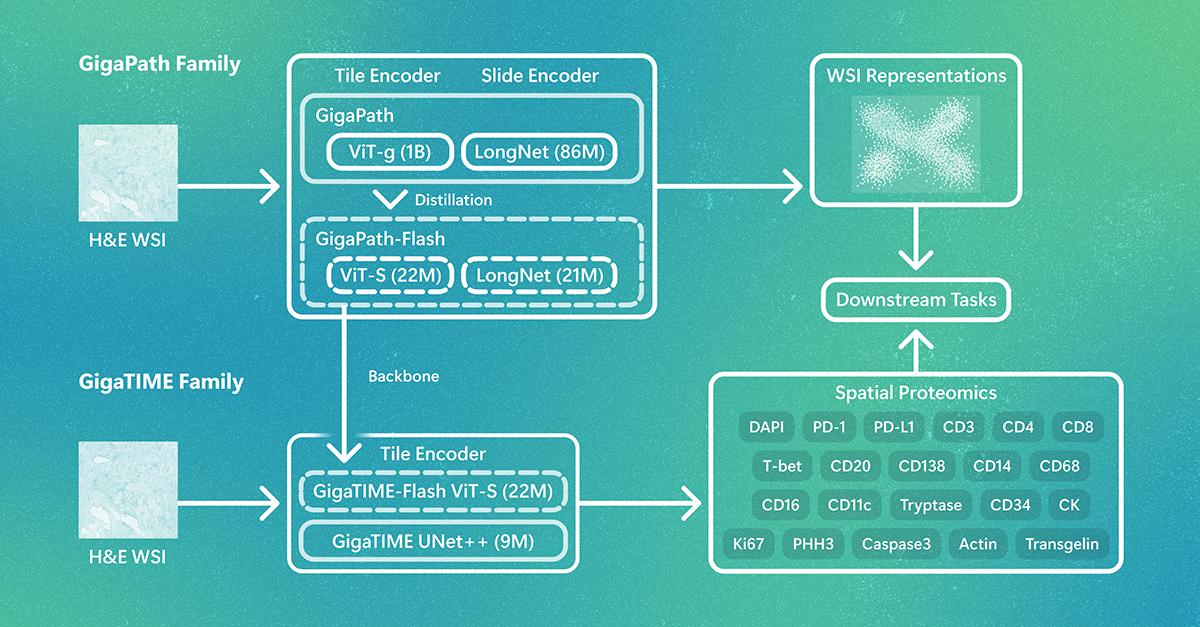
GigaPath-Flash and GigaTIME-Flash: Toward population-scale discovery with efficient pathology foundation models

What if pathology foundation models could do more with less? GigaPath-Flash and GigaTIME-Flash cut computational demands while maintaining strong performance, opening the door to larger studies and broader exploration. The post GigaPath-Flash and GigaTIME-Flash: Toward population-scale discovery with efficient pathology foundation models appeared first on Microsoft Research.

We use cookies to run the site and, with your consent, for analytics and to show ads. See our Cookie Policy.