Skip to content
#edge computing Review Open access

AI-Powered Computer Vision Industrial Quality Inspection Systems: A Practice Review

Sep 2026 · Encyclopedia · 0 citations · 25 references

Abstract

Computer vision (CV) systems driven by artificial intelligence (AI) are increasingly replacing manual and conventional rule-based inspection procedures in industrial quality inspection, enabling automated, real-time, and data-driven decision-making based on visual data. Conventional inspection procedures are usually limited in terms of scalability, human-related errors, and high operational costs, which drives the increasing reliance on smart vision-based technologies. A practical, practice-oriented review of AI-based computer vision systems for industrial quality control is provided in this paper, with emphasis on real-world deployment issues and performance aspects. Two representative industrial case studies are examined. The first investigates real-time extrusion monitoring in robotic building construction, where geometric deviations, bead-width variation, surface irregularities, and process inconsistencies are detected during material deposition using vision-based monitoring and image-processing pipelines. The second case study focuses on automated inspection of bolts and screws in manufacturing lines, addressing presence detection, orientation recognition, and defect classification under high-speed production conditions. In both cases, widely adopted vision and AI techniques, including image-processing pipelines, convolutional neural networks, and edge-computing hardware, are discussed and compared. The analysis shows that AI-enabled computer vision systems can outperform traditional rule-based or manual solutions in terms of inspection accuracy, consistency, and throughput when they are supported by reliable acquisition, representative data, and robust industrial integration. Nevertheless, challenges related to dataset quality, model generalization, lighting variability, and real-time computational constraints remain critical in industrial environments. In conclusion, AI-based computer vision plays a central enabling role in intelligent quality inspection within the context of Industry 5.0. Future research should focus on adaptive model capabilities, tighter integration with cyber-physical systems, and scalable deployment strategies to achieve reliable and autonomous inspection across diverse industrial sectors.

Read PDF

Similar papers

#computer vision Review Sep 2017

Agile Software Development Methods: Review and Analysis

This publication proposes a definition and a classification of agile software development approaches and analyses ten software development methods that can be characterized as being "agile" against the defined criterion.

P. Abrahamsson, O. Salo, Jussi Ronkainen et al. · 727 citations · ⚡54
#computer vision Jun 2008

The impact of agile practices on communication in software development

The study shows that agile practices improve both informal and formal communication, but indicates that, in larger development situations involving multiple external stakeholders, a mismatch of adequate communication mechanisms can sometimes even hinder the communication.

M. Pikkarainen, Jukka Haikara, O. Salo et al. · 401 citations · ⚡48
#machine learning Review Open access Oct 2014

Software development in startup companies: A systematic mapping study

The results indicate that software engineering work practices are chosen opportunistically, adapted and configured to provide value under the constrains imposed by the startup context.

Nicolò Paternoster, Carmine Giardino, M. Unterkalmsteiner et al. · 394 citations · ⚡54

Related blog posts

GPT-Lab Sep 17, 2026

Beyond Prompt Engineering: The Role of Tacit Knowledge in Software Engineering

AI is making software generation faster, but speed does not remove the need for expertise. As more work is delegated to AI, tacit knowledge may become one of the most important human advantages in software engineering. The post Beyond Prompt Engineering: The Role of Tacit Knowledge in Software Engineering appeared first on GPT-Lab.

Microsoft Research Blog Aug 31, 2026

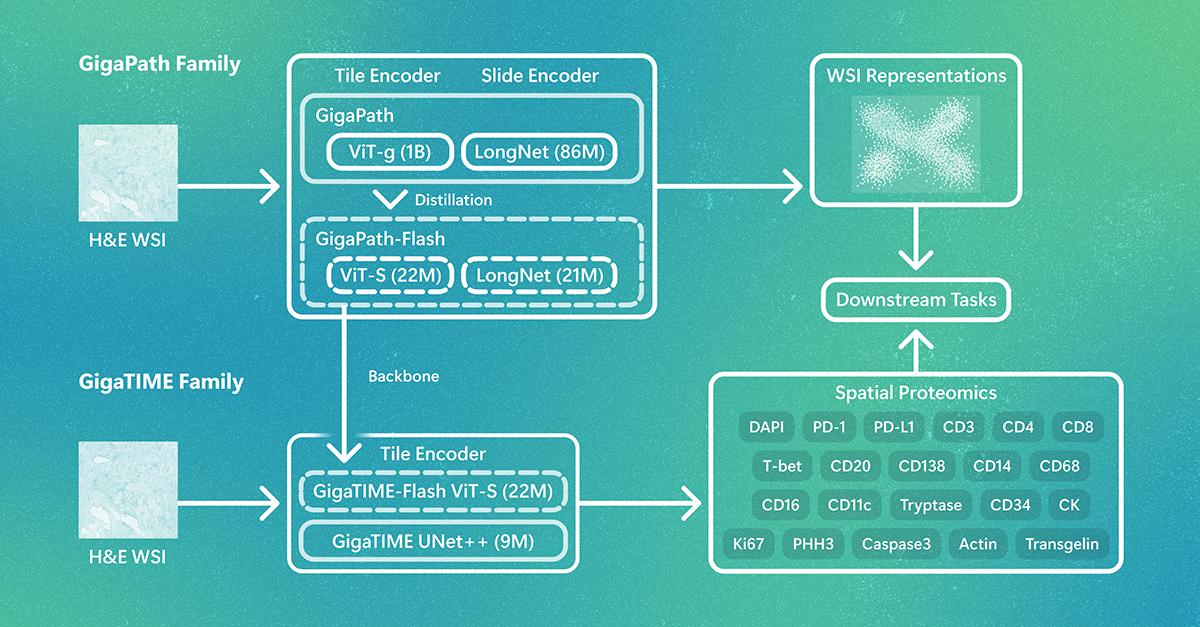
GigaPath-Flash and GigaTIME-Flash: Toward population-scale discovery with efficient pathology foundation models

What if pathology foundation models could do more with less? GigaPath-Flash and GigaTIME-Flash cut computational demands while maintaining strong performance, opening the door to larger studies and broader exploration. The post GigaPath-Flash and GigaTIME-Flash: Toward population-scale discovery with efficient pathology foundation models appeared first on Microsoft Research.

We use cookies to run the site and, with your consent, for analytics and to show ads. See our Cookie Policy.