Increasingly large deep neural networks (DNNs) pose a significant challenge regarding required compute capabilities and energy consumption, especially at the edge. This challenge generally necessitates dedicated inference hardware accelerators. Hardware/software co-design can improve overall system performance by jointly optimizing the hardware micro-architecture and DNN workload mapping. It is however not easy to quantify how well such an accelerator generalizes to workloads not considered during hardware/software co-design. In response to this, we introduce the Compatibility Ratio (CR) as a simple guideline for evaluating performance trade-offs between optimal hardware micro-architecture configurations across different workloads. CR allows us to quantify the performance trade-offs of deploying a workload on an accelerator optimized for a different workload. We demonstrate CR through two case studies on a systolic array-based accelerator. First, we apply CR to explore the design space of the accelerator across 13 DNN workloads. In this case study, CR analysis showed that the choice of representative workload during co-design can implicitly increase the normalized area-latency cost of unconsidered workloads by more than 30% in the evaluated design space. Furthermore, we use CR to analyze how well our systolic array-based accelerator template can generalize beyond a single DNN workload to cover a family of DNN workloads. Our findings show that, for the considered accelerator, a DNN model-family optimized configuration might occupy an effective middle ground between highly targeted single- and general-purpose configurations. Second, we use CR as a guideline for a practical memory-retargeting decision in a specialized variant of our accelerator template. In this case study, CR quantifies whether a memory-retargeted accelerator derivative is justified under the selected memory-area and latency objective. For this two-configuration memory-retargeting case, analytical CR differs from implementation-level CR by 0.01, corresponding to one percentage point on the normalized CR scale.
This publication proposes a definition and a classification of agile software development approaches and analyses ten software development methods that can be characterized as being "agile" against the defined criterion.
P. Abrahamsson, O. Salo, Jussi Ronkainen et al.· arXiv.org· 727 citations· ⚡54
The study shows that agile practices improve both informal and formal communication, but indicates that, in larger development situations involving multiple external stakeholders, a mismatch of adequate communication mechanisms can sometimes even hinder the communication.
M. Pikkarainen, Jukka Haikara, O. Salo et al.· Empirical Software Engineeri...· 401 citations· ⚡48
The results indicate that software engineering work practices are chosen opportunistically, adapted and configured to provide value under the constrains imposed by the startup context.
Nicolò Paternoster, Carmine Giardino, M. Unterkalmsteiner et al.· Information and Software Tec...· 394 citations· ⚡54
The perception of the impact of agile methods is predominantly positive, and several challenge areas were discovered, but based on this study, agile methods are here to stay.
M. Laanti, O. Salo, P. Abrahamsson· Information and Software Tec...· 260 citations· ⚡20
AI is making software generation faster, but speed does not remove the need for expertise. As more work is delegated to AI, tacit knowledge may become one of the most important human advantages in software engineering. The post Beyond Prompt Engineering: The Role of Tacit Knowledge in Software Engineering appeared first on GPT-Lab.
MIT News · Artificial Intelligence· news.mit.eduSep 9, 2026
A weeklong summer workshop brought higher education faculty to campus to explore how AI and machine learning materials can be adapted for their classrooms.
MIT News · Artificial Intelligence· news.mit.eduSep 2, 2026
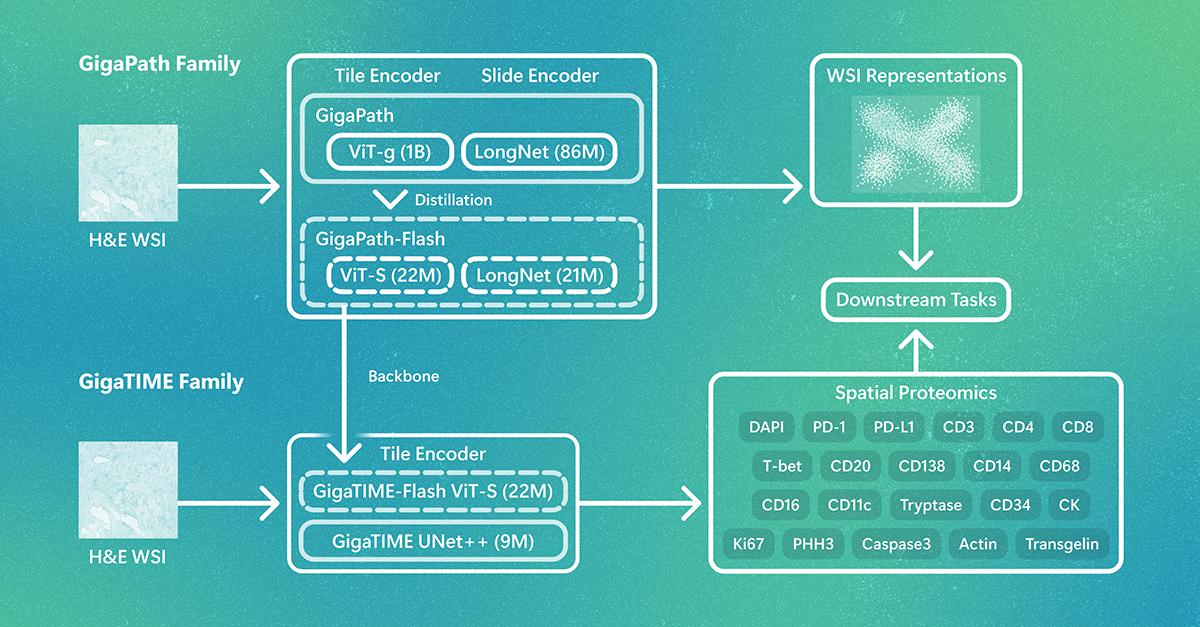
What if pathology foundation models could do more with less? GigaPath-Flash and GigaTIME-Flash cut computational demands while maintaining strong performance, opening the door to larger studies and broader exploration. The post GigaPath-Flash and GigaTIME-Flash: Toward population-scale discovery with efficient pathology foundation models appeared first on Microsoft Research.
We use cookies to run the site and, with your consent, for analytics and to show ads.
See our Cookie Policy.