Skip to content
#edge computing Open access

DS-RangeNet: Lightweight Dual-Stream LiDAR Semantic Segmentation for Industrial Indoor Environments

Sep 2026 · Electronics · 0 citations · 22 references
Advanced Neural Network Applications

Abstract

Real-time LiDAR semantic segmentation for industrial AGVs must distinguish repeated structures and weak glass returns while remaining robust to sensor-dependent intensity and tight edge computing budgets. We introduce DS-RangeNet, a lightweight range image network that processes geometry and material-sensitive intensity in separate streams. The geometry stream uses voxel-PCA descriptors, while the intensity stream uses normalized range, local intensity statistics, boundary strength, and intensity curvature. A lightweight convolutional attention block handles shallow fusion, whereas intensity–geometry cross-attention (IGCA) links deep features by estimating affinity within the guiding stream and routing values from the other stream. Centered kernel alignment (CKA) and normalized cross-covariance reveal weak similarity after separate encoding and progressively stronger alignment during fusion. On the site disjoint UBPC-9 test split, DS-RangeNet reaches 73.2% mIoU with 5.69 M parameters and 37 ms end-to-end latency on Jetson AGX Orin. A nine-fold leave-one-environment-out evaluation obtains 71.0% mIoU. The evaluation further spans SemanticPOSS and SemanticKITTI, five random seeds, 21 corruption conditions across seven families, standard cross-attention and convolution controls, a 60 min Jetson run, and cross-sensor transfer.

Read PDF

Similar papers

#computer vision Review Sep 2017

Agile Software Development Methods: Review and Analysis

This publication proposes a definition and a classification of agile software development approaches and analyses ten software development methods that can be characterized as being "agile" against the defined criterion.

P. Abrahamsson, O. Salo, Jussi Ronkainen et al. · 727 citations · ⚡54
#computer vision Jun 2008

The impact of agile practices on communication in software development

The study shows that agile practices improve both informal and formal communication, but indicates that, in larger development situations involving multiple external stakeholders, a mismatch of adequate communication mechanisms can sometimes even hinder the communication.

M. Pikkarainen, Jukka Haikara, O. Salo et al. · 401 citations · ⚡48
#machine learning Review Open access Oct 2014

Software development in startup companies: A systematic mapping study

The results indicate that software engineering work practices are chosen opportunistically, adapted and configured to provide value under the constrains imposed by the startup context.

Nicolò Paternoster, Carmine Giardino, M. Unterkalmsteiner et al. · 394 citations · ⚡54

Related blog posts

GPT-Lab Sep 17, 2026

Beyond Prompt Engineering: The Role of Tacit Knowledge in Software Engineering

AI is making software generation faster, but speed does not remove the need for expertise. As more work is delegated to AI, tacit knowledge may become one of the most important human advantages in software engineering. The post Beyond Prompt Engineering: The Role of Tacit Knowledge in Software Engineering appeared first on GPT-Lab.

Microsoft Research Blog Aug 31, 2026

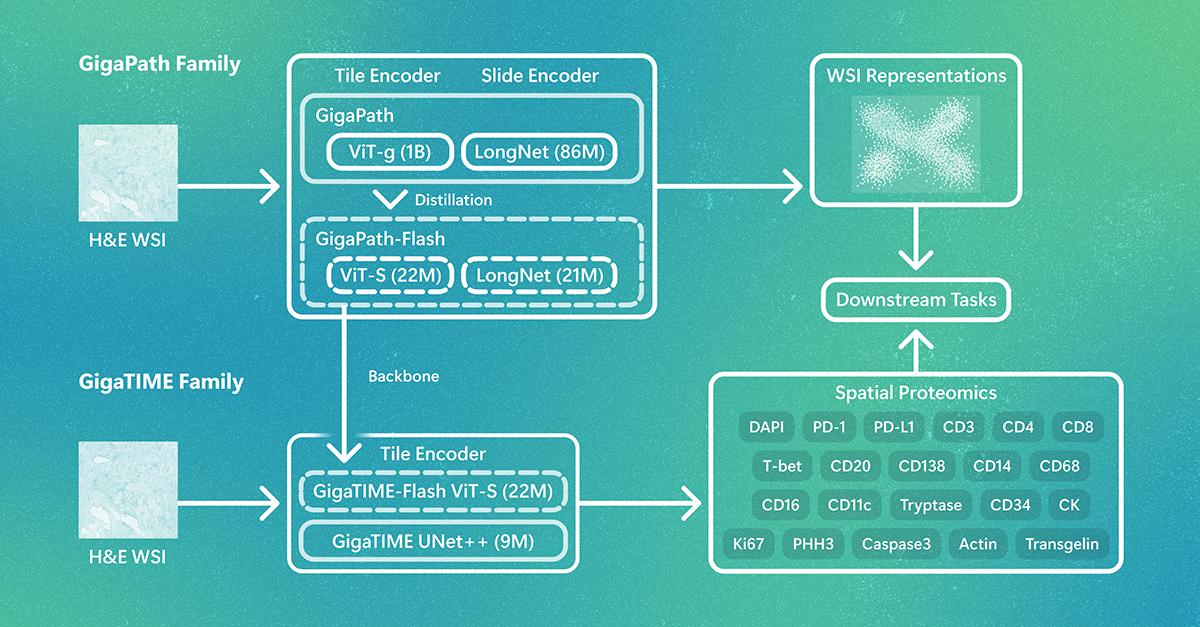
GigaPath-Flash and GigaTIME-Flash: Toward population-scale discovery with efficient pathology foundation models

What if pathology foundation models could do more with less? GigaPath-Flash and GigaTIME-Flash cut computational demands while maintaining strong performance, opening the door to larger studies and broader exploration. The post GigaPath-Flash and GigaTIME-Flash: Toward population-scale discovery with efficient pathology foundation models appeared first on Microsoft Research.

We use cookies to run the site and, with your consent, for analytics and to show ads. See our Cookie Policy.