L-shaped SFT is presented, a split fine-tuning framework that removes the need for continuous client participation and introduces one-shot SFT, in which clients upload activations once and then go offline while the server continues optimization over cached representations.
Abstract
Large language model (LLM) fine-tuning is increasingly shifting toward data generated on edge devices, where memory, computation, bandwidth, and connectivity constraints make conventional federated learning difficult to sustain. Split federated fine-tuning (SFT) improves client-side efficiency by offloading most model parameters and computation to the server but requires step-by-step bidirectional communication loop across the split interface and forces continuous client involvement throughout training. In this paper, we present L-shaped SFT, a split fine-tuning framework that removes this bidirectional bottleneck. Our key insight is that weight tying in modern LLMs enables server-side hidden activations to be directly supervised using target embeddings, allowing the training loss to be computed on the server without returning server outputs to the client. To further eliminate the need for continuous client participation, based on L-shaped SFT, we introduce one-shot SFT, in which clients upload activations once and then go offline while the server continues optimization over cached representations. We implement our design in a real system testbed with heterogeneous edge clients, including commercial smartphones and NVIDIA developer boards. Experiments demonstrate that our schemes significantly reduce communication costs and client online time compared with existing SFT baselines.
This publication proposes a definition and a classification of agile software development approaches and analyses ten software development methods that can be characterized as being "agile" against the defined criterion.
P. Abrahamsson, O. Salo, Jussi Ronkainen et al.· arXiv.org· 727 citations· ⚡54
The study shows that agile practices improve both informal and formal communication, but indicates that, in larger development situations involving multiple external stakeholders, a mismatch of adequate communication mechanisms can sometimes even hinder the communication.
M. Pikkarainen, Jukka Haikara, O. Salo et al.· Empirical Software Engineeri...· 401 citations· ⚡48
The results indicate that software engineering work practices are chosen opportunistically, adapted and configured to provide value under the constrains imposed by the startup context.
Nicolò Paternoster, Carmine Giardino, M. Unterkalmsteiner et al.· Information and Software Tec...· 394 citations· ⚡54
The perception of the impact of agile methods is predominantly positive, and several challenge areas were discovered, but based on this study, agile methods are here to stay.
M. Laanti, O. Salo, P. Abrahamsson· Information and Software Tec...· 260 citations· ⚡20
Related blog posts
Microsoft Research Blog· microsoft.comAug 31, 2026
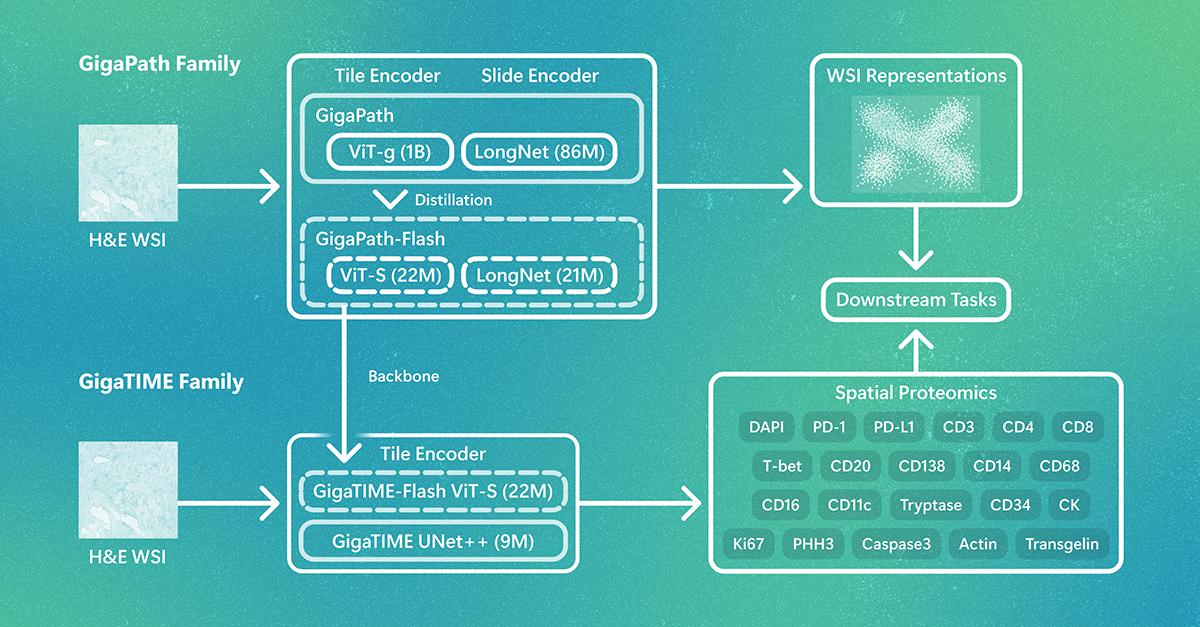
What if pathology foundation models could do more with less? GigaPath-Flash and GigaTIME-Flash cut computational demands while maintaining strong performance, opening the door to larger studies and broader exploration. The post GigaPath-Flash and GigaTIME-Flash: Toward population-scale discovery with efficient pathology foundation models appeared first on Microsoft Research.
MIT News · Artificial Intelligence· news.mit.eduAug 31, 2026
With millions of users across the world, Julia has been used to conduct cutting-edge research and to design new drugs, jet engines, heat pumps, and more.
LLMs do not get smarter just by remembering more. EvoLib turns experience into evolving knowledge, taking reusable skills and insights that help models learn and adapt across tasks long after deployment. The post EvoLib: Turning experience into evolving knowledge appeared first on Microsoft Research.
We use cookies to run the site and, with your consent, for analytics and to show ads.
See our Cookie Policy.