Sep 2026· IEEE Electron Device Letters· Vol 47, pp. 1942-1945· 0 citations· 23 references
Abstract
Wearable edge computing devices require novel hardware for high-efficiency data processing. In this work, we proposed novel textile in-memory computing memristor, exhibiting great potential in image compression applications for the first time. The device shows low operation voltage and reliable switching characteristics, paving the way for continuous analog modulation of input signals. Based on the experimental I-V curve model, 16-cell memristor array was constructed to validate analog multiplication and integration functions of memristor circuits. The measured current and voltage responses were further obtained from the practical circuit and showed good agreement with the theoretical results. To further evaluate the feasibility of realizing compressed sensing tasks, block-wise compressed sensing reconstruction based on memristor arrays was carried out in practical circuits. These results demonstrate the great potential of textile memristors in constructing next-generation wearable in-memory compressed sensing system.
The exciting potential of memristor-based components of neuroelectronics as the building blocks for a new era of artificial intelligence hardware, capable of surpassing current computational limitations, as well as their role in the ongoing transition to hybrid intelligence based on the symbiosis of electronic and biol...
A. Mikhaylov, S. Shchanikov, M. Koryazhkina et al.· Electronics· 0 citations
The physical mechanisms of mainstream memristors are discussed, recent progress in memristor-based neuromorphic computing for tactile sensing is highlighted, and key challenges and future directions for neuromorphic tactile perception systems are outlined.
A homogeneous silicon-based reservoir computing (Si-RC) system, which is composed of SiNx optoelectronic synapses and memristors for the real-time recognition of dynamic images, demonstrating a 1.9-fold improvement in training speed.
Shao-Peng Feng, Kai Li, Sen-Hao Yan et al.· Science and Technology of Ad...· 0 citations
As multiterminal electronic devices integrating the functionalities of MOSFETs and memristors, memtransistors are core hardware for constructing complex neuromorphic computing circuits in the post-Moore era. However, random and uncontrollable defects in 2D materials limit existing devices in terms of volatile memory ch...
Wen Deng, Xin Yan, Di Tang et al.· Nano letters (Print)· 0 citations
A comprehensive hardware-aware design framework for systematically mapping algorithmic workloads onto IMC architectures, using the discrete Fourier transform (DFT) as a case study and a novel mapping scheme that reduces energy consumption per computation by 53% compared with conventional mapping techniques is introduce...
Sofia Tatidis, P. Nielsen, Liang Liu et al.· 0 citations
Related blog posts
Microsoft Research Blog· microsoft.comOct 29, 2026
Host Sowbhagya Suresh shares some of the latest news and cutting-edge research from across Microsoft—from understanding the challenges facing coding agents to uncovering how people use AI at work and improving extended-range weather forecasting. The post Microsoft Research Focus – Edition #97 appeared first on Microsoft Research.
MIT News · Artificial Intelligence· news.mit.eduOct 28, 2026
Professor Paris Smaragdis develops computers with superhuman hearing for applications like speech recognition, music understanding, and environmental monitoring.
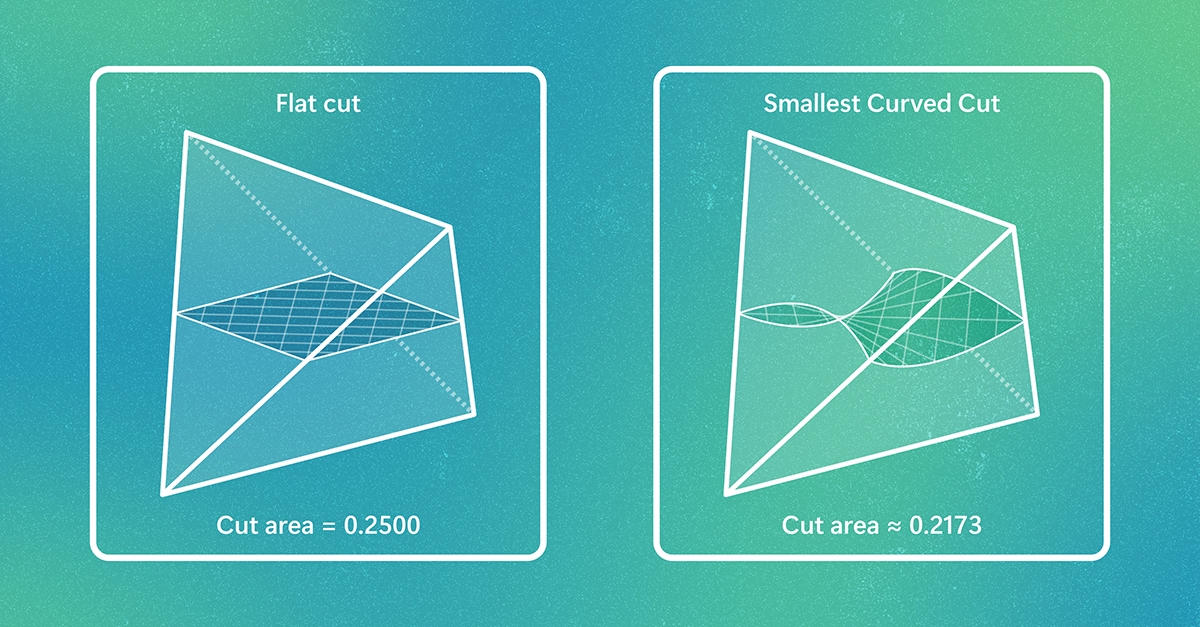
For decades, a fundamental question about the difficulty of computing in high-dimensional spaces has resisted proof. New research resolves this question, removing a major theoretical obstacle to understanding the efficiency of randomized algorithms used across science and computing. The Kannan–Lovász–Simonovits (KLS) conjecture was proposed in 1995. It asks whether, for a broad class of high-dimensional […] The post Solving a 31-year-old grand challenge in mathematics – the KLS conjecture appear…
We use cookies to run the site and, with your consent, for analytics and to show ads.
See our Cookie Policy.