Jun 2026· arXiv.org· Vol abs/2606.03780· 0 citations· 24 references
Computer Science
TL;DR
Findings show that successful MoE-block restoration does not necessarily imply localization to a single expert, as it is shown that successful MoE-block restoration does not necessarily imply localization to a single expert.
Abstract
Activation patching can identify a mixture-of-experts (MoE) block whose clean output restores a corrupted factual prediction. However, because the block output combines contributions from multiple routed experts, block-level rescue does not establish whether the recovery localizes to an individual expert or depends on the routed expert set. We study this question on single-token COUNTERFACT contrasts by corrupting subject-token embeddings, restoring clean block outputs, and then restoring clean-minus-noised expert updates under fixed routing. In Qwen3-30B-A3B-Base, a discovery sweep selects layer 44, and held-out analysis identifies L44E069 as a recurrent routed contributor with positive specificity over same-layer active experts. Its effect is fact-matched and improves true-token probability and rank, which explains part of the layer rescue. In Mixtral-8x7B-v0.1, the selected recurrent singleton is not specific; matched-size controls instead show specificity of the clean-routed top-2 set. These findings show that successful MoE-block restoration does not necessarily imply localization to a single expert.
Diffusion language models (DLMs) enable flexible parallel generation by resolving tokens according to the model's evolving predictability rather than a fixed left-to-right order. This flexibility, however, introduces training choices absent from standard autoregressive teacher forcing: which reference tokens are visibl...
Miao Li, Han-Yang Jiang, Heng-Yu Fu et al.· 0 citations
A three-stage symbolic reasoning circuit (abstraction, induction, retrieval) is traced across shot counts in three model families and finds it is detectable and functional well before the model achieves high accuracy.
Tabular foundation models (TFMs) achieve strong predictive performance by conditioning on labeled demonstrations provided in context, without any parameter update. Yet how individual demonstrations shape a given prediction remains poorly understood. This gap matters in practice: the context is often assembled from what...
Yacine Benihaddadene, Milan Bhan, Eliot Dugelay et al.· 0 citations
A systematic evaluation of ICL failure modes is presented, complementing contemporaneous studies of dLLM context comprehension and demonstration-order sensitivity, and open questions about how iterative denoising interacts with label biases are identified.
The results show that fact transfer is very limited: under the strictest removal condition, a large majority of English-acquired facts fail to transfer into Persian, and it is shown that sentence-level co-occurrence removal is insufficient to eliminate fact signal.
Romina Oji, Marc Braun, Marcel Bollmann et al.· 0 citations
Machine unlearning for large language models seeks to remove specified knowledge while preserving general capability, yet current methods often treat an entire response as the unit of forgetting. This coarse granularity causes unnecessary utility loss when the forget target is only a small set of sensitive facts embedd...
Jing-Yue Cong, Andy Song, Yang Yu et al.· 0 citations
Related blog posts
MIT News · Artificial Intelligence· news.mit.eduAug 27, 2026
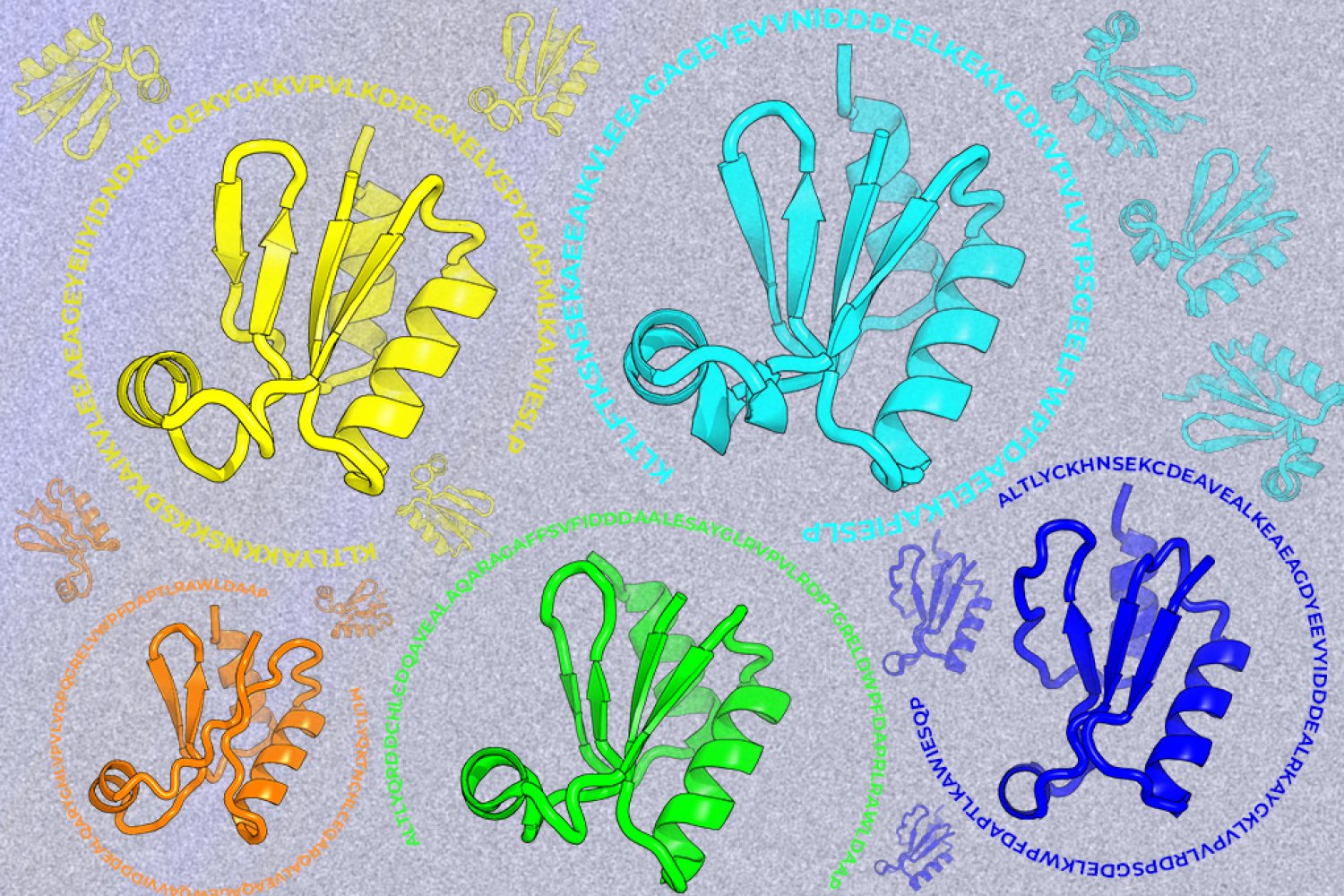
A new machine-learning framework aims to improve the success rate of computational protein design while moving away from results that reproduce sequences found in nature.