Contact-rich loco-manipulation requires a bridge between semantic action generation and physical interaction control. Existing Vision-language-action (VLA) models generate task-level actions from visual and linguistic observations, but cannot interpret the physical interactions induced by those actions. While the whole-body control (WBC) policy can stabilize the robot, it cannot distinguish task-relevant interaction forces from forces induced by external disturbances during manipulation. Although force/torque sensors provide direct measurements of physical interactions, retrofitting them entails additional hardware costs and substantial integration effort, particularly for platforms not designed with sensor integration in mind. To address this problem, we propose FWBC-VLA, a force-aware framework that bridges task-level VLA action generation and low-level whole-body compensation control for wheeled-legged robots. First, we introduce HSR-Force, a sensorless residual-torque estimator for inferring contact strength and its temporal variation. These contact estimates are then encoded as tokens and injected into the VLA action expert during action decoding, enabling the policy to perceive contact onset, sustained loading, and release. For loco-manipulation tasks, all parameters of the pretrained VLA backbone are fine-tuned on our WL\&Arm Dataset, which comprises more than 5,000 episodes. Moreover, the robot's proprioceptive state, the Jacobian-derived body-frame force estimate, and the estimated contact state are jointly fed into a compensation generator to produce corrective actions. The manipulation-centric actions are subsequently combined with the corrective actions and passed to the WBC policy for execution. Real-world experiments on whiteboard wiping and door opening with a door closer demonstrate the effectiveness of our FWBC-VLA in contact-rich loco-manipulation.
GAOKAO-Bench is introduced, an intuitive benchmark that employs questions from the Chinese GAOKAO examination as test samples, including both subjective and objective questions that contribute a robust evaluation benchmark for future large language models and offers valuable insights into the advantages and limitations of such models.
Xiaotian Zhang, Chun-yan Li, Yi Zong et al.· arXiv.org· 216 citations· ⚡17
This work investigates the possibilities of using LLMs in a resume screening setting via a document retrieval framework that simulates job candidate selection and finds that the MTEs are biased, significantly favoring White-associated names in 85% of cases and female-associated names in only 11.1% of cases.
Empirically, PRISM reduces the end-to-end time for data selection and model tuning to just 30% of conventional pipelines, and achieves this efficiency while simultaneously enhancing performance, surpassing models fine-tuned on the full dataset across eight multimodal and three language understanding benchmarks.
Jinhe Bi, Yifan Wang, Danqi Yan et al.· arXiv.org· 73 citations· ⚡4
The method, ECCOLA, is presented, which aims at making the high-level AI ethics principles more practical, making it possible for developers to more easily implement them in practice.
Ville Vakkuri, Kai-Kristian Kemell, P. Abrahamsson· EUROMICRO Conference on Soft...· 64 citations· ⚡6
This paper designs Markov decision processes (MDPs) for different combinatorial problems and proposes to train conditional GFlowNets to sample from the solution space and demonstrates that GFlowNet policies can efficiently find high-quality solutions.
Dinghuai Zhang, H. Dai, Esmeralda S. Whitammer et al.· Advances in Neural Informati...· 59 citations· ⚡8
An empirical study on the current state of practice in artificial intelligence ethics is conducted by means of a multiple case study of five case companies, which indicates a gap between research and practice in the area.
Ville Vakkuri, Kai-Kristian Kemell, Joni Kultanen et al.· arXiv.org· 56 citations· ⚡6
Related blog posts
MIT News · Artificial Intelligence· news.mit.eduJul 30, 2026
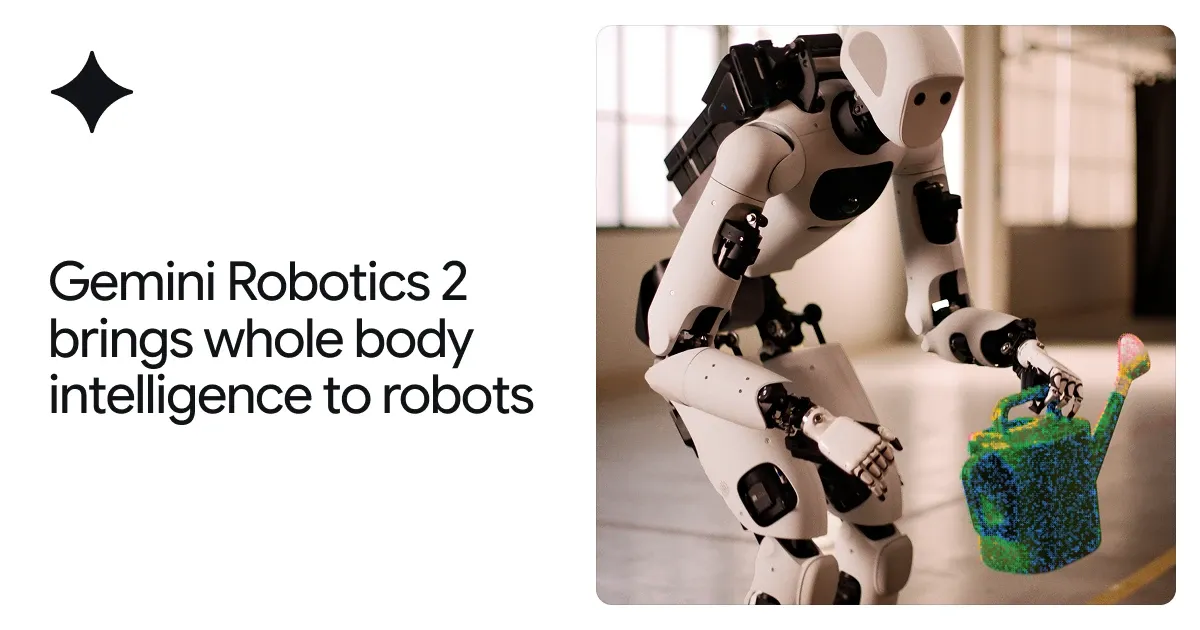
From feet to fingertips — we are teaching robots intelligent whole-body control, fine dexterity, and teamwork to complete a broad range of complex tasks.