Skip to content

Attributing Security Outcomes in LLM-Agent Evaluations: The Role of Content-Free State

Nov 2026 · 0 citations · 51 references
Computer Science

Abstract

Security benchmarks for LLM agents record whether each attack succeeded and compare agents, attacks, and defenses by attack success rate (ASR). Such comparisons are valid only if the agent, the attack, and the defense cause each verdict. We show that verdicts also depend on content-free state: details of a run that carry no information about the system under test, such as the Python hash seed, the order of tools or evidence, and the scoring of failed runs. We require that this state influence no verdict (decision noninterference) and treat it as untrusted input, because evaluators and requesters of LLM-based gates can choose it. Our framework, TARE (Testing Attribution of Reported Effects), attributes a reported effect to the agent, attack, or defense only if it exceeds the measured influence of content-free state. On Agent Security Bench (ASB), runs with a fixed hash seed are identical for seven agents from four model families, yet changing the seed changes up to 17% of an agent's verdicts while the ASR moves by at most 5 points. The seed acts through the tool order: sorting the tool list instead of reverse-sorting it raises the ASR by up to 19 points, because ASB's naming convention places attacker tools first. When the same evidence is reordered, six of seven LLM judges change their decision on 17-91% of 98 proposed actions. Across eighteen agent-defense combinations, TARE's worst-case test attributes effects to two of three defenses, one of them in opposite directions on two agents, and a test fixed in advance confirms a 4.8-point decrease from the third; in the attributed decreases, 35-69% of the stopped attacks end without any tool call, which ASB counts as a failed attack. Reproducible verdicts are thus not necessarily attributable, and security evaluations of LLM agents should report the influence of content-free state. We release TARE, the ASB patch, and all verdict tables.

View source

Similar papers

#artificial intelligence Preprint Jul 2024

The Llama 3 Herd of Models

It is found that Llama 3 delivers comparable quality to leading language models such as GPT-4 on a plethora of tasks, and performs competitively with the state-of-the-art on image, video, and speech recognition tasks.

Aaron Grattafiori, Abhimanyu Dubey, Abhinav Jauhri et al. · 21,082 citations · ⚡3,832
#artificial intelligence Conference Open access Jun 2018

Gibson Env: Real-World Perception for Embodied Agents

This paper investigates developing real-world perception for active agents, proposes Gibson Environment for this purpose, and showcases a set of perceptual tasks learned therein.

F. Xia, Amir Zamir, Zhi-Yang He et al. · 1,069 citations · ⚡112
#machine learning Review Open access Oct 2014

Software development in startup companies: A systematic mapping study

The results indicate that software engineering work practices are chosen opportunistically, adapted and configured to provide value under the constrains imposed by the startup context.

Nicolò Paternoster, Carmine Giardino, M. Unterkalmsteiner et al. · 394 citations · ⚡54

Diffusion models as plug-and-play priors

The possibility of inferring high-dimensional data inference in a model that consists of a prior and an auxiliary differentiable constraint given some additional information is considered, thereby allowing a range of potential applications in adapting models to new domains and tasks.

Alexandros Graikos, Esmeralda S. Whitammer, N. Jojic et al. · 316 citations · ⚡15

Trajectory Balance: Improved Credit Assignment in GFlowNets

It is proved that any global minimizer of the trajectory balance objective can define a policy that samples exactly from the target distribution, and empirically demonstrate the benefits of the trajectories balance objective for GFlowNet convergence, diversity of generated samples, and robustness to long action sequenc...

Esmeralda S. Whitammer, Moksh Jain, Emmanuel Bengio et al. · 302 citations · ⚡60
#artificial intelligence Open access May 2023

Evaluating the Performance of Large Language Models on GAOKAO Benchmark

GAOKAO-Bench is introduced, an intuitive benchmark that employs questions from the Chinese GAOKAO examination as test samples, including both subjective and objective questions that contribute a robust evaluation benchmark for future large language models and offers valuable insights into the advantages and limitations...

Xiaotian Zhang, Chun-yan Li, Yi Zong et al. · 216 citations · ⚡17

Related blog posts

Microsoft Research Blog Nov 3, 2026

Learn the rules: The hacker mindset

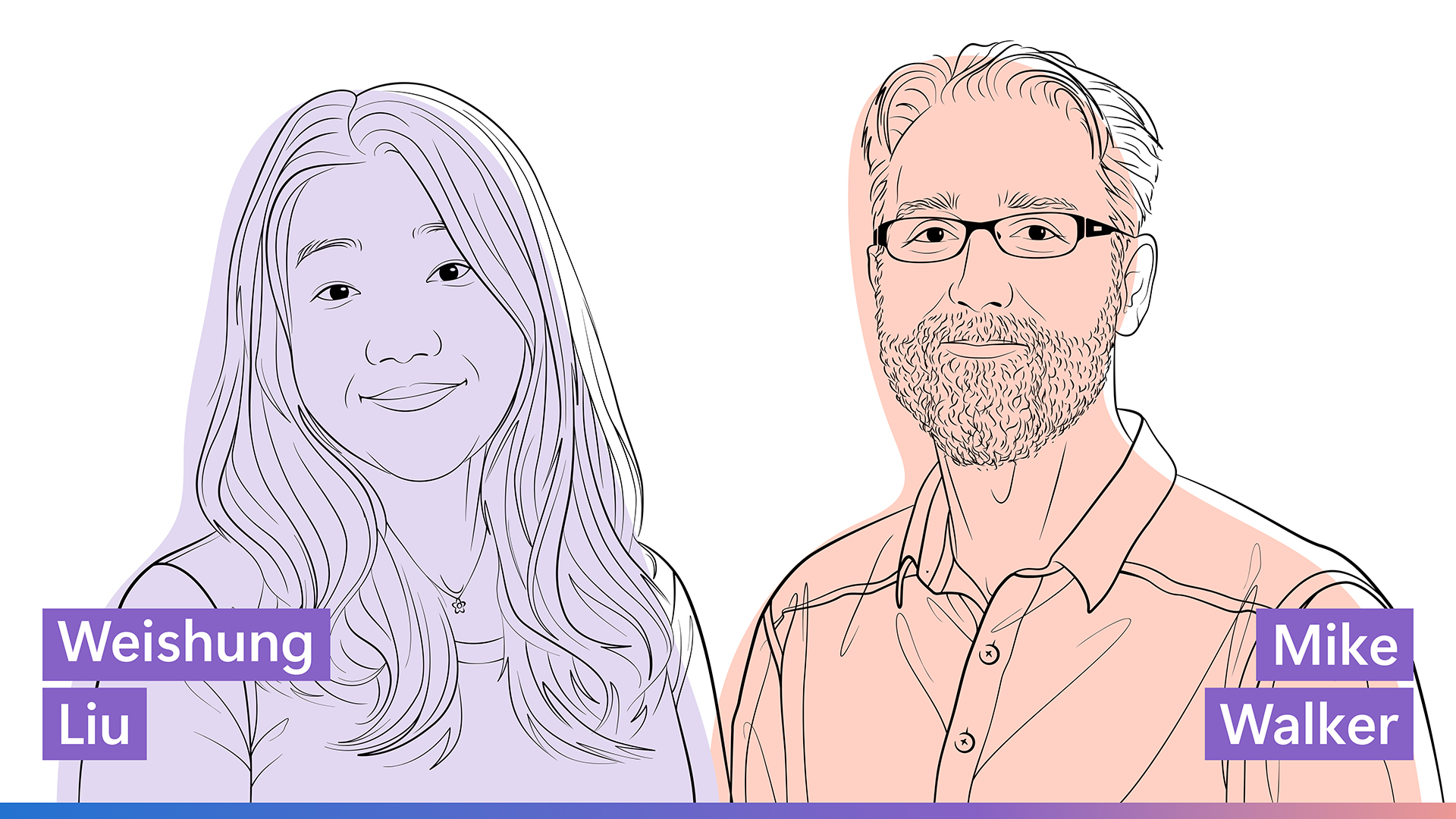
Research Manager Mike Walker reflects on a career spanning hacker culture, cybersecurity, and AI, sharing lessons about trust, teamwork, leadership, and why solving difficult problems requires curiosity, judgment, agility—and an understanding of the rules. The post Learn the rules: The hacker mindset appeared first on Microsoft Research.

MIT News · Artificial Intelligence Sep 29, 2026

Who we become when we talk to machines

Professor Sherry Turkle’s new book, “Artificial Intimacy,” offers a withering critique of chatbots and the antisocial dynamics she believes they encourage.

We use cookies to run the site and, with your consent, for analytics and to show ads. See our Cookie Policy.