Skip to content

Drift Testing for Conversational AI: What Changed for the Customer, Build After Build

Nov 2026 · Zenodo (CERN European Organization for Nuclear Research) · 2 references
Software Testing and Debugging Techniques

Abstract

A conversational AI product changes on every build: a new model, a new prompt, new documents, a new retrieval setting. The same question gets a differently worded answer, and a tester signing off a release needs to know one thing: did the answer change in a way that matters to the customer? This paper describes Behavior Drift Analysis, a method for drift testing, which is regression testing for AI applications: it expects answers to change between builds and looks for the changes that matter. A New Answer is checked against three references: the Baseline a tester has already accepted, the Project Knowledge documents the application is meant to draw on, and the Expectations the tester has written in plain language. Every change is read three ways: facts (numbers, conditions, negation, obligations), care (what the answer does for the customer: apologizes, reassures, gives a next step, or presses and sells) and certainty (how sure the answer sounds), and each finding that matters carries a Customer Impact line in the customer's terms. Rules decide first; a small natural language inference model, run in both directions on the pairs the rules form, decides what rules cannot, and its reading stays on every finding. No large language model runs at test time; the analysis runs on the tester's own computer and is reproducible on a recorded pipeline signature. The tester's judgment is a record of its own: accepted findings with a reason and an expiry, and a release gate that respects them. The paper states the method and its formal core, how the method is itself tested, and its limits, and it introduces Build Drift Bench, a public benchmark of 260 answer pairs in four languages, with a protocol for measuring any implementation on it. It reports no results of the method. This document describes the method. Parts of it are implemented in the preview release of the Ai4Testers software; the software's own documentation states which. AI4TESTERS® is a trade mark registered in India (no. 6371251, Class 41). Ai4Testers™ is also used in relation to the Ai4Testers software. The document grants no license under any trade mark and no license to the software, its models, corpora, rule sets, lexicons or data.

View source

Similar papers

#computer vision Review Sep 2017

Agile Software Development Methods: Review and Analysis

This publication proposes a definition and a classification of agile software development approaches and analyses ten software development methods that can be characterized as being "agile" against the defined criterion.

P. Abrahamsson, O. Salo, Jussi Ronkainen et al. · 727 citations · ⚡54
#small language model Dataset Open access Oct 2026

Socratic guiding questions in synthetic arithmetic data: matched LoRA runs (revision v2)

Supporting data, adapters, predictions and code for the article *Low-Cost LoRA Fine-Tuning of Small Language Models for Multi-Step Arithmetic Reasoning* by Jake O'Grady, Asena Isik Gürhan, Chee Fong Ting and Effirul Ramlan (University of Galway). We generated 20,000 GSM8K-derived arithmetic problems with step-by-step s...

O'Grady, Jake, Gürhan, Asena Isik, Chee, Fong Ting et al. · 465 citations
#computer vision Jun 2008

The impact of agile practices on communication in software development

The study shows that agile practices improve both informal and formal communication, but indicates that, in larger development situations involving multiple external stakeholders, a mismatch of adequate communication mechanisms can sometimes even hinder the communication.

M. Pikkarainen, Jukka Haikara, O. Salo et al. · 401 citations · ⚡48
#machine learning Review Open access Oct 2014

Software development in startup companies: A systematic mapping study

The results indicate that software engineering work practices are chosen opportunistically, adapted and configured to provide value under the constrains imposed by the startup context.

Nicolò Paternoster, Carmine Giardino, M. Unterkalmsteiner et al. · 394 citations · ⚡54
#computer vision Review Mar 2008

Agile methods in European embedded software development organisations: a survey on the actual use and usefulness of Extreme Programming and Scrum

The results show that the embedded industry has been able to apply agile methods in its development processes and that the appreciation of the agile methods and their individual practices appears to increase once adopted and applied in practice.

O. Salo, P. Abrahamsson · 238 citations · ⚡9
#computer vision Open access Jul 2017

What happens when software developers are (un)happy

Consequences of happiness and unhappiness that are beneficial and detrimental for developers' mental well-being, the software development process, and the produced artifacts are found.

D. Graziotin, Fabian Fagerholm, Xiaofeng Wang et al. · 236 citations · ⚡13

Related blog posts

Microsoft Research Blog Oct 12, 2026

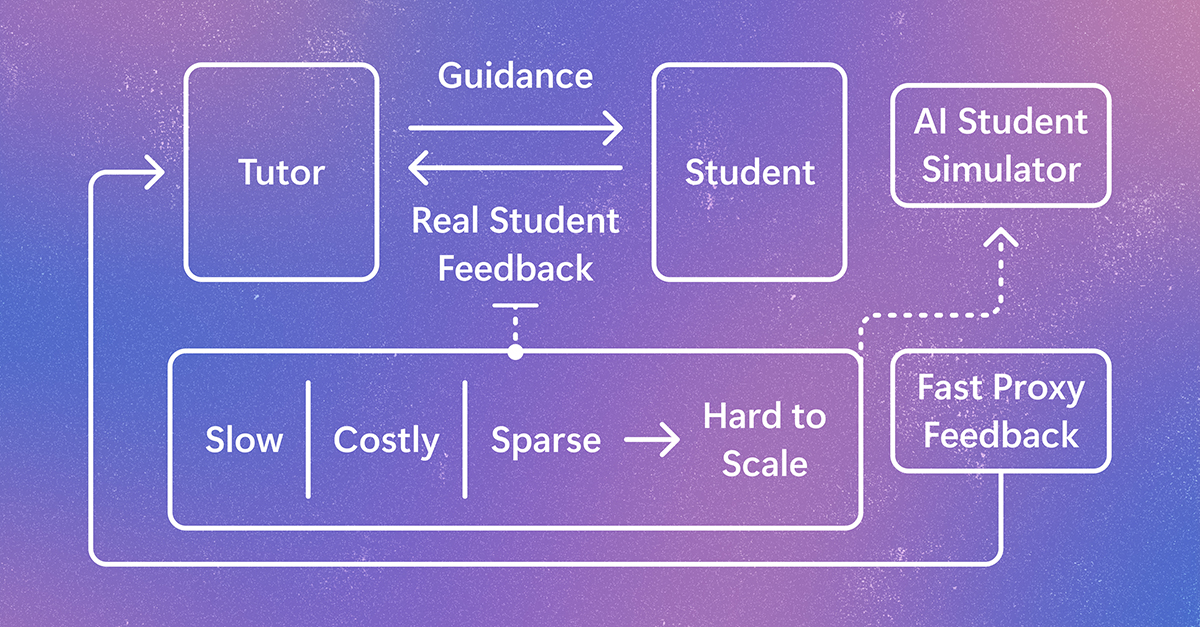
Simulating student learning for better AI tutoring

StudentSim is a research system for evaluating and improving AI tutoring tools before they are tested with learners. It models how individuals may engage with tutors, giving feedback to improve tutor performance across subjects like chess, writing, and mathematics. The post Simulating student learning for better AI tutoring appeared first on Microsoft Research.

We use cookies to run the site and, with your consent, for analytics and to show ads. See our Cookie Policy.