A Bayesian latent class reinforcement learning framework to capture adaptive, feedback-driven travel behaviour
Georges SfeirStephane HessThomas O. HancockFilipe RodriguesJamal Amani RadMichiel BliemerMatthew BeckFayyaz Khan
Nov 2026· Transportation Research Part C Emerging Technologies· 40 references
Machine LearningData Science
Abstract
Many travel decisions involve a degree of experience formation, where individuals learn their preferences over time. At the same time, there is extensive scope for heterogeneity across individual travellers, both in their underlying preferences and in how these evolve. The present paper puts forward a Latent Class Reinforcement Learning (LCRL) model that allows analysts to capture both of these phenomena. We apply the model to a driving simulator dataset and estimate the parameters through Variational Bayes. We identify three distinct classes of individuals that differ markedly in how they adapt their preferences: the first displays context-dependent preferences with context-specific exploitative tendencies; the second follows a persistent exploitative strategy regardless of context; and the third engages in an exploratory strategy combined with context-specific preferences.
It is found that Llama 3 delivers comparable quality to leading language models such as GPT-4 on a plethora of tasks, and performs competitively with the state-of-the-art on image, video, and speech recognition tasks.
This paper investigates developing real-world perception for active agents, proposes Gibson Environment for this purpose, and showcases a set of perceptual tasks learned therein.
F. Xia, Amir Zamir, Zhi-Yang He et al.· 2018 IEEE/CVF Conference on...· 1,069 citations· ⚡112
This publication proposes a definition and a classification of agile software development approaches and analyses ten software development methods that can be characterized as being "agile" against the defined criterion.
P. Abrahamsson, O. Salo, Jussi Ronkainen et al.· arXiv.org· 727 citations· ⚡54
The study shows that agile practices improve both informal and formal communication, but indicates that, in larger development situations involving multiple external stakeholders, a mismatch of adequate communication mechanisms can sometimes even hinder the communication.
M. Pikkarainen, Jukka Haikara, O. Salo et al.· Empirical Software Engineeri...· 401 citations· ⚡48
The results indicate that software engineering work practices are chosen opportunistically, adapted and configured to provide value under the constrains imposed by the startup context.
Nicolò Paternoster, Carmine Giardino, M. Unterkalmsteiner et al.· Information and Software Tec...· 394 citations· ⚡54
Related blog posts
MIT News · Artificial Intelligence· news.mit.eduNov 6, 2026
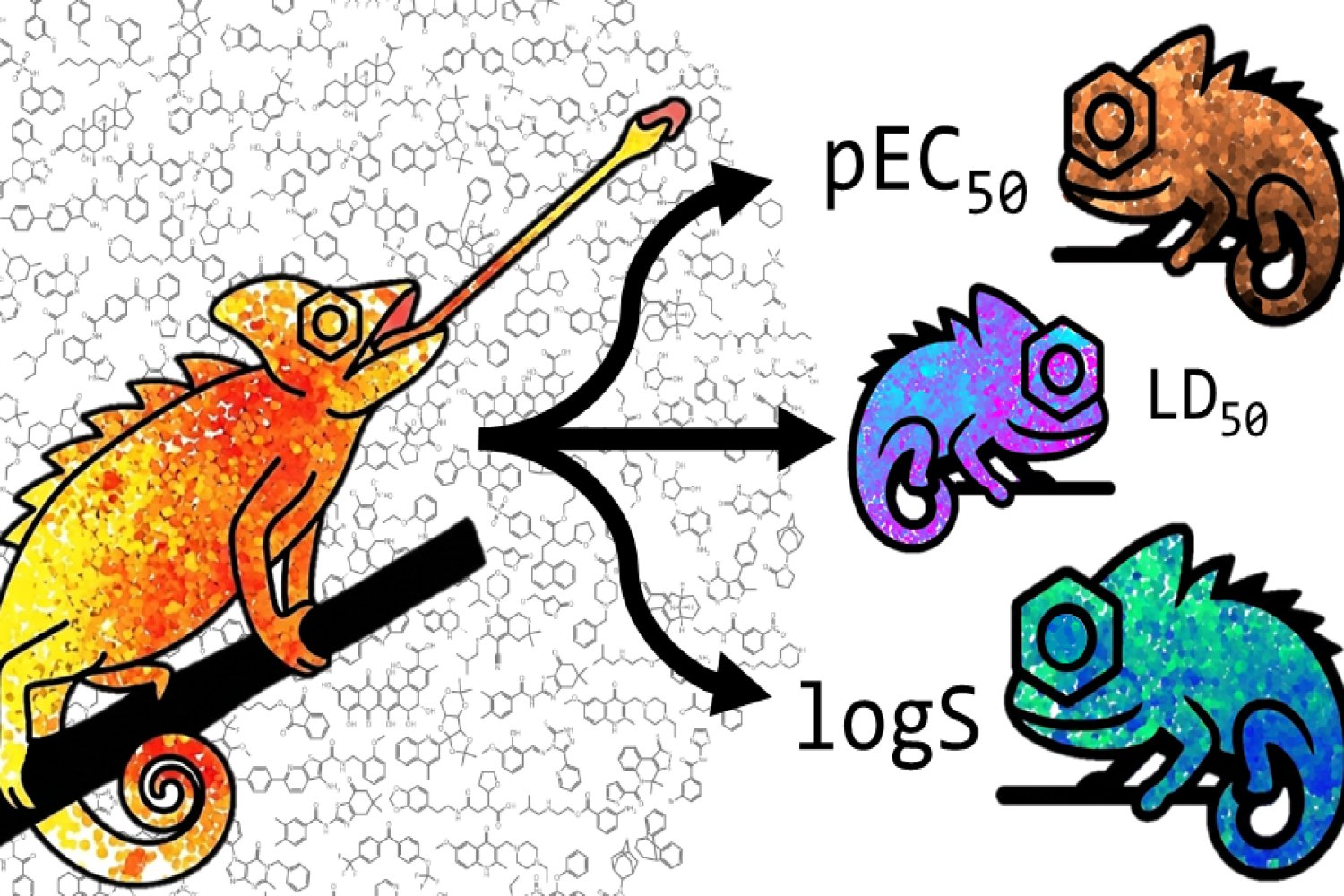
A machine-learning approach called CheMeleon provides a practical way to develop new drugs or other molecules with much less detailed, expensive experimentation.
Learn how Google DeepMind and GovTech Singapore uses lightweight on-device Gemma models to intercept conversational scams in private chats with zero cloud data egress.