Task Convergent Flow Matching for Generative Robotics
Lorenzo PaiolaMaximilian St\"olzleGiorgio GrioliDaniela RusCosimo Della Santina
Nov 2026
Machine LearningRobotics
Abstract
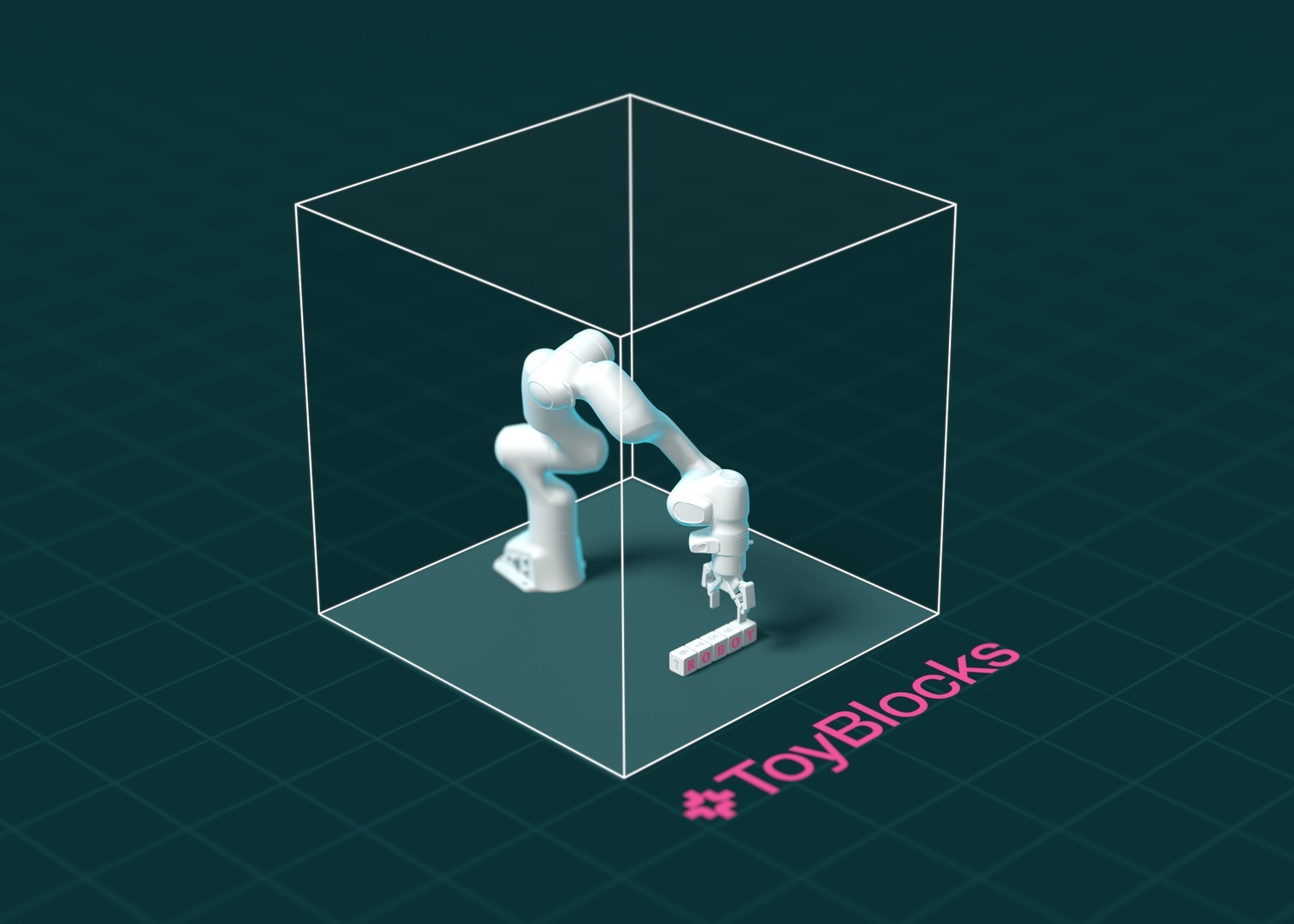
Successful manipulation requires the manipulated objects to progress toward a desired task outcome. Generative policies can produce plausible robot motions without ensuring this progress, allowing successive action chunks to stall or undo earlier changes to the scene. We introduce a task-centric inference-time refinement framework for flow matching policies that evaluates candidate action chunks through parallel physics-based rollouts and searches for motions satisfying sufficient conditions for task convergence. Task-level performance funnels bound temporary regressions while requiring net progress over each chunk. We establish sufficient conditions under which repeated funnel satisfaction yields convergence throughout execution, and use interval-wise Lipschitz bounds to verify continuous-time funnel satisfaction from sampled rollouts. To accommodate contact-rich hybrid dynamics, we refine the flow's source seeds using derivative-free Covariance Matrix Adaptation Evolution Strategy (CMA-ES), constrained to radial quantile bands of the source distribution to help retain the learned motion prior. This formulation supports both Euclidean and pose-valued Riemannian Flow Matching (RMFM) policies. On PushT and three-cube stacking, refinement raises success from 31.3% to 88.5% and from 77.0% to 86.0%. On PushT, whose coverage score responds continuously to the motion of the block, a learned funnel lowers the average maximum loss of achieved progress by 19% relative to constraining the endpoint of each chunk alone, at a similar success rate. With the radial band, 11.3% of the executed motion windows are out of distribution, a rate within the range of held-out demonstrations, compared with 34.1% for an unconstrained search.

It is found that Llama 3 delivers comparable quality to leading language models such as GPT-4 on a plethora of tasks, and performs competitively with the state-of-the-art on image, video, and speech recognition tasks.
This paper investigates developing real-world perception for active agents, proposes Gibson Environment for this purpose, and showcases a set of perceptual tasks learned therein.
F. Xia, Amir Zamir, Zhi-Yang He et al.· 2018 IEEE/CVF Conference on...· 1,069 citations· ⚡112
The results indicate that software engineering work practices are chosen opportunistically, adapted and configured to provide value under the constrains imposed by the startup context.
Nicolò Paternoster, Carmine Giardino, M. Unterkalmsteiner et al.· Information and Software Tec...· 394 citations· ⚡54
The possibility of inferring high-dimensional data inference in a model that consists of a prior and an auxiliary differentiable constraint given some additional information is considered, thereby allowing a range of potential applications in adapting models to new domains and tasks.
Alexandros Graikos, Esmeralda S. Whitammer, N. Jojic et al.· Neural Information Processin...· 316 citations· ⚡15
It is proved that any global minimizer of the trajectory balance objective can define a policy that samples exactly from the target distribution, and empirically demonstrate the benefits of the trajectories balance objective for GFlowNet convergence, diversity of generated samples, and robustness to long action sequenc...
Esmeralda S. Whitammer, Moksh Jain, Emmanuel Bengio et al.· Neural Information Processin...· 302 citations· ⚡60
An algorithm is proposed which leverages disentangled semantic factors to generate adversarial perturbation by altering controlled semantic attributes to fool the learner towards various "adversarial" targets.
Haonan Qiu, Chaowei Xiao, Lei Yang et al.· arXiv.org· 208 citations· ⚡17
Related blog posts
MIT News · Artificial Intelligence· news.mit.eduNov 9, 2026