A Metamorphic Artificial Age Score Decision-Support Prototype for Flight-Log-Based Drone Propeller Health Monitoring
Seyma Yaman Kayadibi
Aug 2026
Artificial IntelligenceRobotics
Abstract
Drone propeller faults can create safety and reliability risks when their effects are distributed across multiple flight-log channels rather than appearing as a single diagnostic signal. This paper proposes a Metamorphic Artificial Age Score (AAS) decision-support prototype for flight-log-based drone propeller health monitoring. Using selected historical real flight logs from the 2024 DronePropA public dataset, the framework computes six health-related indicators from raw MATLAB matrices: trajectory tracking error, attitude instability, thrust-command burden, motor-command imbalance, ESC-command instability, and battery-level stress. These indicators are normalized relative to a healthy baseline and evaluated through candidate scoring policies, metamorphic adequacy relations, and a redundancy-adjusted AAS formulation. In this context, AAS is used as a structural policy-adequacy and burden measure rather than as a chronological age measure. A controlled retrospective evaluation was performed using one healthy baseline and three defective propeller cases under the same speed profile and trajectory. The healthy case was assigned to routine monitoring. The Severity 1 case was dominated by ESC-command instability and assigned to maintenance review. The Severity 2 case reached maximum motor-command and ESC-command burden, while the Severity 3 case reached maximum trajectory tracking error; both triggered mandatory inspection. The results show that propeller fault effects may appear through different operational channels, supporting the need for a multi-indicator decision-support layer for post-flight maintenance prioritization and autonomous-system oversight.

Investigating how experienced developers use agents in building software, including their motivations, strategies, task suitability, and sentiments finds that while experienced developers value agents as a productivity boost, they retain their agency in software design and implementation out of insistence on fundamental software quality attributes.
This systematic review evaluates 55 studies from 2017 to 2023 on the application of machine learning techniques to ASD, highlighting key challenges and opportunities, particularly the need for models that can integrate complex data to improve diagnostic accuracy and treatment outcomes.
Rafael Muñoz-Terol, Jesús Peral, Sandra Amador et al.· Heliyon· 4 citations· ⚡1
This paper identifies two different routes through which models can acquire geometrically separable features: they can learn them from complementary co-occurrence signals in general language data, including text-number co-occurrence and cross-number interaction, or from multi-token addition problems.
This work explores image generation using flow matching using flow matching and proposes an iterative process that can be integrated into virtually any generative modeling technique, thereby enhancing the performance and robustness of image synthesis systems.
Eldad Haber, Shadab Ahamed, Md Shahriar Rahim Siddiqui et al.· SIAM Journal on Scientific C...· 3 citations
Tensor networks are powerful formats for compressing large-scale data. However, their application to general data processing has been limited by the difficulty of performing nonlinear operations. Here, we introduce iterative tensor network transformations (ITNTs), a general algorithmic framework for the element-wise evaluation of elementary and nonlinear filtering functions on data encoded as tensor trains (TTs), a class of tensor networks. Our approach operates entirely in the compressed domain, enabling efficient computation on exponentially large datasets while maintaining a controlled computational cost. We demonstrate its power in two key areas: (I) evaluating highly nonlinear elementary and filtering functions on a 3D reactive flow field, enabling high-fidelity reaction rate computation and region filtering, and (II) finding extrema in complex optimization problems, such as solving Max-SAT instances on spaces up to $2^{70}$ configurations. These results establish ITNT as a foundational tool that provides tensor network methods with the capability for general-purpose data science and large-scale optimization.
Xiao Wang, Tomohiro Hashizume, Pia Siegl et al.· 2 citations
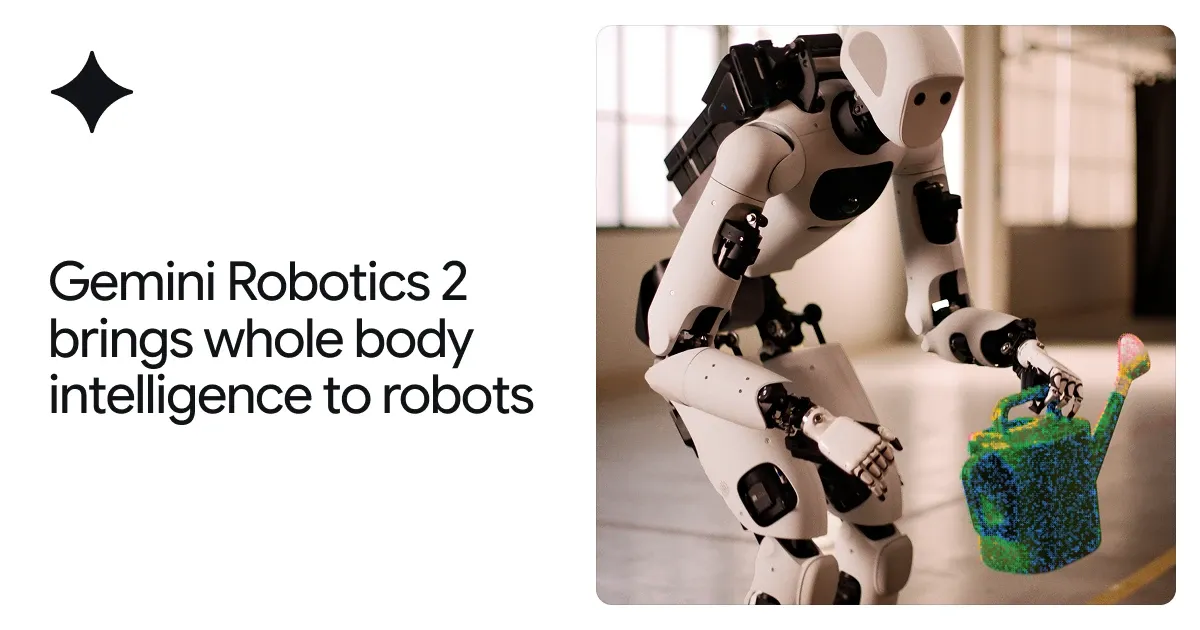
From feet to fingertips — we are teaching robots intelligent whole-body control, fine dexterity, and teamwork to complete a broad range of complex tasks.