Nov 2026· Bulletin of Monetary Economics and Banking
Auditing, Earnings Management, Governance
Abstract
This study investigates whether Chinese listed firms’ financial transparency improves with AI. Our main AI measure is AI-related disclosure intensity based on annual report text. We validate it using firm-year proxies for AI-related patents and AI/software investment to reduce potential symbolism. We add extensive controls, governance covariates, and mechanism tests to support the instrumental-variable results. From 2011 to 2023, we measured transparency through stock-exchange disclosure quality ratings and AI through annual report AI-related language for 1,028 Shanghai and Shenzhen Stock Exchange firms. Using provincial internet penetration as an AI instrument, we estimate two-way fixed effects models and address endogeneity using two-stage least squares. We also compare the effect by firm size, ownership (SOE vs. non-SOE), industry (high tech vs. non-high-tech), and regional development. Even after controlling for firm characteristics, absorbing firm and year effects, and instrumenting AI, firms with higher AI intensity are more transparent. In smaller, privately owned, and high-tech firms, and in firms located in less-developed regions, transparency gains are greatest. The findings suggest that AI-supported monitoring and documentation improve reported information and can partially replace poorer internal control capabilities.

This publication proposes a definition and a classification of agile software development approaches and analyses ten software development methods that can be characterized as being "agile" against the defined criterion.
P. Abrahamsson, O. Salo, Jussi Ronkainen et al.· arXiv.org· 727 citations· ⚡54
Supporting data, adapters, predictions and code for the article *Low-Cost LoRA Fine-Tuning of Small Language Models for Multi-Step Arithmetic Reasoning* by Jake O'Grady, Asena Isik Gürhan, Chee Fong Ting and Effirul Ramlan (University of Galway). We generated 20,000 GSM8K-derived arithmetic problems with step-by-step s...
O'Grady, Jake, Gürhan, Asena Isik, Chee, Fong Ting et al.· Zenodo (CERN European Organi...· 465 citations
The study shows that agile practices improve both informal and formal communication, but indicates that, in larger development situations involving multiple external stakeholders, a mismatch of adequate communication mechanisms can sometimes even hinder the communication.
M. Pikkarainen, Jukka Haikara, O. Salo et al.· Empirical Software Engineeri...· 401 citations· ⚡48
The results indicate that software engineering work practices are chosen opportunistically, adapted and configured to provide value under the constrains imposed by the startup context.
Nicolò Paternoster, Carmine Giardino, M. Unterkalmsteiner et al.· Information and Software Tec...· 394 citations· ⚡54
The results show that the embedded industry has been able to apply agile methods in its development processes and that the appreciation of the agile methods and their individual practices appears to increase once adopted and applied in practice.
O. Salo, P. Abrahamsson· IET Software· 238 citations· ⚡9
Consequences of happiness and unhappiness that are beneficial and detrimental for developers' mental well-being, the software development process, and the produced artifacts are found.
D. Graziotin, Fabian Fagerholm, Xiaofeng Wang et al.· Journal of Systems and Softw...· 236 citations· ⚡13
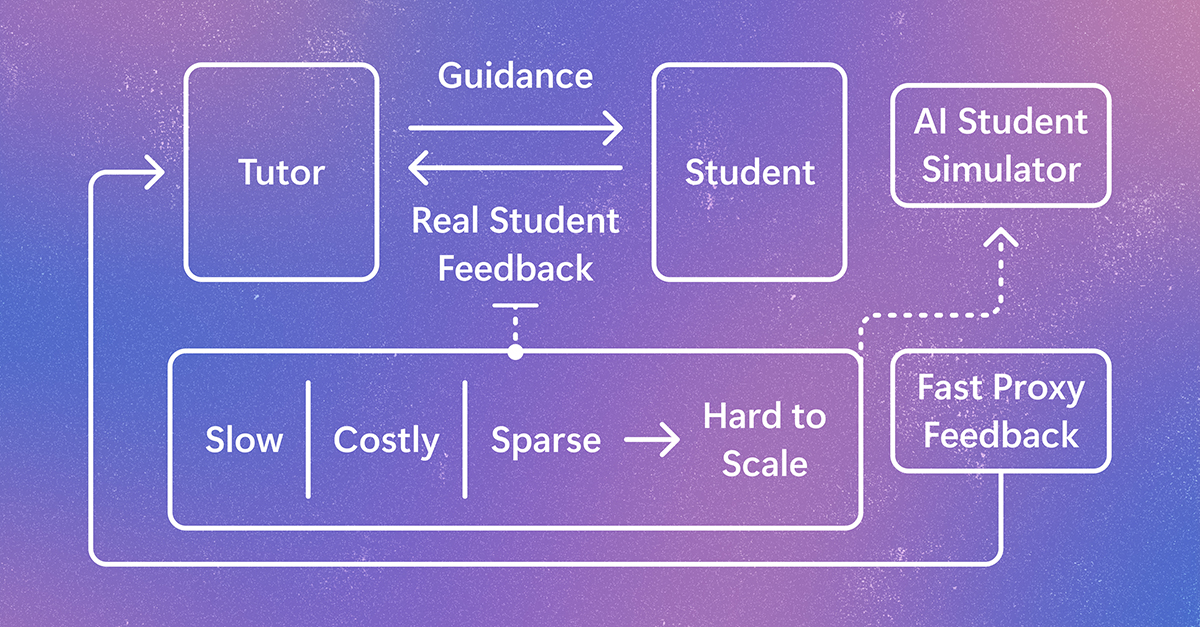
StudentSim is a research system for evaluating and improving AI tutoring tools before they are tested with learners. It models how individuals may engage with tutors, giving feedback to improve tutor performance across subjects like chess, writing, and mathematics. The post Simulating student learning for better AI tutoring appeared first on Microsoft Research.
We use cookies to run the site and, with your consent, for analytics and to show ads.
See our Cookie Policy.