Back to #software testing

A framework for identifying turbulence periods with the relative financial Reynolds number: case study on six construction projects

Aug 2026 · Engineering Construction and Architectural Management · 0 citations · 32 references

Abstract

This study proposes a framework for identifying financial turbulence in construction project cash flows using the Relative Financial Reynolds Number (Re(t)). Inspired by fluid mechanics, the indicator captures transitions between stable, high-risk, and turbulent financial regimes and provides an early-warning mechanism for identifying liquidity stress in construction projects. Daily cash flow data from six residential construction projects in Izmir, Türkiye, were analyzed. The Relative Financial Reynolds Number was calculated as the ratio between cumulative cash flow and its daily rate of change, following an analogy derived from Bernoulli-type financial flow models. Financial regimes were classified using statistical boundaries based on the mean and standard deviation of Re(t). The empirical performance of the indicator was evaluated through ROC analysis, lead-time analysis, and Monte Carlo simulation. The results show that Re(t) captures financial turbulence periods more sensitively than conventional S-curves. ROC analysis yielded AUC values between 0.49 and 0.78 across projects, with a pooled AUC of 0.64, indicating moderate classification capability. Lead-time analysis suggests that turbulence signals appear approximately 2–3 weeks before liquidity stress events on average. Monte Carlo simulations further indicate a 60-day stress probability ranging between 0.75 and 0.90 across projects. The empirical analysis is limited to six projects within a single national context. Future research should test the model across different countries and project types and explore additional statistical validation techniques to strengthen the theoretical foundations of the approach. The six-project analysis demonstrates that Re(t), compared to conventional S-curves, more distinctly differentiates stable periods, risk clusters, and extreme turbulence regimes. It provided early indications of the impact of macroeconomic shocks (interest rate hikes, currency crises, political transitions) on project financing, while also capturing legal, parcel-based, and site-specific disruptions directly in the time series. As such, Re(t) functions as an effective early-warning mechanism for project managers, offering insights that cumulative S-curves alone cannot provide. These results strongly support the study’s main hypothesis that Re(t) serves as a more sensitive and responsive indicator of financial risks in construction projects. The primary contribution is the demonstration of the applicability of Re(t), derived from a hydraulic analogy, to project finance. This approach enables project managers to monitor not only cumulative progress but also daily volatilities and critical boundary exceedances. Thus, Re(t) can serve as a signal detection mechanism contributing to risk management.Secondly, project managers should integrate Re(t) into daily or weekly reporting to detect risks more quickly. Re(t) boundary exceedances should be carefully monitored, especially during interest rate shocks, currency crises, and liquidity shortages. Integration of the Re(t) algorithm into project finance software could facilitate practical applications. The study introduces an interdisciplinary analytical framework that connects fluid mechanics and construction finance. By conceptualizing cash flow dynamics through the Relative Financial Reynolds Number, the proposed method provides a practical early warning tool for monitoring financial turbulence in construction projects.
View source

Similar papers

IMPACT OF PROXIMAL RELATIONSHIPS ON DRUG USE: A STUDY IN THERAPEUTIC COMMUNITIES

Drug use is an ancient practice, but its associated disorders represent a contemporary public health challenge. This study investigates the impact of proximal processes in childhood/adolescence and adulthood on substance use, focusing on the role of Therapeutic Communities (TCs). Using a qualitative methodology, 19 residents of TCs in the state of Rio de Janeiro were interviewed. Instruments included a screening test (ASSIST), a sociodemographic inventory, and semi-structured interviews. Content analysis of the interviews was supported by the Requalify.ai software, which proved to be an efficient tool for categorizing and visualizing qualitative data. Results indicate that factors such as dysfunctional family environments, violence, and early onset of consumption, often mediated by peer influence, are determining risk factors. On the other hand, peer social support within TCs emerges as a crucial protective factor, associated with positive changes reported by participants. The sample revealed an overrepresentation of Black and Brown individuals, highlighting the racial dimension in the history of drug use in Brazil. The study concludes that proximal relationships are decisive in both the etiology and recovery of substance use disorders, and that TCs, although controversial, can offer a supportive environment that favors change, especially through peer support and cohabitation.

Marceli de Souza Rosa-Pereira, L. Pessoa · 0 citations
#software testing Review Aug 2026

ChatGPT Solves All Tested Qiskit Homework Assignments

This study examined whether introductory Qiskit homework could remain autogradable while requiring students to run, review, and discuss results rather than banning AI.

A. Kaltchenko, Gurnivaj Tiwana · 0 citations

Mixed Reality Glasses Image Translocation for Binocular Diplopia.

This prototype MRG image translocation software was helpful to 69% of patients with binocular diplopia, but limited by large angle strabismus because of the limited instrument field of view.

Edsel B Ing, Kevin Sha, Sarosh Dandoti et al. · 0 citations
#software testing Open access Aug 2026

Multi-Disease Prediction Using Machine Learning: A Web-Based Diagnostic Support System for Diabetes, Heart Disease, and Parkinson\'s Disease

A diagnostic support system based on a unified web platform that classifies patients according to the risks of developing three diseases based on regularly collected clinical or audio data using classical supervised learning algorithms is presented.

Vedamurthy D R, Dr. Anup Ritti, A. Bibi et al. · 0 citations
#software testing Review Aug 2026

The Influence of Green Procurement on Supply Chain Resilience in Nigeria Maritime University, South-South Region

A high initial investment in acquiring environmentally friendly products can discourage institutions from adopting them. This study explored the extent to which eco-friendly products contribute to supply chain resilience and operational performance at the Nigerian Maritime University. The study employed a quantitative survey method administering a sample of 303copies questionnaire to the staff of the organization using a stratified sampling technique. The hypotheses were tested and analyzed using a regression method with the aid of Minitab software. The regression analysis indicates eco-friendly products significantly relates to operational efficiency in Nigerian Maritime University, South-South Nigeria. The model regression indicates (R² = 99.20, B = 1.039, β = 0.0162, p = 0.000); indicating that the model is a good fit. The coefficient 1.0399 is highly significant (p < 0.001). This indicates a positive and strong effect, explaining that for every one-unit increase in eco-friendly products, the operational efficiency increases by approximately 1.039 units. The NOVA result confirms F = 4117.07, p < 0.001. The study concludes that the adoption of eco-friendly products plays a significant and positive role in enhancing organizational sustainability performance or resilience. Organizations should embed eco-friendly product selection into their procurement guidelines to promote sustainable operations. Management should invest in environmentally friendly technologies and capacity building initiatives to support the transition to sustainable practices.

Ikenna Christopher Ugwu · 0 citations

Related blog posts

MIT News · Artificial Intelligence Aug 17, 2026

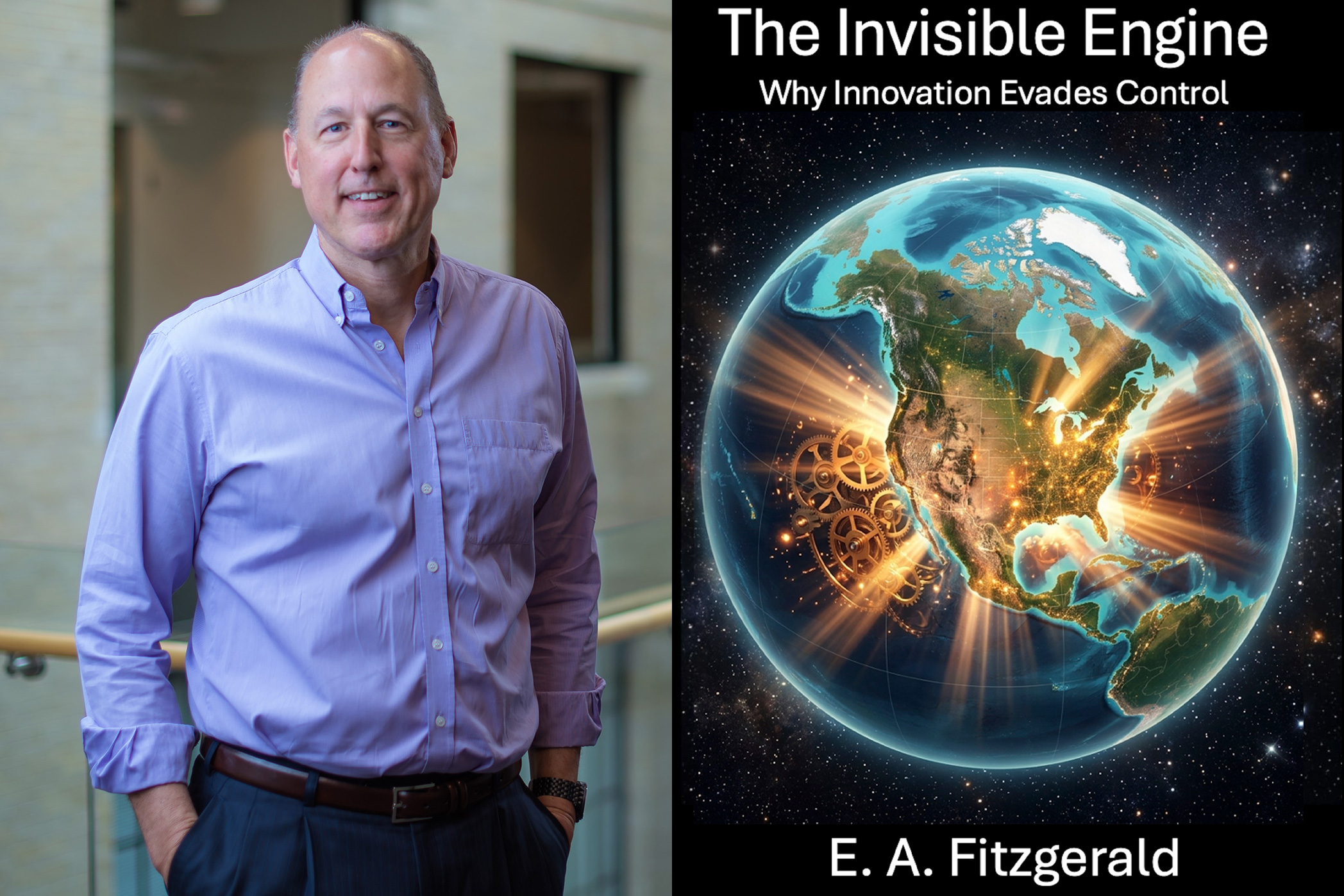
Q&A: Rethinking how innovation happens

In his latest book, Professor Eugene Fitzgerald examines the forces that turn breakthroughs into value — and why innovation resists simple formulas.