Skip to content

Claudini: Autoresearch Discovers State-of-the-Art Adversarial Attack Algorithms for LLMs

Mar 2026 · arXiv.org · Vol abs/2603.24511 · 19 citations · ⚡ 1 influential
Computer Science

TL;DR

It is argued that autoresearch should be the minimum bar for defense evaluation going forward, and the lineage of methods developed during autoresearch is traced, characterizing the agents'sategies and failure modes.

Abstract

We show that AI agents are capable of discovering novel algorithms for adversarial attacks against LLMs, advancing the state of the art on white-box jailbreaking and prompt injection evaluations. We deploy frontier agents, such as Claude Code and Codex, in an autoresearch loop with access to a library of 30+ prior methods and an evaluation script with a fixed compute budget. We show this pipeline to be effective in jailbreaking OpenAI's GPT-OSS-Safeguard-20B and in prompt injections against Meta-SecAlign-70B, an adversarially robust model. For GPT-OSS-Safeguard, the best agent-discovered method achieves up to 80\% attack success rate on CBRN queries, compared to<50\% for existing methods. For SecAlign, it achieves 100\% ASR, while the best prior automated methods only achieve 82\%. Notably, in our setting, attack methods are developed on unrelated surrogate models for a pure random-target token-forcing task, yet generalize directly to prompt injection on the adversarially trained model. Finally, we trace the lineage of methods developed during autoresearch, characterizing the agents'strategies and failure modes. Adversarial ML has long held that defenses must be evaluated against attacks tailored to them; autoresearch automates this principle, and we argue it should be the minimum bar for defense evaluation going forward.

View source

Similar papers

#artificial intelligence Preprint Jul 2024

The Llama 3 Herd of Models

It is found that Llama 3 delivers comparable quality to leading language models such as GPT-4 on a plethora of tasks, and performs competitively with the state-of-the-art on image, video, and speech recognition tasks.

Aaron Grattafiori, Abhimanyu Dubey, Abhinav Jauhri et al. · 21,082 citations · ⚡3,832
#artificial intelligence Conference Open access Jun 2018

Gibson Env: Real-World Perception for Embodied Agents

This paper investigates developing real-world perception for active agents, proposes Gibson Environment for this purpose, and showcases a set of perceptual tasks learned therein.

F. Xia, Amir Zamir, Zhi-Yang He et al. · 1,069 citations · ⚡112
#machine learning Review Open access Oct 2014

Software development in startup companies: A systematic mapping study

The results indicate that software engineering work practices are chosen opportunistically, adapted and configured to provide value under the constrains imposed by the startup context.

Nicolò Paternoster, Carmine Giardino, M. Unterkalmsteiner et al. · 394 citations · ⚡54

Diffusion models as plug-and-play priors

The possibility of inferring high-dimensional data inference in a model that consists of a prior and an auxiliary differentiable constraint given some additional information is considered, thereby allowing a range of potential applications in adapting models to new domains and tasks.

Alexandros Graikos, Esmeralda S. Whitammer, N. Jojic et al. · 316 citations · ⚡15

Trajectory Balance: Improved Credit Assignment in GFlowNets

It is proved that any global minimizer of the trajectory balance objective can define a policy that samples exactly from the target distribution, and empirically demonstrate the benefits of the trajectories balance objective for GFlowNet convergence, diversity of generated samples, and robustness to long action sequenc...

Esmeralda S. Whitammer, Moksh Jain, Emmanuel Bengio et al. · 302 citations · ⚡60
#artificial intelligence Open access May 2023

Evaluating the Performance of Large Language Models on GAOKAO Benchmark

GAOKAO-Bench is introduced, an intuitive benchmark that employs questions from the Chinese GAOKAO examination as test samples, including both subjective and objective questions that contribute a robust evaluation benchmark for future large language models and offers valuable insights into the advantages and limitations...

Xiaotian Zhang, Chun-yan Li, Yi Zong et al. · 216 citations · ⚡17

Related blog posts

Microsoft Research Blog Nov 3, 2026

Learn the rules: The hacker mindset

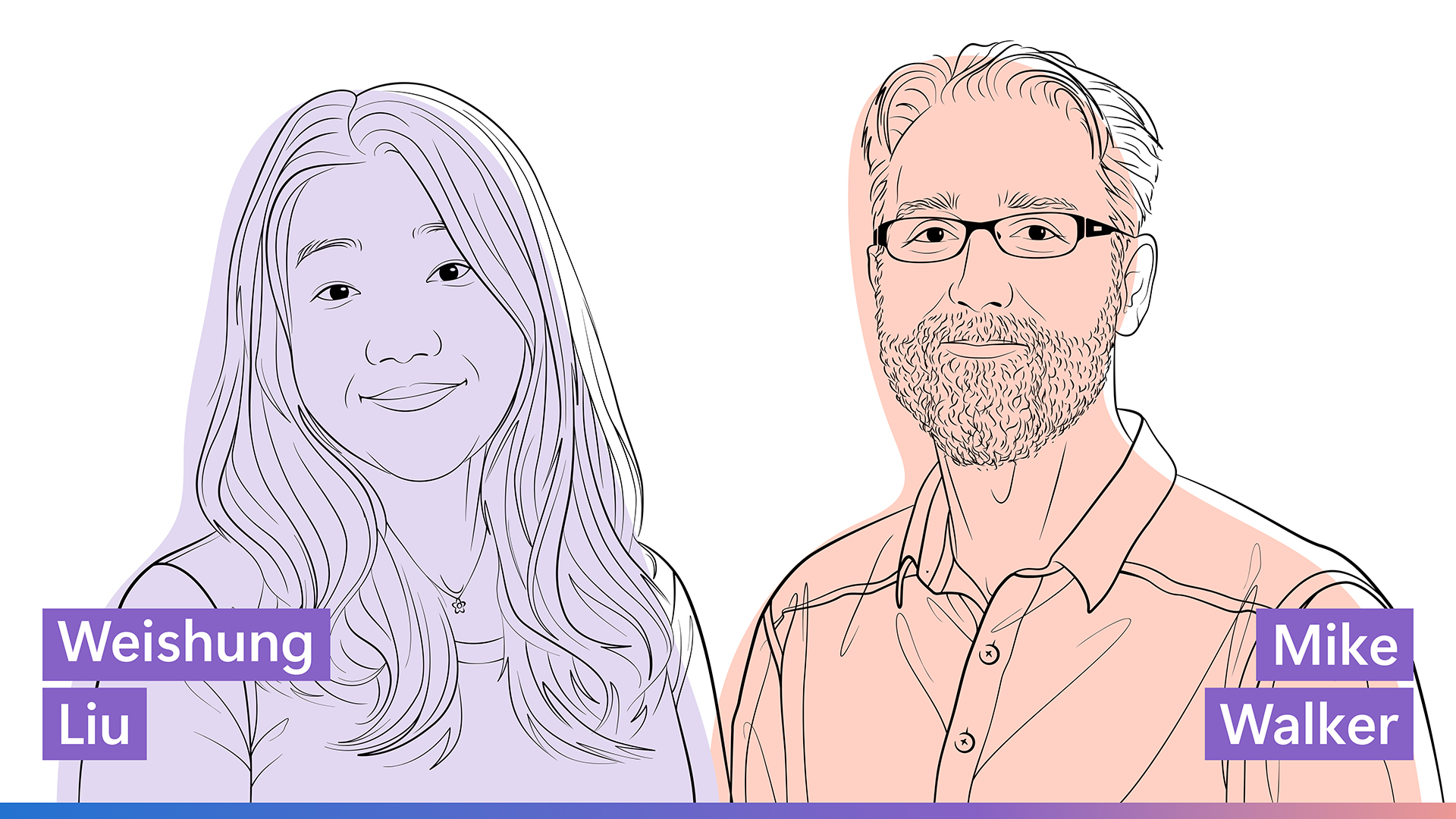
Research Manager Mike Walker reflects on a career spanning hacker culture, cybersecurity, and AI, sharing lessons about trust, teamwork, leadership, and why solving difficult problems requires curiosity, judgment, agility—and an understanding of the rules. The post Learn the rules: The hacker mindset appeared first on Microsoft Research.

MIT News · Artificial Intelligence Sep 29, 2026

Who we become when we talk to machines

Professor Sherry Turkle’s new book, “Artificial Intimacy,” offers a withering critique of chatbots and the antisocial dynamics she believes they encourage.

We use cookies to run the site and, with your consent, for analytics and to show ads. See our Cookie Policy.