This work presents a robust, privacy-preserving Swarm Learning framework that makes verifiable data quality the condition for admission to the learning task and adapts the cut-layer idea of Split Learning to let peers re-verify that a mask was computed on the attested data without an expensive end-to-end zero-knowledge proof.
Abstract
Swarm Learning improves resilience and removes the need for a single trusted coordinator by distributing model aggregation and validation across participating nodes. However, it also delegates the validation of model updates to peers whose private data may be biased, unrepresentative, or adversarial, and existing Swarm Learning protocols generally do not attest that data, leaving decentralized validation as an attack surface. We present a robust, privacy-preserving Swarm Learning framework that makes verifiable data quality the condition for admission to the learning task. A validator joins only after a zero-knowledge attestation proves, without revealing any raw sample, that a reference model ran correctly on its private data. The attested outputs also yield a label-free class profile, so the network assembles a collectively IID validator pool from individually skewed validators as accurately as an oracle with the true labels (total-variation distance to uniform 0.025, against 0.021 for the oracle and 0.21 for random selection). Admitted validators score client updates and, through a Tendermint-style Byzantine Fault Tolerant consensus, agree on a gradient mask and a quality-derived aggregation weight for each submission, replacing dataset-size weighting with a quality-aware signal. Adapting the cut-layer idea of Split Learning, a challenge-based audit lets peers re-verify that a mask was computed on the attested data without an expensive end-to-end zero-knowledge proof. Across four benchmarks under non-IID partitions the framework matches FedAvg on clean data; under a gradient-scaling attack that collapses FedAvg to random chance, it retains 94% of clean accuracy on CIFAR-100 and over 99% on FashionMNIST, where FedAvg achieves only 2.1% and 11%. The result is a private, robust, and auditable foundation for decentralized learning.
It is found that Llama 3 delivers comparable quality to leading language models such as GPT-4 on a plethora of tasks, and performs competitively with the state-of-the-art on image, video, and speech recognition tasks.
This paper investigates developing real-world perception for active agents, proposes Gibson Environment for this purpose, and showcases a set of perceptual tasks learned therein.
F. Xia, Amir Zamir, Zhi-Yang He et al.· 2018 IEEE/CVF Conference on...· 1,069 citations· ⚡112
The results indicate that software engineering work practices are chosen opportunistically, adapted and configured to provide value under the constrains imposed by the startup context.
Nicolò Paternoster, Carmine Giardino, M. Unterkalmsteiner et al.· Information and Software Tec...· 394 citations· ⚡54
The possibility of inferring high-dimensional data inference in a model that consists of a prior and an auxiliary differentiable constraint given some additional information is considered, thereby allowing a range of potential applications in adapting models to new domains and tasks.
Alexandros Graikos, Esmeralda S. Whitammer, N. Jojic et al.· Neural Information Processin...· 316 citations· ⚡15
It is proved that any global minimizer of the trajectory balance objective can define a policy that samples exactly from the target distribution, and empirically demonstrate the benefits of the trajectories balance objective for GFlowNet convergence, diversity of generated samples, and robustness to long action sequenc...
Esmeralda S. Whitammer, Moksh Jain, Emmanuel Bengio et al.· Neural Information Processin...· 302 citations· ⚡60
GAOKAO-Bench is introduced, an intuitive benchmark that employs questions from the Chinese GAOKAO examination as test samples, including both subjective and objective questions that contribute a robust evaluation benchmark for future large language models and offers valuable insights into the advantages and limitations...
Xiaotian Zhang, Chun-yan Li, Yi Zong et al.· arXiv.org· 216 citations· ⚡17
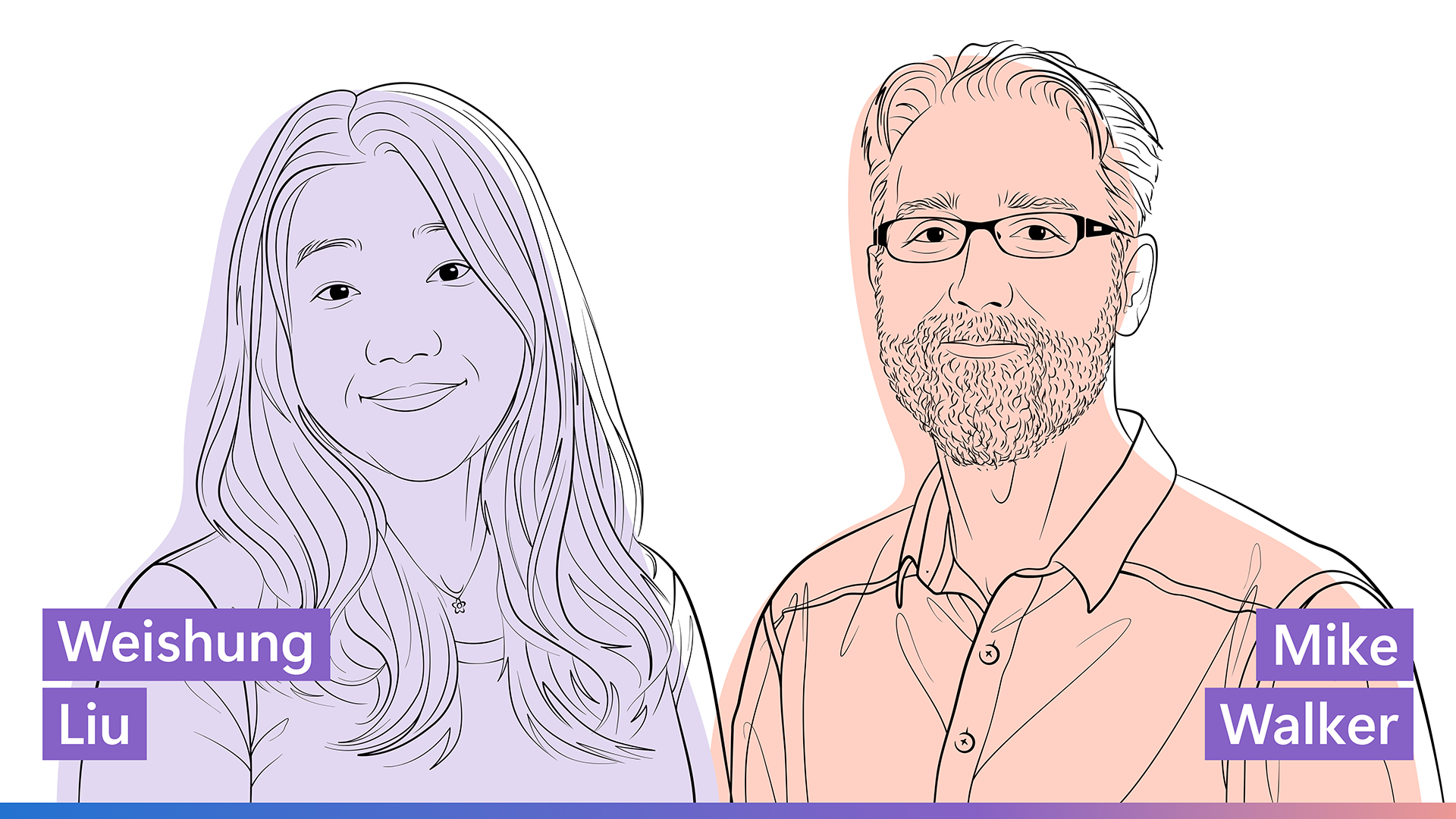
Research Manager Mike Walker reflects on a career spanning hacker culture, cybersecurity, and AI, sharing lessons about trust, teamwork, leadership, and why solving difficult problems requires curiosity, judgment, agility—and an understanding of the rules. The post Learn the rules: The hacker mindset appeared first on Microsoft Research.
MIT News · Artificial Intelligence· news.mit.eduOct 13, 2026
Machine-learning networks can learn without detailed instructions from a designer. Those that do may offer insight into how the brain reorganizes itself during learning.
MIT News · Artificial Intelligence· news.mit.eduSep 29, 2026
Professor Sherry Turkle’s new book, “Artificial Intimacy,” offers a withering critique of chatbots and the antisocial dynamics she believes they encourage.