Behavior-Conditioned Symbolic Synthesis is introduced---an approach for automated search of interpretable, deterministic symbolic programs that verifiably reproduce behavior---and applied to model both human and machine behavior across hundreds of challenging reasoning problems, pointing to underlying mechanisms reminiscent of satisficing in both people and machines.
Abstract
Symbolic models offer a powerful account of cognition, but their scope has historically been limited by the need for hand-engineering and computational tractability. We show how advances in artificial intelligence (AI) can scale symbolic modeling and help overcome these engineering limitations. We introduce Behavior-Conditioned Symbolic Synthesis (BCSS)---an approach for automated search of interpretable, deterministic symbolic programs that verifiably reproduce behavior---and apply it to model both human and machine behavior across hundreds of challenging reasoning problems. Analyzing these programs reveals that both people and machines tend to oversimplify, adopt rules that are partial explanations for their observations, and misinfer dependencies between problem features. These shared signatures are modulated by available resources, with reasoning effort predicting the extent to which machines simplify and explain their observations. Together, these results point to underlying mechanisms reminiscent of satisficing in both people and machines, and illustrate how BCSS offers a general approach for interpreting and comparing rule-based reasoning of humans and black-box AI systems.

State of Thought is proposed, a new reasoning paradigm that enables endogenous reasoning in LLMs, with the model's internal reasoning state governing how reasoning unfolds, and provides a generalizable and efficient alternative to existing test-time reasoning paradigms.
Z. Gong, Yi-Kun Hou, Zi-Hao Zeng et al.· arXiv.org· 0 citations
Experiments on multiple symbolic regression benchmarks show that SymbolicLM substantially improves structural recovery while maintaining competitive numerical fitting performance, demonstrating that symbolic regression can be explicitly learned as an intrinsic capability of LLMs.
Jun Yao, Ying-Fan Hua, Rui-Kun Li et al.· arXiv.org· 0 citations
Large language models (LLMs), especially recent reasoning-oriented models trained with reinforcement learning, achieve near-saturating accuracy on many reasoning benchmarks. However, it remains unclear whether these models truly reason over semantic structure or rely on superficial symbol patterns and familiar language...
Jing-Hao Zhang, Shi-Song Chen, Zhi-Xu Li et al.· Proceedings of the 35th ACM...· 0 citations
CogGym is introduced, a scalable, unified framework grounded in cognitive science for systematically comparing model and human behavior on matched experimental trials, and intends for CogGym to provide a living evaluation framework that continually incorporates new cognitive science experiments to characterize where mo...
Lance Ying, Jin-Zhou Wu, Y. Wang et al.· arXiv.org· 0 citations
Large language models (LLMs) have achieved strong performance in mathematical and logical reasoning, yet they still suffer from the curse of complexity and struggle as problem difficulty increases with the number of constraint interactions and the size of the search space. In contrast, satisfiability solvers such as Z3...
A unified architectural theory of practical knowledge that assesses AI know-how at the appropriate system level, extends intellectualism, and grounds the normative assessment of human-AI collaboration is defended.
J. Varghese· Philosophy & Technology· 0 citations
Related blog posts
MIT News · Artificial Intelligence· news.mit.eduOct 13, 2026
Machine-learning networks can learn without detailed instructions from a designer. Those that do may offer insight into how the brain reorganizes itself during learning.
MIT News · Artificial Intelligence· news.mit.eduSep 29, 2026
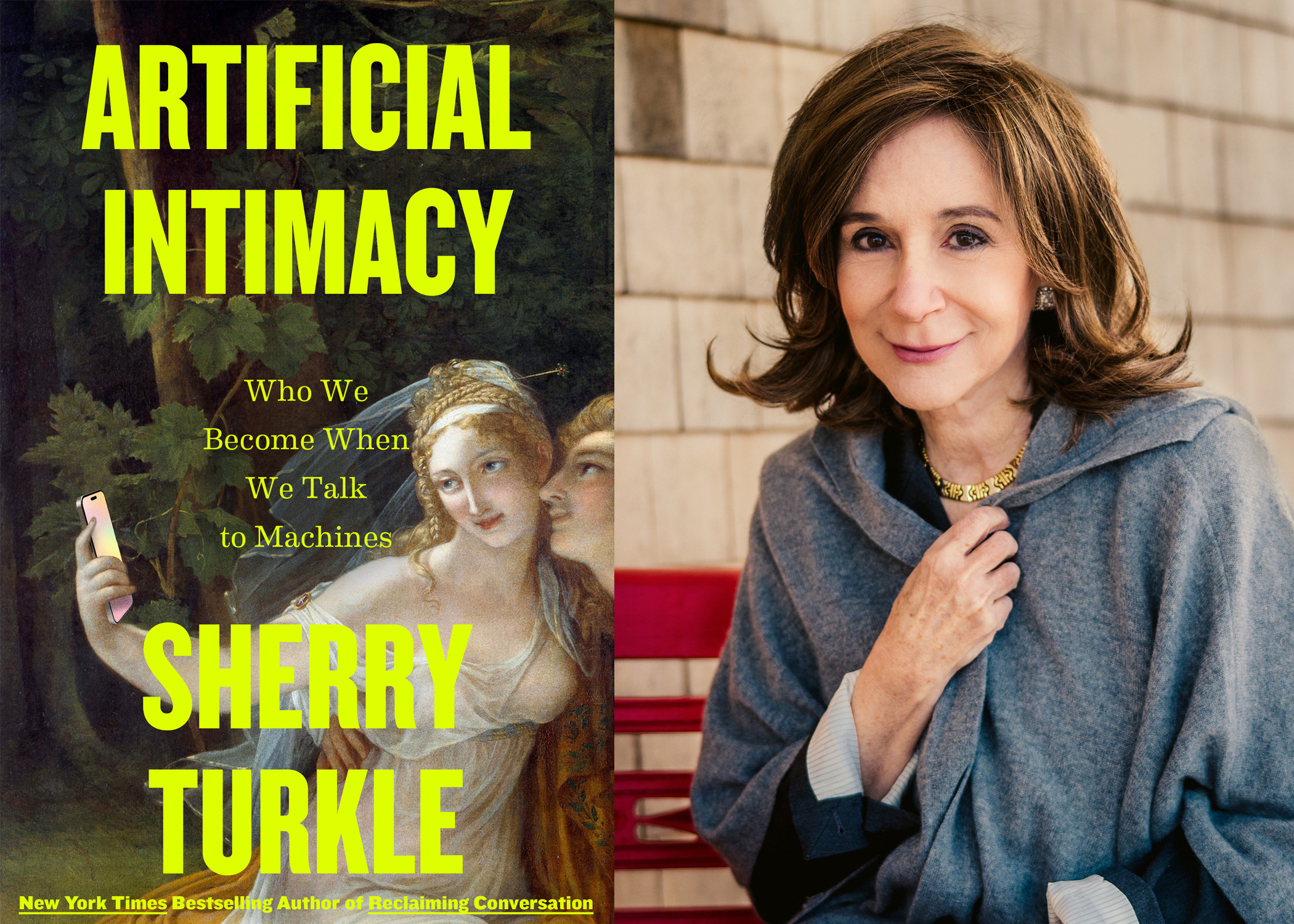
Professor Sherry Turkle’s new book, “Artificial Intimacy,” offers a withering critique of chatbots and the antisocial dynamics she believes they encourage.