Skip to content

Scaling Reinforcement Learning for Diffusion Models via Velocity Matching

Aug 2026 · 1 citation · 79 references
Computer Science

TL;DR

This work proposes reward-based velocity matching (RVM), a simple trajectory-free update that acts directly on the velocity field and provides a general framework that recovers recent fine-tuning methods, including RAM and DiffusionNFT, as special cases.

Abstract

Reward-based fine-tuning of diffusion models has largely inherited likelihood-based policy optimization developed for autoregressive large language models (LLMs). Diffusion models, however, are natively trained through velocity regression and do not directly provide the likelihood of a generated sample. Existing methods address this using transition likelihoods along stochastic denoising trajectories or evidence lower bounds (ELBOs) to approximate generated-sample likelihoods. These approximations arise from applying likelihood-based updates to models whose native training and generation operate through velocity fields. We instead take velocity matching as the starting point for reward fine-tuning. We propose \textbf{reward-based velocity matching (RVM)}, which weights the velocity-matching loss by reward with an additional anchor regression term, requiring neither likelihood estimation nor likelihood ratios. RVM recovers Reinforce Adjoint Matching at the update level and contains DiffusionNFT as a special case, while ELBO-based methods are closely related through the same velocity-regression structure. This unified view isolates reward design and anchor velocity as principal design choices in velocity-based fine-tuning. Across text-to-image, text-to-video, and image-to-video generation, RVM matches or outperforms the evaluated trajectory-based methods. On Wan2.1-T2V-1.3B, it achieves the highest VBench Overall among the evaluated methods, with substantially lower estimated training costs than the trajectory-based approaches. For video fine-tuning, we introduce a dynamic-tracking reward that provides explicit motion feedback and improves both Dynamic Degree and overall VBench performance.


View source

Similar papers

#machine learning Preprint Aug 2026

Designing Reinforcement Learning for Diffusion Models: A Unified Path-Space View

The empirical gap between these method families is identified as a variance-reduction effect rather than a difference in RL principle, and a multi-sample KDE value-gradient estimator that reuses rollout groups, together with scale-bounded weight families that retain stable existing recipes while excluding singular ones...

Yi-Xian Xu, Yuanrui Zhang, Sheng-Jie Luo et al. · 3 citations
Preprint Aug 2026

Explore or Converge? Stage-Guided Per-Step Optimization for Diffusion Models

Stage-Guided Per-Step Optimization (SGPO) is proposed for diffusion models, which jointly leverages signal-to-noise ratio and semantic changes to identify generation stages and adaptively assign stage-specific objectives.

Ren-Ye Yan, Ji-Kang Cheng, You Wu et al. · 1 citation
Preprint Aug 2026

PAST: Prompt-Adaptive Sampling Termination for Efficient Diffusion Model

PAST is proposed, which provides differentiated rewards while adaptively regulating training episode length by jointly perceiving denoising progress and prompt difficulty and establishes a dual adaptive coordination mechanism that balances the extrinsic and intrinsic rewards.

Ren-Ye Yan, Ji-Kang Cheng, You Wu et al. · 0 citations
Preprint Aug 2026

A Mean-Field Framework for Inference-Time Distributional Control of Diffusion Models

This work formulate inference-time distributional control as targeting a tilted measure under a mean-field framework, and derive a weighted interacting particle scheme to target it in a principled manner, and derives a weighted interacting particle scheme to target it in a principled manner.

Samuel Howard, N. Nüsken · 0 citations
Preprint Aug 2026

Latent Reward Registers for Diffusion Preference Alignment

This work proposes Latent Reward Registers, a mechanism that estimates terminal preference directly from intermediate noisy latents, and achieves significant reward improvement with a favorable reward-quality balance against training-free baselines.

Yuan-Shen Guan, Zipeng Feng, Cheng-Ru Song et al. · 0 citations
Preprint Aug 2026

On-Policy Self-Distillation in Diffusion Models

The results support on-policy self-distillation as an efficient and analyzable approach to diffusion post-training by converting image-level reward guidance into explicit and continually refreshed intermediate supervision, thereby opening a path toward more efficient and diagnosable alignment.

Weina Zhou, Xiongwei Zhu, Ling-Dong Kong et al. · 9 citations

Related blog posts

MIT News · Artificial Intelligence Oct 28, 2026

Making machines that can listen

Professor Paris Smaragdis develops computers with superhuman hearing for applications like speech recognition, music understanding, and environmental monitoring.

Microsoft Research Blog Aug 11, 2026

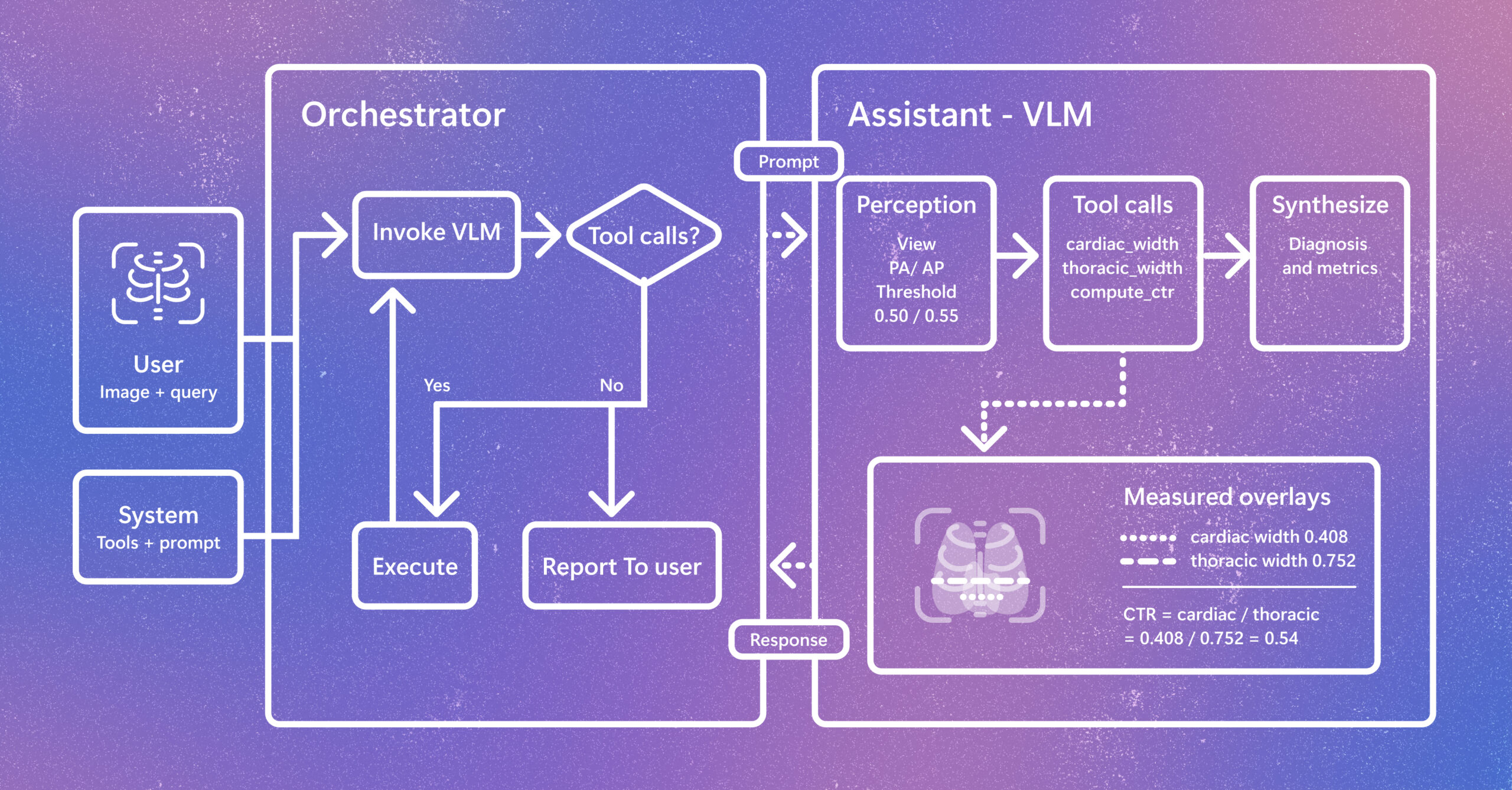
Introducing CARE-X: Towards Clinically Useful Radiology VLMs with Auxiliary Supervision, Reward-Aligned Learning, and Tool-Augmented Measurement

Radiology AI is evolving beyond report generation. CARE-X explores a unified approach that combines flexible reasoning, calibrated predictions, and measurement-based tools for chest X-ray interpretation. The post Introducing CARE-X: Towards Clinically Useful Radiology VLMs with Auxiliary Supervision, Reward-Aligned Learning, and Tool-Augmented Measurement appeared first on Microsoft Research.

We use cookies to run the site and, with your consent, for analytics and to show ads. See our Cookie Policy.