Skip to content

Unsatz: Evaluating Scientific Discovery Without a Given Ansatz

Oct 2026 · 0 citations · 34 references
Computer Science

Abstract

Before a scientist fits any parameter, they must decide what the model contains: which quantities exist, which are hidden, how they interact, and how they are measured. Physicists call such a trial form an ansatz. Benchmarks for automated equation discovery mostly supply it, by fixing the variables, a library of candidate terms, or a law to be modified. We introduce Unsatz, a benchmark in which an LLM agent must construct the ansatz itself. Each task is a simulated system, generated from a private seed as a program in a small modeling language: ordinary, delay, or partial differential equations, discrete maps, static and causal models, or stochastic processes, possibly with hidden states, distorted sensors, and uninformative measurement channels. The agent buys experiments within a budget, writes candidate programs in the same language, obtains their coefficients from the benchmark's fitter, and is scored only on how its final program predicts experiments it never saw: conditions outside the range it could explore, interventions, and longer runs. Across 80 systems in 20 domains, nine language models solve between 21% and 60%. On 44 of these systems, classical equation-discovery methods almost never succeed, although the same data usually suffice once the true equations are given with unknown coefficients; the difficulty lies in finding the structure, not in estimating it. Because mechanisms recur across systems, we also give agents the program they discovered for a related system; it helped only when the new system shared the mechanism and the first investigation had succeeded. Stronger agents make fewer unscientific errors; beyond these, agents find which variables a system has but not how they act, and prefer revisions that lower the training error to revisions that predict better.

View source

Similar papers

#artificial intelligence Preprint Sep 2026

Counterfactual Predictions in Scientific Emulators Without Controlled Experiments

This work introduces ReRoute, a framework for targeted scientific what-if prediction that combines factual data with partial mechanistic knowledge, without requiring controlled intervention data for adaptation, and provides a causal identification result for this construction under explicit structural assumptions.

Ding-Ling Yao, Kahaan Gandhi, Valentin Duruisseaux et al. · 1 citation
Preprint Oct 2026

Explore or Confirm? LLM Agents Misallocate Measurements Under Noise

Wellocate is released as a benchmark and reinforcement-learning environment with frozen splits and scripted baselines, and anyone can measure how an agent splits its budget before trusting it with real experiments, and train agents to split it better.

Abdul Karim, Matt Keon · 0 citations
Preprint Nov 2026

Hard to Fool: A Bounded LLM Research Loop for Quantitative Finance, and What Two Dozen Campaigns Found

Agentic research loops that let a language model propose a change, run a fixed experiment and keep whatever improves the metric work well in machine learning. In trading research the same loop is a machine for producing false discoveries: a backtest that"improves the metric"is, by default, overfit, look-ahead, a multip...

Harry Zhang · 0 citations
#artificial intelligence Preprint Oct 2026

Learning to Outgrow a Theory: Experimental Discovery Beyond the Initial Hypothesis Space

Scientific discovery systems typically optimize experiments within a fixed hypothesis space. This creates a failure mode when all available candidates omit the same missing mechanism: candidate disagreement can collapse even while the model class is systematically wrong. We formulate experimental model-class revision,...

Si-Yuan Ma, Albert Gao, Chun-Zheng Zhu et al. · 0 citations
#artificial intelligence Preprint Oct 2026

Explore, Then Commit: Measurement-Efficient Scientific Law Discovery with Language Models

An explore-then-commit protocol in which a large language model proposes hypotheses, a programmatic planner gathers measurements, and a fresh prompt synthesizes the final law from fixed observations is evaluated, supporting the complete protocol as a promising measurement-efficient configuration.

Kautik Mandve, Dileepa Fernando · 0 citations

Related blog posts

MIT News · Artificial Intelligence Sep 29, 2026

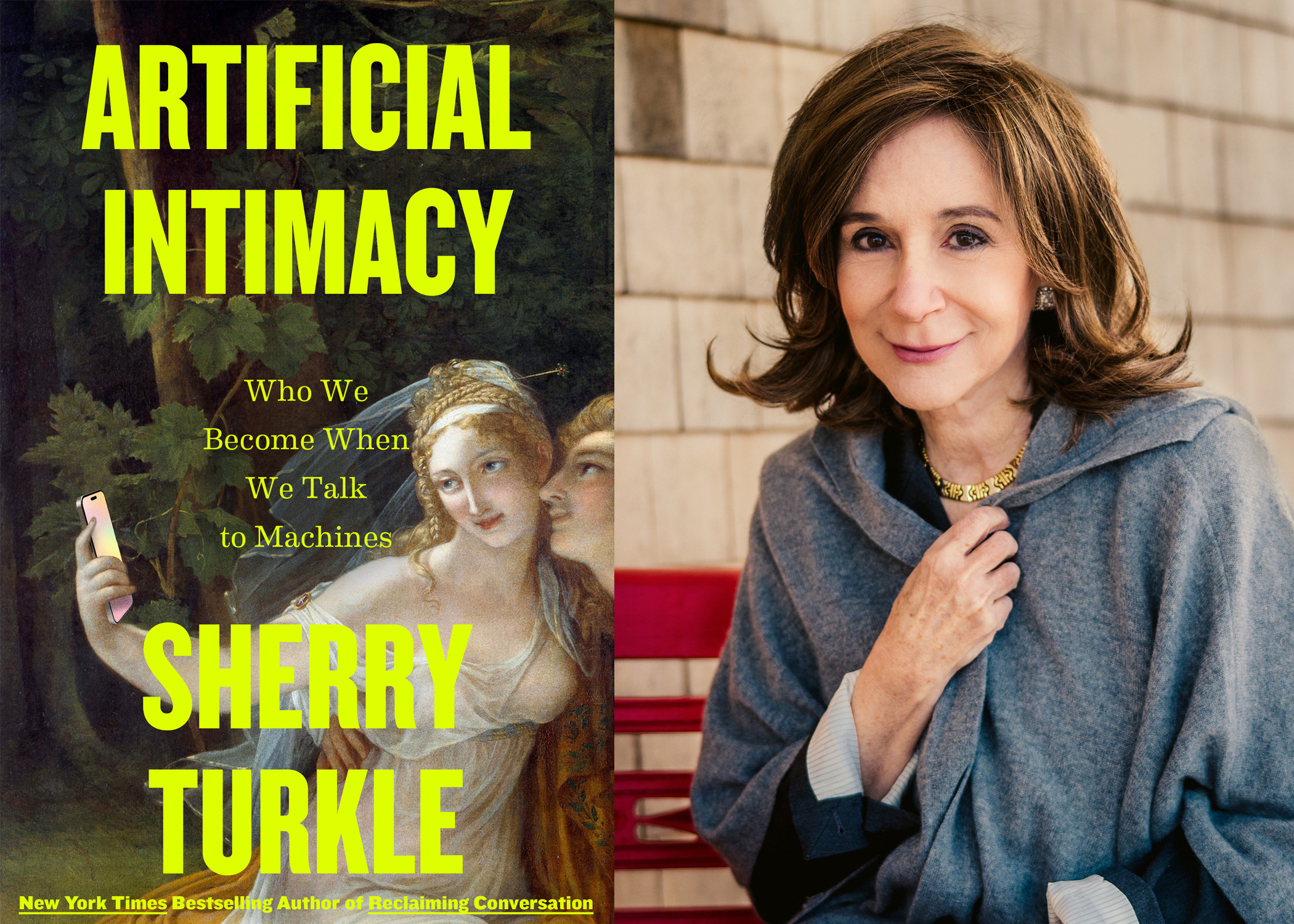
Who we become when we talk to machines

Professor Sherry Turkle’s new book, “Artificial Intimacy,” offers a withering critique of chatbots and the antisocial dynamics she believes they encourage.

We use cookies to run the site and, with your consent, for analytics and to show ads. See our Cookie Policy.

