Oct 2026· Zenodo (CERN European Organization for Nuclear Research)
Logic, programming, and type systems
Abstract
Research preprint accompanying ESS-MAI POC011 version 0.1.0, by Bledar Gjata. This four-page preprint describes a bounded five-cycle Rust experiment with scalar verification outcomes 0, 0, 0, 1, 1 and two committed local effects. It documents distinct LIGHT coordination, QUANTUM candidate elimination and SHADOW verification competences; D-BAB witnessing; a borrowed 0-NOI primitive; one-use FFI handle consumption; and context-linked durable memory. The proposed AI Authority paradigm is explained separately from the mechanisms demonstrated by this capsule. Recorded local evidence comprises 38 Rust tests passing in debug and release, 17 independent Python verifier self-tests, exact source provenance and SHA-256 manifests. Selected primitives are source extractions; the finite affine model and orchestration are documented adaptations. This is not independent peer review, security certification, a full native hierarchy proof or a completed VERITAS integration. Missing evidence remains distinct from a valid counterexample. RAM write/readback does not measure physical energy, hashes do not authenticate authority, and valid-prefix WAL rollback is an explicit limitation. Reproduction note, 30 October 2026: use Rust 1.98.0. Initial hosted compilation with Rust 1.99.1 stopped because fetch_update was deprecated and warnings are denied. Pinning the recorded toolchain allowed full Ubuntu and Windows reproduction in run 41077100247, without changing runtime code or tests. The deposited PDF and software archive remain unchanged; the repository compatibility note records the correction. AI tools assisted implementation and writing under the author’s architecture, direction and review. Independent replication, criticism and attributed technical contributions are welcome. Versioned software, evidence and checksum archive GitHub repository and review protocol Hugging Face byte-identical mirror Originating ESS-MAI project ESS-MAI archive Author ORCID Author LinkedIn OpenAIRE discovery route (indexing not yet confirmed) PREreview request (not a completed review or endorsement)
The method, ECCOLA, is presented, which aims at making the high-level AI ethics principles more practical, making it possible for developers to more easily implement them in practice.
Ville Vakkuri, Kai-Kristian Kemell, P. Abrahamsson· EUROMICRO Conference on Soft...· 64 citations· ⚡6
The goal is to not only refine the accuracy of the LLM-based tool but also to underscore its potential in streamlining the software development lifecycle through proactive code improvement and education.
Z. Rasheed, Malik Abdul Sami, Muhammad Waseem et al.· arXiv.org· 62 citations· ⚡3
The use of large language models to automatically improve the user story quality in Austrian Post Group IT agile teams is explored, with a reference model for an Autonomous LLM-based Agent System developed and implemented at the company.
Zheying Zhang, M. Rayhan, Tomas Herda et al.· International Conference on...· 48 citations· ⚡4
This paper introduces a novel multi-AI-agent system designed to fully automate SLRs, and demonstrates how it substantially reduces the time and effort traditionally required for SLRs while maintaining comprehensiveness and precision.
Abdul Malik Sami, Z. Rasheed, Kai-Kristian Kemell et al.· arXiv.org· 44 citations· ⚡2
The proposed LLM-based multi-agent system automates qualitative data analysis process, creating opportunities for researchers and practitioners, and future improvements focus on enhancing multilingual performance and integrating continuous expert feedback.
Z. Rasheed, Muhammad Waseem, Aakash Ahmad et al.· arXiv.org· 41 citations
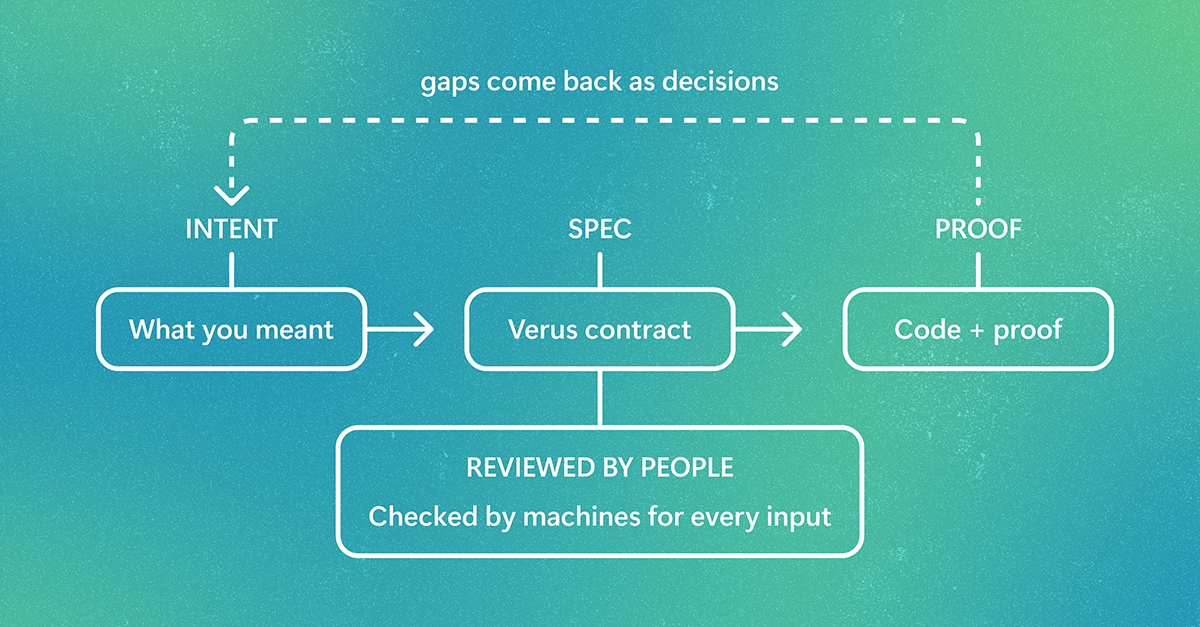
AI agents can generate code at a scale that’s hard for humans to review line-by-line. PDD Kit helps ensure the code is doing what the developer intended by creating formal specifications and testing against them. It converts developer intent into a Verus specification, proves AI-generated code meets it for every input, and uses tests where proofs aren't practical. Developers review intent, not every line. The post Formally verifying agent-written full-stack web apps with PDD Kit appeared first o…
Research Manager Mike Walker reflects on a career spanning hacker culture, cybersecurity, and AI, sharing lessons about trust, teamwork, leadership, and why solving difficult problems requires curiosity, judgment, agility—and an understanding of the rules. The post Learn the rules: The hacker mindset appeared first on Microsoft Research.
We use cookies to run the site and, with your consent, for analytics and to show ads.
See our Cookie Policy.