A framework connects certified privacy accounting with optimization through nonlinear training dynamics, and establishes existence and budget stability of optimal schedules, design-to-training utility stability, and deterministic, stochastic, and sample-average stationarity guarantees.
Abstract
Privacy accounting bounds the cumulative privacy cost of Differentially Private Stochastic Gradient Descent but does not determine how to allocate a fixed budget across iterations. We formulate the complete Gaussian noise-variance schedule as an open-loop control under a composed zero-Concentrated Differential Privacy constraint, explicitly accounting for schedule selection. For expected quadratic terminal tracking, we prove that every local minimizer exhausts the certified budget, yielding an exact-budget simplex formulation. We introduce Privacy-Budget Adjoint Mirror Descent (PB-AMD), combining pathwise adjoint gradients with entropic updates that preserve positivity, charge floors, and the prescribed budget. Under regularity and coercivity assumptions, we establish existence and budget stability of optimal schedules, design-to-training utility stability, and deterministic, stochastic, and sample-average stationarity guarantees. A linear-quadratic reduction yields an explicit square-root allocation law. Experiments demonstrate tracking improvements over several allocation rules and predictive improvements over uniform allocation in a learning-rate restart setting, where learning-rate allocation performs similarly. Comparisons at a common stationarity tolerance show lower schedule-optimization times than projected gradient descent on the tested problems. The framework connects certified privacy accounting with optimization through nonlinear training dynamics.

AO-Pri-BAI is proposed, an adaptive algorithm that maintains private running estimates through Laplace-tree mechanisms and learns a sampling design through a min--max interaction between hard alternatives and arm allocations that satisfies pure $\epsilon$-differential privacy.
Ke-Qin Chen, Jie Bian, Yu-Lian Wu et al.· 0 citations
Mitigating unfair disparities in sequential decision-making is a growing concern in machine learning. We study contextual bandits under a global covariate-based Lipschitz fairness constraint, pioneered by \cite{dwork2012fairness}, requiring individuals with similar contexts to receive similar action distributions. We s...
Geng-Yu Xue, Fan Wang, Fei-Yu Jiang et al.· 0 citations
We study finite-horizon LQR with independent disturbances whose laws may drift over time. We address uncertainty in this evolution through ex-ante distributionally robust regret optimization (DRRO), which minimizes worst-case excess expected cost relative to the optimal causal controller that knows the law sequence. To...
Lukas-Benedikt Fiechtner, J. Blanchet· 0 citations
Saturated Propose-test-release, a general mechanism that privately releases the output of a discrete selector with probability one once its stability certificate reaches a finite threshold, is introduced and a computable support-stability score is constructed.
We study offline learning in two-player zero-sum contextual games with public and private information, motivated by strategic settings such as auctions and negotiations with private valuations. We introduce unilateral prescriptive concentrability and show that asymmetric information can change offline coverage through...
S. Liu, Claire Chen, Jiuqi Wang et al.· 2 citations
Standard Policy Gradient (PG) algorithms suffer from high estimation variance because they rely on Monte Carlo updates. While off-policy variance reduction mitigates this problem, establishing optimal sample complexity currently requires either restrictive assumptions, such as uniformly bounded importance weights, or i...
Leonardo Cesani, M. Papini, Marcello Restelli· 0 citations
Related blog posts
MIT News · Artificial Intelligence· news.mit.eduOct 13, 2026
Machine-learning networks can learn without detailed instructions from a designer. Those that do may offer insight into how the brain reorganizes itself during learning.
MIT News · Artificial Intelligence· news.mit.eduSep 29, 2026
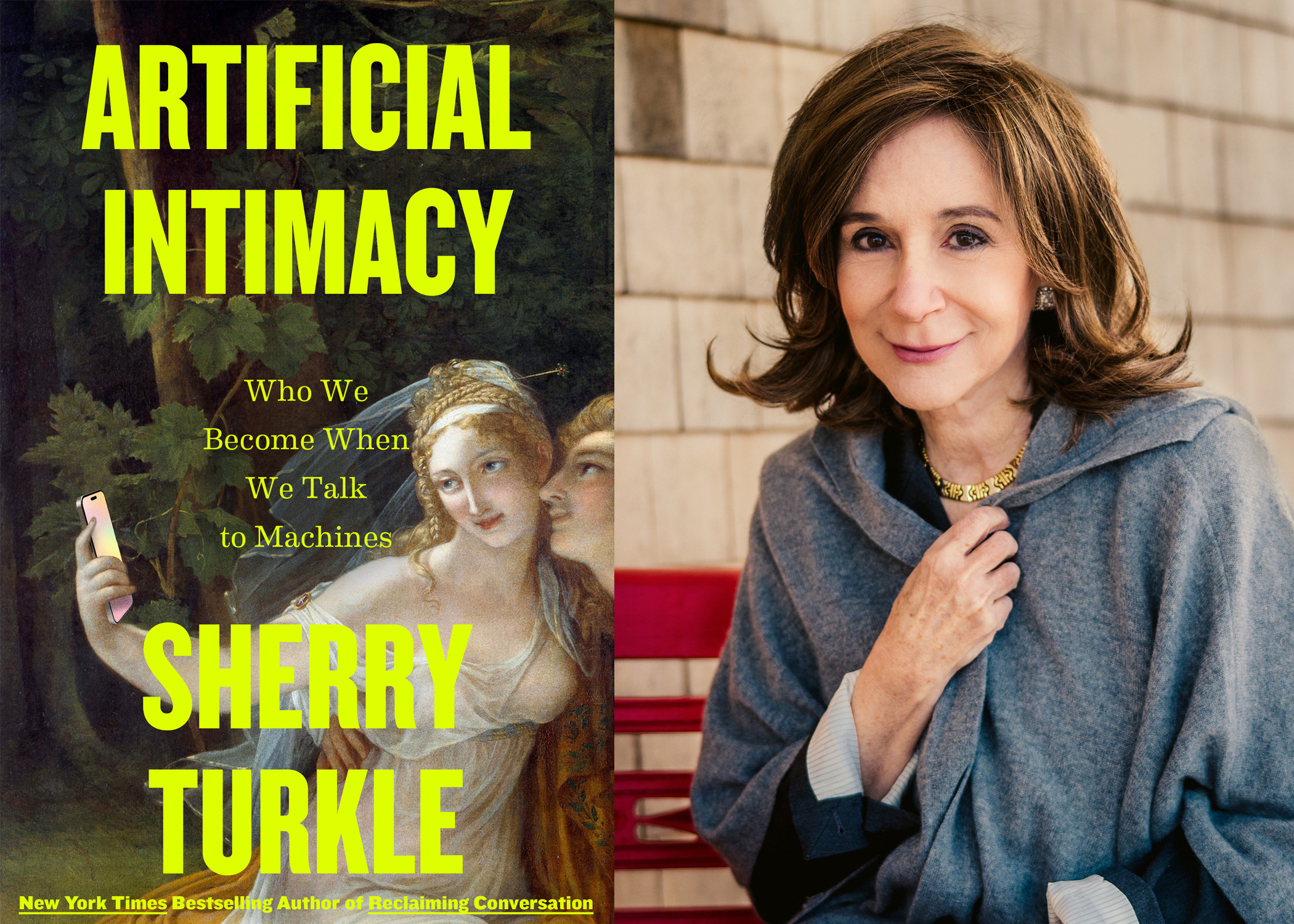
Professor Sherry Turkle’s new book, “Artificial Intimacy,” offers a withering critique of chatbots and the antisocial dynamics she believes they encourage.