Aug 2026· Frontiers in Computing and Intelligent Systems· Vol 17, pp. 54-61· 0 citations· 15 references
TL;DR
A formalized privacy-aware scheduling perspective is proposed that incorporates latency, energy consumption, cost, node trustworthiness, data sensitivity, privacy leakage risk, reliability and auditability into a unified decision model.
Abstract
With the rapid development of edge computing, cloud computing, big data, artificial intelligence and the Internet of Things, traditional centralized cloud computing faces increasing challenges in latency, bandwidth pressure, resource utilization and data privacy protection. Edge-cloud collaboration provides a new computing paradigm by extending computing, storage and network resources from centralized cloud data centers to edge nodes closer to users and data sources. This architecture can improve service response efficiency and reduce data transmission pressure, but it also introduces heterogeneous resources, dynamic task requests, unclear security boundaries and privacy leakage risks. This paper reviews existing studies on edge-cloud collaboration, resource scheduling, intelligent optimization and privacy protection, and then conducts an analytical discussion of the research gaps rather than an experimental evaluation. The review shows that existing studies have achieved valuable progress in task offloading, resource allocation, deep reinforcement learning, access control, encryption and federated learning. However, research on integrated frameworks that combine intelligent resource scheduling with privacy-aware security management remains limited. To address this limitation, this paper proposes a formalized privacy-aware scheduling perspective that incorporates latency, energy consumption, cost, node trustworthiness, data sensitivity, privacy leakage risk, reliability and auditability into a unified decision model. The analysis indicates that future edge-cloud systems should evolve from efficiency-centric scheduling toward secure, trustworthy and sustainable collaborative governance.
According to the review, combining AI-powered optimisation with sophisticated security frameworks has the potential to enhance the performance, resilience and reliability of multi-cloud environments.
A. Jain· Journal of Global Research i...· 0 citations
This paper introduced an Intelligent Portable Edge – Cloud Computing Architecture (IPECA) that combines the portable computing hardware, AI-based workload prediction, adaptive resource optimization, container-based virtualization and secure edge-cloud collaboration into a single computing architecture.
Pradeep Kachakayala, Akshith Kachakayala· International Journal for Re...· 0 citations
Cloud computing has become a part of modern technology. It is used in intelligence, online education, banking,
healthcare, entertainment, business applications and many other areas. The growth of intelligence is increasing the demand for
computing power, storage, networking and data-centre resources. Because of this growth, energy consumption, security and
efficient resource management have become issues in cloud computing. This paper discusses cloud computing in the AI era with
a focus on energy-efficient infrastructure, resource management, edge computing and cloud security. It also discusses how
artificial intelligence can be used to improve cloud resource management and reduce resource usage. A simple conceptual
approach based on workload monitoring, resource allocation, edge processing and security monitoring is presented. The study
concludes that future cloud systems need to provide performance while also reducing unnecessary energy consumption and
maintaining security and reliability.
Fayiza Rinaz K. M, Ayesha Thahleela K. K, Aaslim Sanofar A et al.· International Journal for Re...· 0 citations
Abstract
Artificial Intelligence (AI) and Cloud Computing are two transformative technologies that reshape the digital landscape of modern organizations. Cloud computing provides scalable computing resources, storage capabilities, and on-demand services, while AI offers intelligent decision-making, automation, predictive analytics, and machine learning capabilities. The integration of AI into cloud environments has significantly improved operational efficiency, resource optimization, cybersecurity, service delivery, and business intelligence.
This study explores the role of Artificial Intelligence in enhancing cloud computing infrastructures and services. The research investigates the benefits of AI-enabled cloud systems, including automated resource management, predictive maintenance, intelligent workload balancing, cost optimization, and enhanced customer experiences. Furthermore, the study examines the challenges associated with integrating AI into cloud environments, such as data privacy concerns, computational complexity, interoperability issues, algorithmic bias, and regulatory compliance.
Security remains a critical concern in cloud ecosystems. Therefore, this paper analyzes major security issues including data breaches, insider threats, adversarial AI attacks, identity management vulnerabilities, and compliance risks. The study also evaluates AI-driven security mechanisms such as anomaly detection, threat intelligence, behavioral analytics, and automated incident response systems.
Through an extensive literature review and qualitative analysis of existing research, the paper demonstrates that AI significantly enhances cloud computing capabilities while introducing new security and ethical challenges. The findings suggest that organizations adopting AI-powered cloud solutions must implement robust governance frameworks, cybersecurity measures, and regulatory compliance strategies to maximize benefits and minimize risks.
Keywords: Artificial Intelligence, Cloud Computing, Machine Learning, Cybersecurity, Resource Optimization, Cloud Security, Big Data Analytics, Intelligent Automation, Predictive Analytics, AI-driven Cloud Services.
Kurban Kurban, A. Farooqi· International Scientific Jou...· 0 citations
AI is making software generation faster, but speed does not remove the need for expertise. As more work is delegated to AI, tacit knowledge may become one of the most important human advantages in software engineering. The post Beyond Prompt Engineering: The Role of Tacit Knowledge in Software Engineering appeared first on GPT-Lab.
MIT News · Artificial Intelligence· news.mit.eduSep 9, 2026
A weeklong summer workshop brought higher education faculty to campus to explore how AI and machine learning materials can be adapted for their classrooms.
MIT News · Artificial Intelligence· news.mit.eduSep 2, 2026
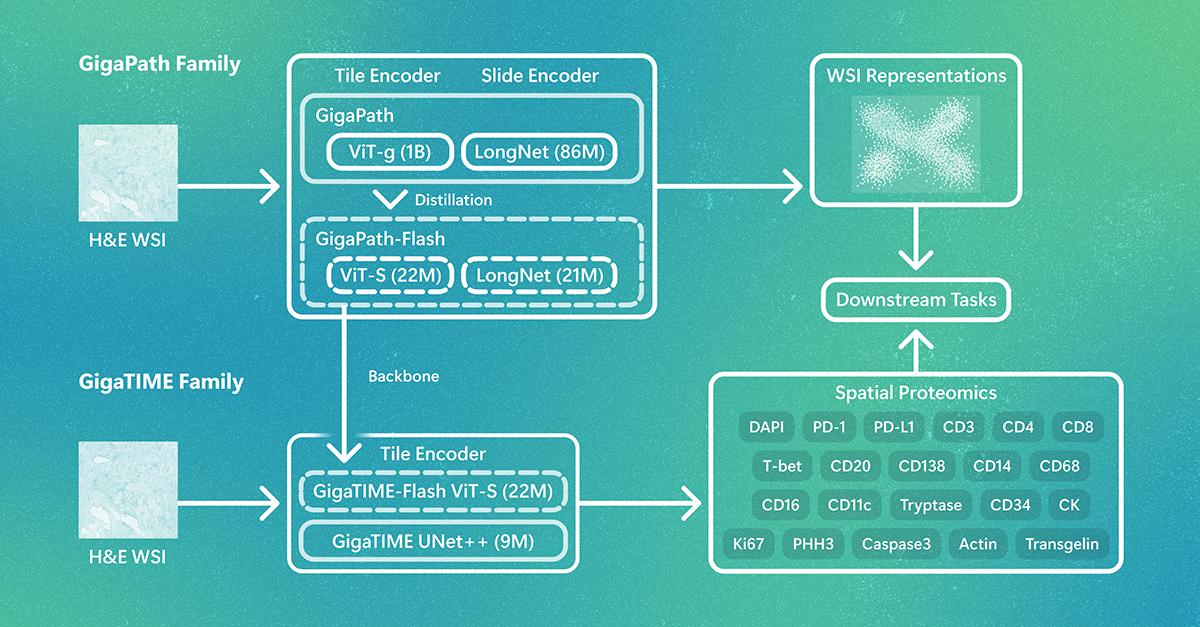
What if pathology foundation models could do more with less? GigaPath-Flash and GigaTIME-Flash cut computational demands while maintaining strong performance, opening the door to larger studies and broader exploration. The post GigaPath-Flash and GigaTIME-Flash: Toward population-scale discovery with efficient pathology foundation models appeared first on Microsoft Research.
We use cookies to run the site and, with your consent, for analytics and to show ads.
See our Cookie Policy.