Oct 2026· Zenodo (CERN European Organization for Nuclear Research)
Computational Drug Discovery Methods
Abstract
Purpose. Drug development is long, costly and mostly unsuccessful, so any tool that improves the choice of targets, molecules or trial designs is valuable. This article asks where artificial intelligence stands in the pharmaceutical industry in 2026 and where it could be by about 2035. Design and methods. A review that combines the share of the drug-discovery and development literature that involves AI (OpenAlex, 2010–2025), Eurostat's survey of AI use in pharmaceutical manufacturing firms in the European Union (2021–2025), and published evidence from structural biology, clinical pipelines and regulators. Claims from the literature were checked against the cited sources. The scenarios are judgements built on this evidence. Findings. The share of drug-development works that mention AI rose from 1.2% in 2018 to 8.0% in 2025 and language-model works from 68 to 1,640 in three years. In the EU, 41.3% of pharmaceutical-manufacturing enterprises used AI in 2025, against 15.7% in 2021 and 19.9% of all enterprises, but the uses were led by text mining (25.6%) and language generation (21.0%), not machine learning for data analysis (12.6%). The scientific successes are real, from protein structure prediction to a generative-AI-designed molecule that showed a signal in a 71-patient phase 2a trial, and AI-discovered molecules passed phase I in 80–90% of cases; but phase II success, about 40% in a small sample, was similar to historic averages. We expect AI to remain routine in structure-based design and to move into trial design and development planning by 2028, and the first approval of an AI-designed drug to be a question for about 2029–2031. Originality. The article separates the parts of the pharmaceutical value chain where AI has demonstrably worked from those where it is still hoped for, uses a dated adoption series for the industry, and gives signposts for the main open question: whether AI improves the odds of clinical success or only the speed of design.
The method, ECCOLA, is presented, which aims at making the high-level AI ethics principles more practical, making it possible for developers to more easily implement them in practice.
Ville Vakkuri, Kai-Kristian Kemell, P. Abrahamsson· EUROMICRO Conference on Soft...· 64 citations· ⚡6
The goal is to not only refine the accuracy of the LLM-based tool but also to underscore its potential in streamlining the software development lifecycle through proactive code improvement and education.
Z. Rasheed, Malik Abdul Sami, Muhammad Waseem et al.· arXiv.org· 62 citations· ⚡3
A comprehensive overview of how enhanced sampling methods are reshaping the field, with a particular focus on the data-driven construction of collective variables, is provided.
Kai Zhu, Enrico Trizio, Jintu Zhang et al.· Chemical Reviews· 58 citations
The use of large language models to automatically improve the user story quality in Austrian Post Group IT agile teams is explored, with a reference model for an Autonomous LLM-based Agent System developed and implemented at the company.
Zheying Zhang, M. Rayhan, Tomas Herda et al.· International Conference on...· 48 citations· ⚡4
This paper introduces a novel multi-AI-agent system designed to fully automate SLRs, and demonstrates how it substantially reduces the time and effort traditionally required for SLRs while maintaining comprehensiveness and precision.
Abdul Malik Sami, Z. Rasheed, Kai-Kristian Kemell et al.· arXiv.org· 44 citations· ⚡2
The proposed LLM-based multi-agent system automates qualitative data analysis process, creating opportunities for researchers and practitioners, and future improvements focus on enhancing multilingual performance and integrating continuous expert feedback.
Z. Rasheed, Muhammad Waseem, Aakash Ahmad et al.· arXiv.org· 41 citations
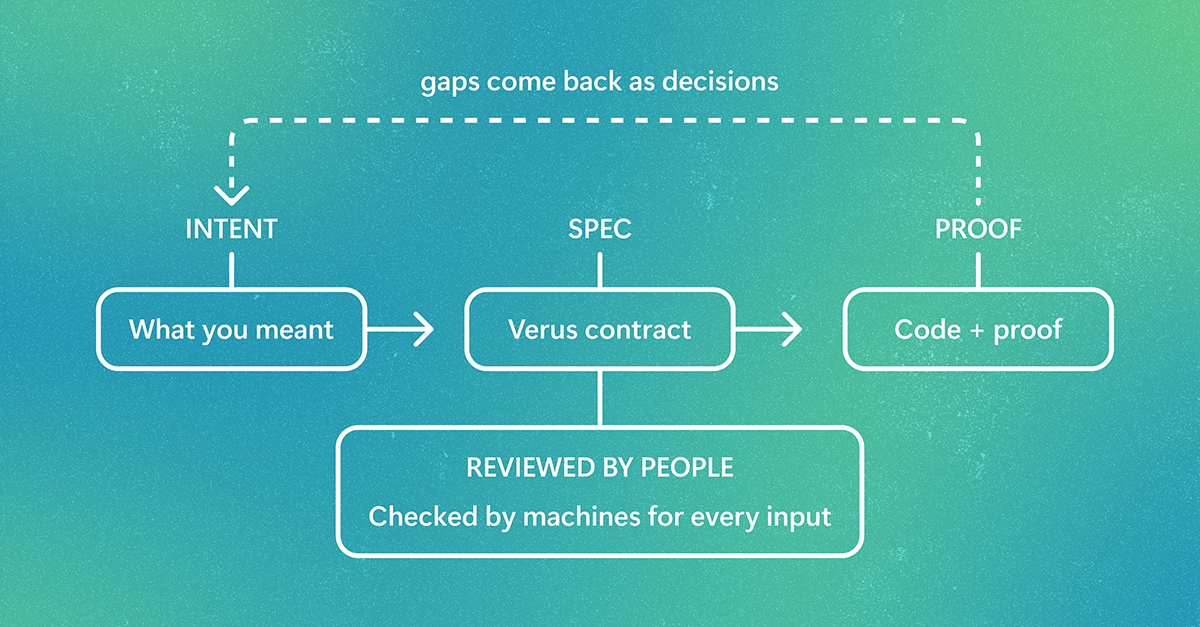
AI agents can generate code at a scale that’s hard for humans to review line-by-line. PDD Kit helps ensure the code is doing what the developer intended by creating formal specifications and testing against them. It converts developer intent into a Verus specification, proves AI-generated code meets it for every input, and uses tests where proofs aren't practical. Developers review intent, not every line. The post Formally verifying agent-written full-stack web apps with PDD Kit appeared first o…
Research Manager Mike Walker reflects on a career spanning hacker culture, cybersecurity, and AI, sharing lessons about trust, teamwork, leadership, and why solving difficult problems requires curiosity, judgment, agility—and an understanding of the rules. The post Learn the rules: The hacker mindset appeared first on Microsoft Research.
We use cookies to run the site and, with your consent, for analytics and to show ads.
See our Cookie Policy.