Skip to content
#edge computing Open access

Agricultural Cyber-Physical Systems: Research Progress in Perception-Driven Multi-Robot Coordination and Logistics in Unstructured Environments

Aug 2026 · Sensors · Vol 26, pp. 5514 · 159 references
Smart Agriculture and AI

Abstract

Driven by the escalating global agricultural workforce shortage and the urgent need to meet the “Zero Hunger” mandate, the automation of harvest–transport workflows has emerged as a cornerstone of Agriculture 4.0. This paper highlights the latest research progress in multi-robot collaborative logistics scheduling across highly unstructured farming environments, underpinned by cutting-edge spatial perception and digital twin frameworks. Initially, we summarize the technological leap from conventional 2D geometric mapping to multi-modal semantic 3D reconstruction—fusing light detection and ranging (LiDAR), unmanned aerial vehicle (UAV) imagery, and spatial data—to enable high-fidelity forward-looking predictions. The discussion then transitions to algorithmic advancements, emphasizing the shift from traditional centralized operations research to decentralized, data-driven approaches such as Multi-Agent Reinforcement Learning (MARL). We also explore micro-kinematic predictive control mechanisms and the growing integration of ecological sustainability metrics into routing models. To demonstrate practical engineering progress, multi-agent implementations are analyzed across three typical spatial settings: high-throughput continuous relays in open fields, global navigation satellite system (GNSS)-denied discrete routing in dense orchards, and close-proximity human–robot collaboration (HRC) in smart greenhouses. Finally, we identify the remaining barriers to the large-scale commercialization of Agricultural Cyber-Physical Systems (ACPS), such as the “Sim-to-Real” gap restricted by edge-computing capacities, unclosed economic loops, and HRC ethical dilemmas, offering a forward-looking roadmap for next-generation resilient agricultural networks.

View source

Similar papers

#computer vision Review Sep 2017

Agile Software Development Methods: Review and Analysis

This publication proposes a definition and a classification of agile software development approaches and analyses ten software development methods that can be characterized as being "agile" against the defined criterion.

P. Abrahamsson, O. Salo, Jussi Ronkainen et al. · 727 citations · ⚡54
#computer vision Jun 2008

The impact of agile practices on communication in software development

The study shows that agile practices improve both informal and formal communication, but indicates that, in larger development situations involving multiple external stakeholders, a mismatch of adequate communication mechanisms can sometimes even hinder the communication.

M. Pikkarainen, Jukka Haikara, O. Salo et al. · 401 citations · ⚡48
#machine learning Review Open access Oct 2014

Software development in startup companies: A systematic mapping study

The results indicate that software engineering work practices are chosen opportunistically, adapted and configured to provide value under the constrains imposed by the startup context.

Nicolò Paternoster, Carmine Giardino, M. Unterkalmsteiner et al. · 394 citations · ⚡54

Related blog posts

Microsoft Research Blog Sep 29, 2026

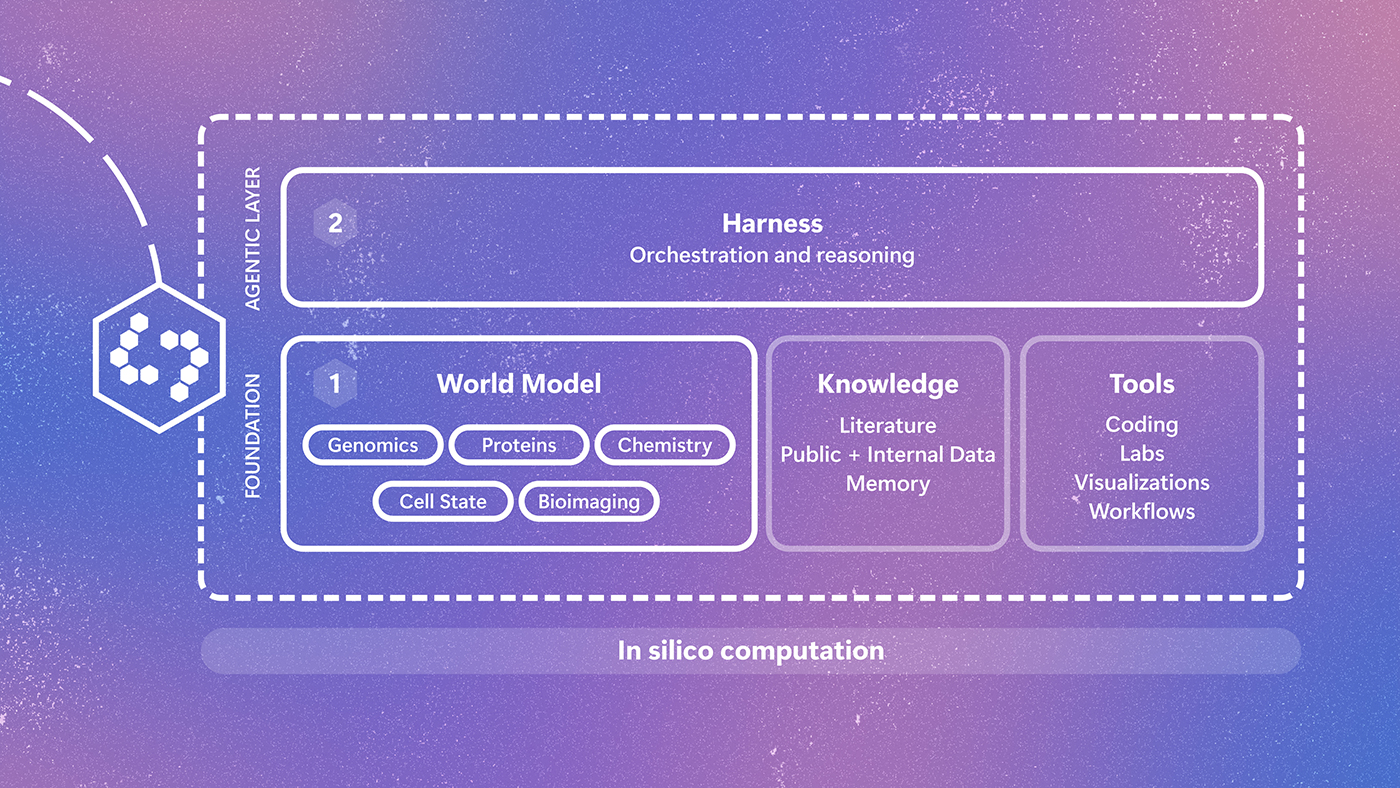
Introducing Quine: An AI research system designed for the complexity of biology

Biology doesn't operate in silos, and neither should the AI representation of it. Quine is an early-stage research effort to create a multimodal world model of biology. By connecting insights across biological scales and modalities, Quine helps scientists computationally search a space far larger than intuition allows and prioritize hypotheses before they reach the lab. Experimental results provide important feedback, helping researchers sharpen future research directions. The post Introducing Q…

We use cookies to run the site and, with your consent, for analytics and to show ads. See our Cookie Policy.