Skip to content
#software testing Open access

Ryder: Epigenome normalization using a two-tier model and internal reference regions.

Oct 2026 · Bioinformatics · 0 citations · 36 references
Medicine

TL;DR

Ryder is presented, a flexible and robust Python package for the normalization of epigenomic signal tracks that leverages stable internal reference regions, such as invariant CTCF binding sites, to correct for technical artifacts genome-wide.

Abstract

MOTIVATION Sequencing-based epigenomic profiling methods are powerful but suffer from technical variability that complicates cross-sample comparisons and can obscure true biological signals. While existing normalization methods using spike-in controls or computational approaches have been proposed, they often rely on assumptions that may not hold across diverse experimental conditions or require additional data types. RESULTS We present Ryder, a flexible and robust Python package for the normalization of epigenomic signal tracks. Ryder leverages stable internal reference regions, such as invariant CTCF binding sites, to correct for technical artifacts genome-wide. Our results show that it effectively adjusts both background noise and signal intensity, ensuring accurate signal alignment across samples while preserving genuine biological differences. We demonstrate that Ryder performs robustly across diverse assays including DNase-seq, CUT&RUN, ATAC-seq, MNase-seq, and ChIP-seq, with or without spike-in controls. By reducing technical noise, Ryder improves the detection of genuine biological changes, such as quantitative reduction of chromatin accessibility at key enhancer elements by depletion of BRG1, a key subunit of the chromatin remodeling BAF complexes. AVAILABILITY AND IMPLEMENTATION The Ryder source code, documentation and test data are freely available at: https://github.com/YaqiangCao/ryder. The software version used in this study is archived at Zenodo: https://zenodo.org/records/21267457. SUPPLEMENTARY INFORMATION Supplementary data are available at Bioinformatics online.

Read PDF

Similar papers

Open access Oct 2026

HyARQ: a Snakemake workflow for allele-specific read counting and quality control in F1 hybrids

It is shown that HyARQ accurately recovers expected parental proportions with minimal cross-parent assignment across all four assay types and provides a standardized and reproducible framework for allele-specific analysis across multiple molecular layers and facilitates downstream studies of cis-regulatory variation in...

Sontosh K. Deb, Sarah Siegle, Joseph L. Gage · 0 citations
Open access Sep 2026

Systematic benchmarking of ambient RNA decontamination tools to advance precision in single-cell transcriptomic analysis

Single-cell RNA sequencing measures gene expression in individual cells, but RNA released from damaged cells can be captured alongside RNA from intact cells, producing spurious signals that affect cell identification and biological interpretation. Although many computational tools aim to remove ambient RNA, their relat...

Ya-Ge Nie, Chao Zhang, Jin-Song Tan et al. · 1 citation
Open access Oct 2026

A Unified Comparison of 10X Genomics and Parse Biosciences scRNA-seq Technologies

Droplet-based and split-pool barcoding are the two dominant high-throughput single-cell RNA-seq paradigms, yet their systematic biases remain incompletely characterized. We compared seven matched 10X Genomics Chromium and Parse Bio-sciences Evercode WT sample pairs from five studies spanning multiple tissues and specie...

Maya Caskey, Ingileif B. Hallgrímsdóttir · 0 citations
Open access Sep 2026

Precision-Based Filtering Facilitates Cross-Referencing of Conventional and Single-Nucleus Transcriptomes to Identify Time- and Temperature-Sensitive Cell Populations.

It is shown, using two independent Arabidopsis RNAseq datasets, that this filter allows for the inclusion of many more transcription factors than even a low-stringency expression level filter, and it is found that these lowly-expressed genes mark specific cell clusters in the single-nucleus (sn)RNAseq dataset and may f...

Adam Seluzicki, Travis A. Lee, N. Hartwick et al. · 0 citations
Open access Sep 2026

A single-cell RNA-seq catalog of ground truth gene coregulation

To enable evaluation of normalization methods for identification of coregulation, 35 scRNA-seq samples with known regulature relationships are curated and preprocessed into a catalog and results indicate implementation choices for advanced normalization methods.

Valentine Svensson · 0 citations

Related blog posts

Microsoft Research Blog Nov 12, 2026

Microsoft Research Focus – Edition #98

What's new in research at Microsoft? Host Anson Ho explores the latest, including AI-powered universal translation, a breakthrough in a 31-year-old mathematics challenge, and advances making AI coding agents faster and more efficient.  The post Microsoft Research Focus – Edition #98 appeared first on Microsoft Research.

Microsoft Research Blog Nov 5, 2026

Formally verifying agent-written full-stack web apps with PDD Kit

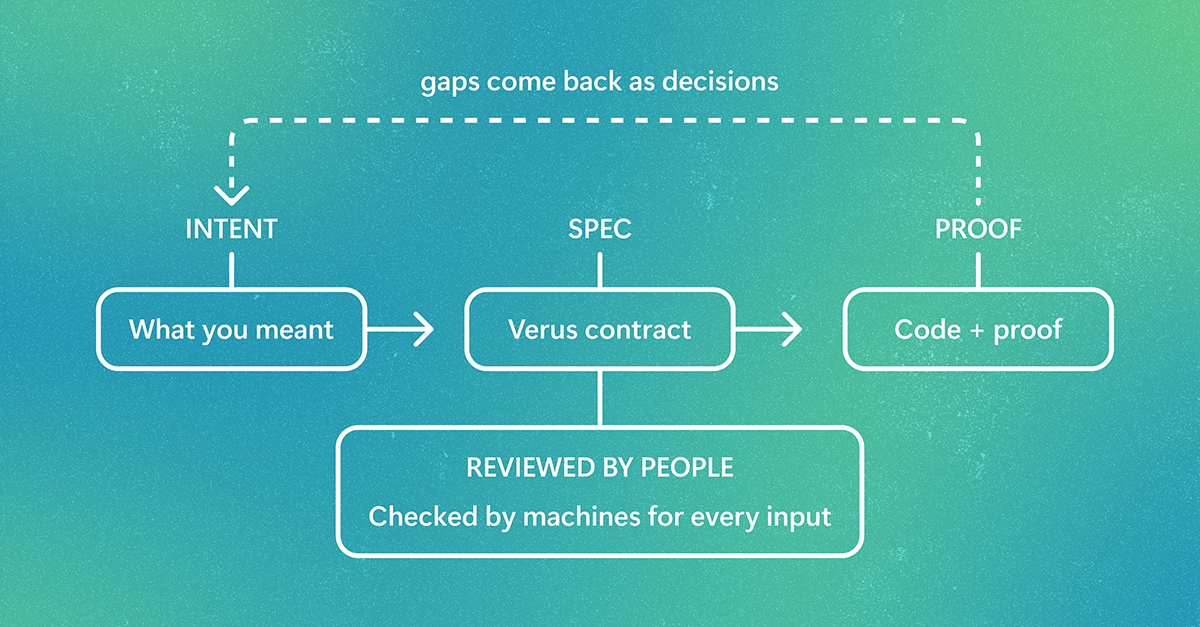
AI agents can generate code at a scale that’s hard for humans to review line-by-line. PDD Kit helps ensure the code is doing what the developer intended by creating formal specifications and testing against them. It converts developer intent into a Verus specification, proves AI-generated code meets it for every input, and uses tests where proofs aren't practical. Developers review intent, not every line. The post Formally verifying agent-written full-stack web apps with PDD Kit appeared first o…

We use cookies to run the site and, with your consent, for analytics and to show ads. See our Cookie Policy.