Skip to content

The Digital Transformation of Rehabilitation Medicine: A Narrative Review of Artificial Intelligence Innovations, Clinical Integration, and Future Paradigms

Aug 2026 · Journal of Evaluation in Clinical Practice · Vol 32 · 121 references
Stroke Rehabilitation and Recovery

Abstract

ABSTRACT Background Traditional rehabilitation medicine, primarily dependent on qualitative clinical assessment and static therapeutic protocols, faces significant challenges in scalability, objectivity, and dynamic adaptability. The integration of Artificial Intelligence (AI) is catalyzing a paradigm shift from “experience‐driven” to “data‐driven” precision rehabilitation. Objective This narrative review delineates the current landscape of AI innovations in rehabilitation, evaluates their clinical integration across the patient lifecycle, and identifies the socio‐technical barriers to widespread adoption. Methods We narratively synthesized recent advancements in four foundational technological pillars: Computer Vision (CV) for markerless motion capture, Reinforcement Learning (RL) for intention‐aware robotics, Digital Twins (DT) for prognostic simulation, and Explainable AI (XAI) for clinical decision support. Results Our analysis reveals that AI‐driven models enhance rehabilitative efficiency by providing highly objective functional assessments, demonstrating high accuracy in specific controlled validation datasets. Clinical evidence suggests that AI‐integrated interventions can potentially reduce certain motor recovery cycles by up to 20%–30% through real‐time assist‐as‐needed (AAN) paradigms. Furthermore, the deployment of AI‐mediated remote monitoring and virtual assistants has demonstrated up to a 25% relative improvement in patient adherence post‐discharge based on selected pilot studies, effectively bridging the “rehabilitation gap” between hospital and home. Conclusion While AI offers transformative potential for personalized and accessible care, its maturation depends on overcoming challenges related to data heterogeneity, algorithmic “black‐box” distrust, and systemic interoperability. We propose a multidisciplinary roadmap to establish unified regulatory frameworks and standardized APIs. Ultimately, the transition to AI‐augmented rehabilitation is highly promising for achieving equitable and evidence‐based functional recovery in the era of digital medicine.

View source

Similar papers

#machine learning Review Open access Oct 2014

Software development in startup companies: A systematic mapping study

The results indicate that software engineering work practices are chosen opportunistically, adapted and configured to provide value under the constrains imposed by the startup context.

Nicolò Paternoster, Carmine Giardino, M. Unterkalmsteiner et al. · 394 citations · ⚡54
#machine learning Review Open access Jun 2014

Why Early-Stage Software Startups Fail: A Behavioral Framework

This state-of-practice investigation was performed using a literature review followed by a multiple-case study approach and presents how inconsistency between managerial strategies and execution can lead to failure by means of a behavioral framework.

Carmine Giardino, Xiaofeng Wang, P. Abrahamsson · 175 citations · ⚡19
#machine learning Review Open access Oct 2016

“Failures” to be celebrated: an analysis of major pivots of software startups

This study conducts a case survey study based on the secondary data of the major pivots happened in 49 software startups, and demonstrates that customer need pivot is the most common among all pivot types.

Sohaib Shahid Bajwa, Xiaofeng Wang, Anh Nguyen-Duc et al. · 127 citations · ⚡15
#artificial intelligence Conference Open access Apr 2020

ECCOLA - a Method for Implementing Ethically Aligned AI Systems

The method, ECCOLA, is presented, which aims at making the high-level AI ethics principles more practical, making it possible for developers to more easily implement them in practice.

Ville Vakkuri, Kai-Kristian Kemell, P. Abrahamsson · 64 citations · ⚡6
#machine learning Review Open access May 2016

Key Challenges in Software Startups Across Life Cycle Stages

It is found that what perceived as biggest challenges by software startups do vary across different life cycle stages, even though its significance decreases when the learning focuses of the startups move from problem to solution and their products mature.

Xiaofeng Wang, Henry Edison, Sohaib Shahid Bajwa et al. · 62 citations · ⚡6

Related blog posts

GPT-Lab Aug 28, 2026

We built an AI factory for HVAC control

What does it take to trust AI-driven HVAC optimization? Our AI Model Factory combines agents, machine learning, reinforcement learning and deterministic checks in a governed workflow designed for messy, real-world building data. The post We built an AI factory for HVAC control appeared first on GPT-Lab.

Microsoft Research Blog Aug 11, 2026

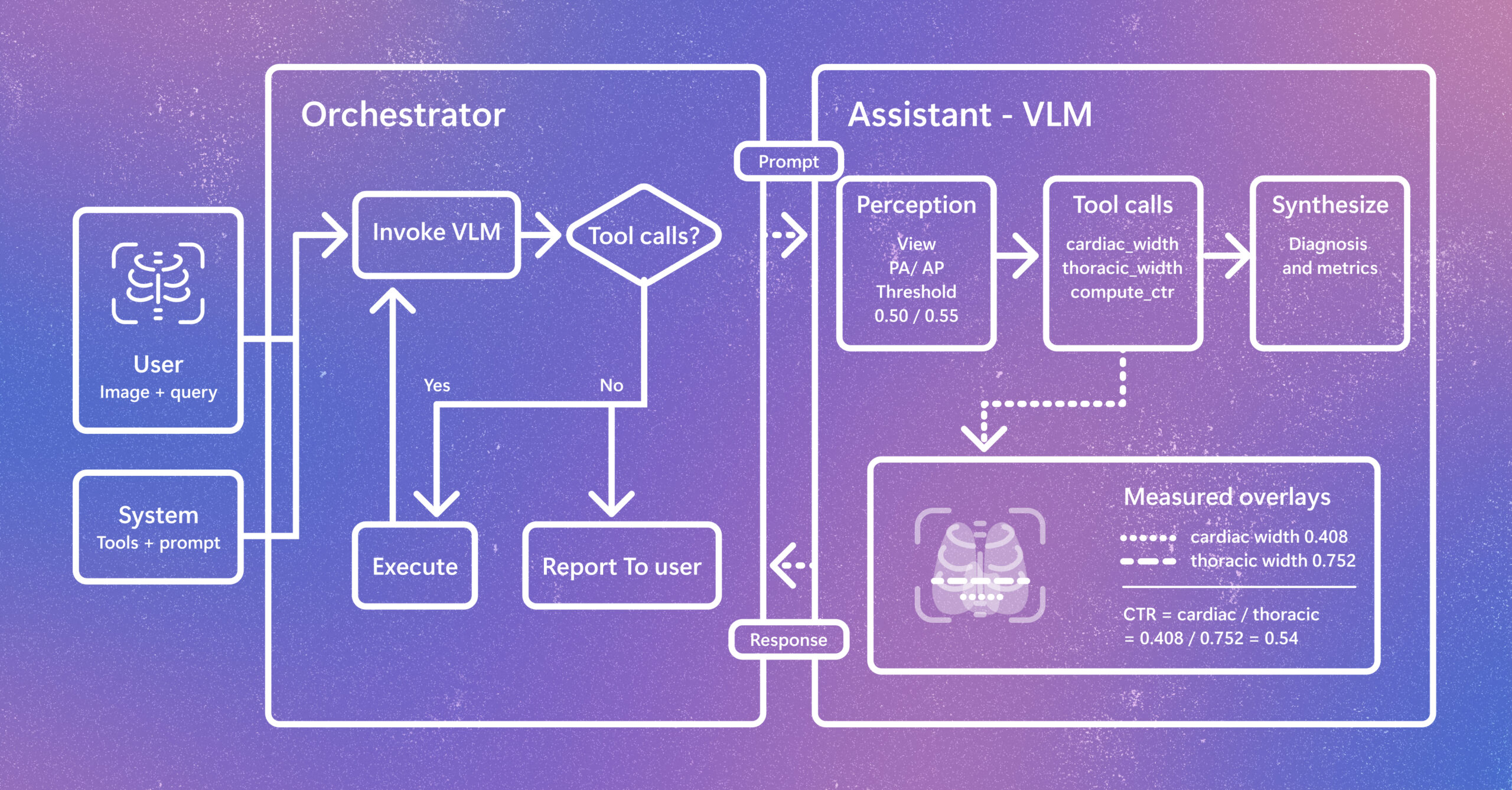
Introducing CARE-X: Towards Clinically Useful Radiology VLMs with Auxiliary Supervision, Reward-Aligned Learning, and Tool-Augmented Measurement

Radiology AI is evolving beyond report generation. CARE-X explores a unified approach that combines flexible reasoning, calibrated predictions, and measurement-based tools for chest X-ray interpretation. The post Introducing CARE-X: Towards Clinically Useful Radiology VLMs with Auxiliary Supervision, Reward-Aligned Learning, and Tool-Augmented Measurement appeared first on Microsoft Research.

We use cookies to run the site and, with your consent, for analytics and to show ads. See our Cookie Policy.