Skip to content

Modular Structure Parameter Generation Algorithm for Rapid Assembly and Disassembly in Temporary Environments

Sep 2026 · Journal of Digital Frontier · Vol 1, pp. 1-26
Manufacturing Process and Optimization

Abstract

In view of the urgent demand for rapid assembly and disassembly of temporary modular structures, this paper proposes a parametric generation algorithm that places disassembly feasibility as a core constraint of scheme generation, prior to the verification stage at the end of design. A linkage representation system for geometric, interface, and logic parameters is established, and the feasible region of parameters is defined by the non‑interference disassembly criterion and the connection reuse threshold as hard constraints. On this basis, a hierarchical cooperative strategy for macro‑topology generation and micro‑parameter optimization is proposed, and two‑way information transfer between the two levels is realized via a differentiable surrogate model. A reversibility‑guided reinforcement learning reward function is designed to enable the generator to evaluate the blocking risk of an action on the subsequent disassembly path in real time during the module‑by‑module addition process. A dynamic connector adapter is developed to adaptively match connector parameters according to local stress distribution. Experiments show that, compared with the standard GNN benchmark in three typical temporary scenarios, the algorithm reduces disassembly time by 24.2%-27.2%, the constraint satisfaction rate reaches 93.2%, and the connection reuse rate increases to 86.4%, and the structural safety margin is maintained in the range of 0.38-0.52. The significant advantages of the proposed mechanism in the co‑optimization of disassembly efficiency and structural performance are verified.
Read PDF

Similar papers

#machine learning Review Open access Oct 2014

Software development in startup companies: A systematic mapping study

The results indicate that software engineering work practices are chosen opportunistically, adapted and configured to provide value under the constrains imposed by the startup context.

Nicolò Paternoster, Carmine Giardino, M. Unterkalmsteiner et al. · 394 citations · ⚡54
#machine learning Review Open access Jun 2014

Why Early-Stage Software Startups Fail: A Behavioral Framework

This state-of-practice investigation was performed using a literature review followed by a multiple-case study approach and presents how inconsistency between managerial strategies and execution can lead to failure by means of a behavioral framework.

Carmine Giardino, Xiaofeng Wang, P. Abrahamsson · 175 citations · ⚡19
#machine learning Review Open access Oct 2016

“Failures” to be celebrated: an analysis of major pivots of software startups

This study conducts a case survey study based on the secondary data of the major pivots happened in 49 software startups, and demonstrates that customer need pivot is the most common among all pivot types.

Sohaib Shahid Bajwa, Xiaofeng Wang, Anh Nguyen-Duc et al. · 127 citations · ⚡15
#machine learning Review Open access May 2016

Key Challenges in Software Startups Across Life Cycle Stages

It is found that what perceived as biggest challenges by software startups do vary across different life cycle stages, even though its significance decreases when the learning focuses of the startups move from problem to solution and their products mature.

Xiaofeng Wang, Henry Edison, Sohaib Shahid Bajwa et al. · 62 citations · ⚡6

Related blog posts

Microsoft Research Blog Sep 30, 2026

Forecasting space weather risks on power grids

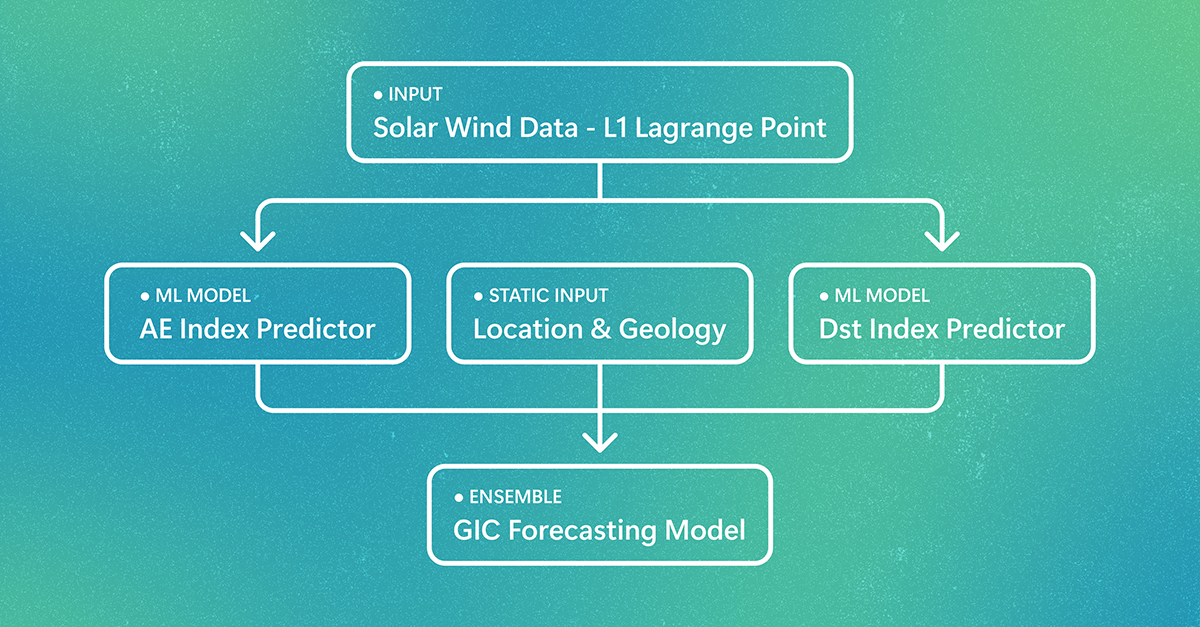
Extreme space-weather events can damage power systems on Earth and degrade GPS accuracy and satellite operations. A new machine learning system can predict where damage is likely to occur 30-60 minutes before a storm arrives. The post Forecasting space weather risks on power grids appeared first on Microsoft Research.

We use cookies to run the site and, with your consent, for analytics and to show ads. See our Cookie Policy.