Adaptive State of Charge and State of Health Estimation through Optimized Deep Reinforcement Learning with Dynamic Agent Selection and Test-Time Training Tailored to Dynamic Operating Conditions
Oct 2026· ACS Applied Engineering Materials· 0 citations· 48 references
Advanced Battery Technologies Research
Abstract
Accurately estimating the state of charge (SOC) and state of health (SOH) of lithium−ion batteries under dynamic conditions is critical for electric vehicles (EVs) and energy storage systems; however, nonlinearity and uncertainties hinder traditional methods. This paper proposes an adaptive estimation framework using optimized deep reinforcement learning (DRL). Key innovations include integrating large language models (LLMs) with test-time training (T3), a process of continuous online model adaptation, for cross-chemistry generalization, model-free DRL with dynamic agent selection and data sharing, solutions for high distribution shifts in aged batteries, self-supervised health index (HI) learning via attention mechanisms, and a hybrid DRL architecture with dual SOC/SOH networks. The algorithm combines pre-trained DRL, T3, reward shaping, and experience replay. Extensive experiments on six battery chemistries under varying temperatures (−10−50 °C), noise (0.3−1%), and aging scenarios demonstrate the framework’s superiority, achieving a state of charge (SOC) error of ≤1.34% and a state of health (SOH) mean absolute error (MAE) of <4%, even for batteries with >30% capacity fade. Case studies validate the adaptability to real-world challenges. While hardware integration remains, this advances real-time battery management for safety and efficiency.
The results indicate that software engineering work practices are chosen opportunistically, adapted and configured to provide value under the constrains imposed by the startup context.
Nicolò Paternoster, Carmine Giardino, M. Unterkalmsteiner et al.· Information and Software Tec...· 394 citations· ⚡54
This state-of-practice investigation was performed using a literature review followed by a multiple-case study approach and presents how inconsistency between managerial strategies and execution can lead to failure by means of a behavioral framework.
Carmine Giardino, Xiaofeng Wang, P. Abrahamsson· International Conference on...· 175 citations· ⚡19
This study conducts a case survey study based on the secondary data of the major pivots happened in 49 software startups, and demonstrates that customer need pivot is the most common among all pivot types.
Sohaib Shahid Bajwa, Xiaofeng Wang, Anh Nguyen-Duc et al.· Empirical Software Engineeri...· 127 citations· ⚡15
It is found that roles of MVPs in startups were not fully aware by entrepreneurs, and entrepreneurs should consider a systematic approach to fully explore the value of MVP, as a multiple facet product (MFP).
Anh Nguyen-Duc, P. Abrahamsson· International Conference on...· 93 citations· ⚡9
It is found that what perceived as biggest challenges by software startups do vary across different life cycle stages, even though its significance decreases when the learning focuses of the startups move from problem to solution and their products mature.
Xiaofeng Wang, Henry Edison, Sohaib Shahid Bajwa et al.· International Conference on...· 62 citations· ⚡6
A comprehensive overview of how enhanced sampling methods are reshaping the field, with a particular focus on the data-driven construction of collective variables, is provided.
Kai Zhu, Enrico Trizio, Jintu Zhang et al.· Chemical Reviews· 58 citations
Related blog posts
Microsoft Research Blog· microsoft.comNov 16, 2026
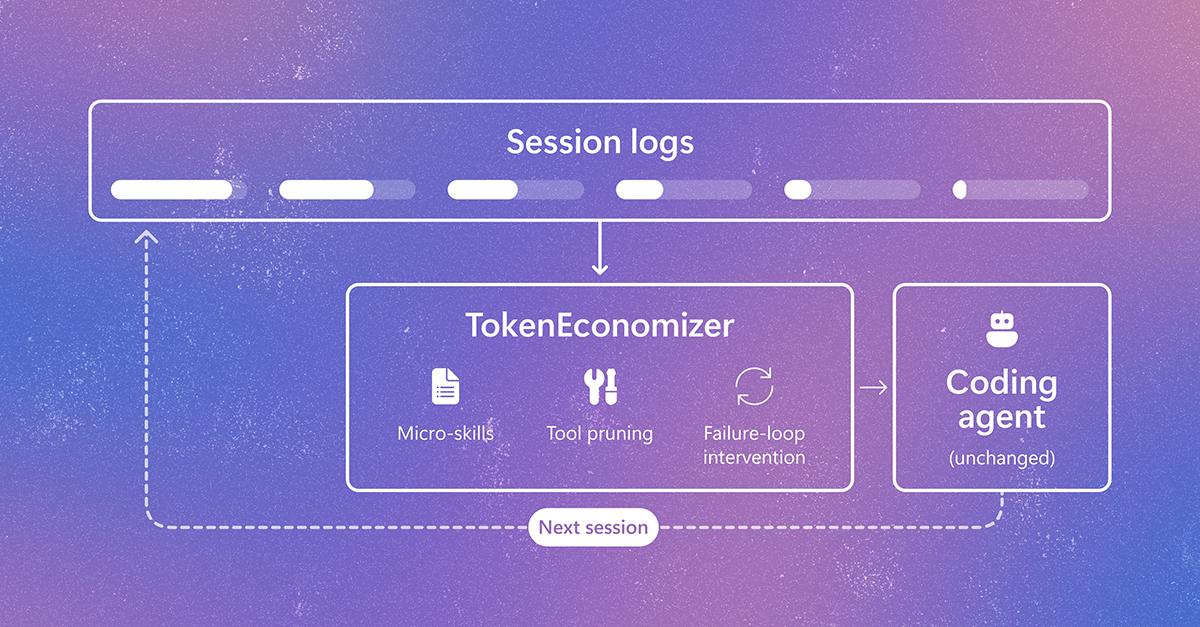
AI coding agents are increasingly help developers fix bugs and build features largely on their own, but every interaction with their models consumes tokens. In each session, an agent sends instructions, tool descriptions, and session history to its model. Most efforts to reduce this cost focus on individual tasks. Yet developers return to the same […] The post TokenEconomizer: Learning from Experience to Make AI Coding Agents More Efficient appeared first on Microsoft Research.
MIT News · Artificial Intelligence· news.mit.eduNov 9, 2026
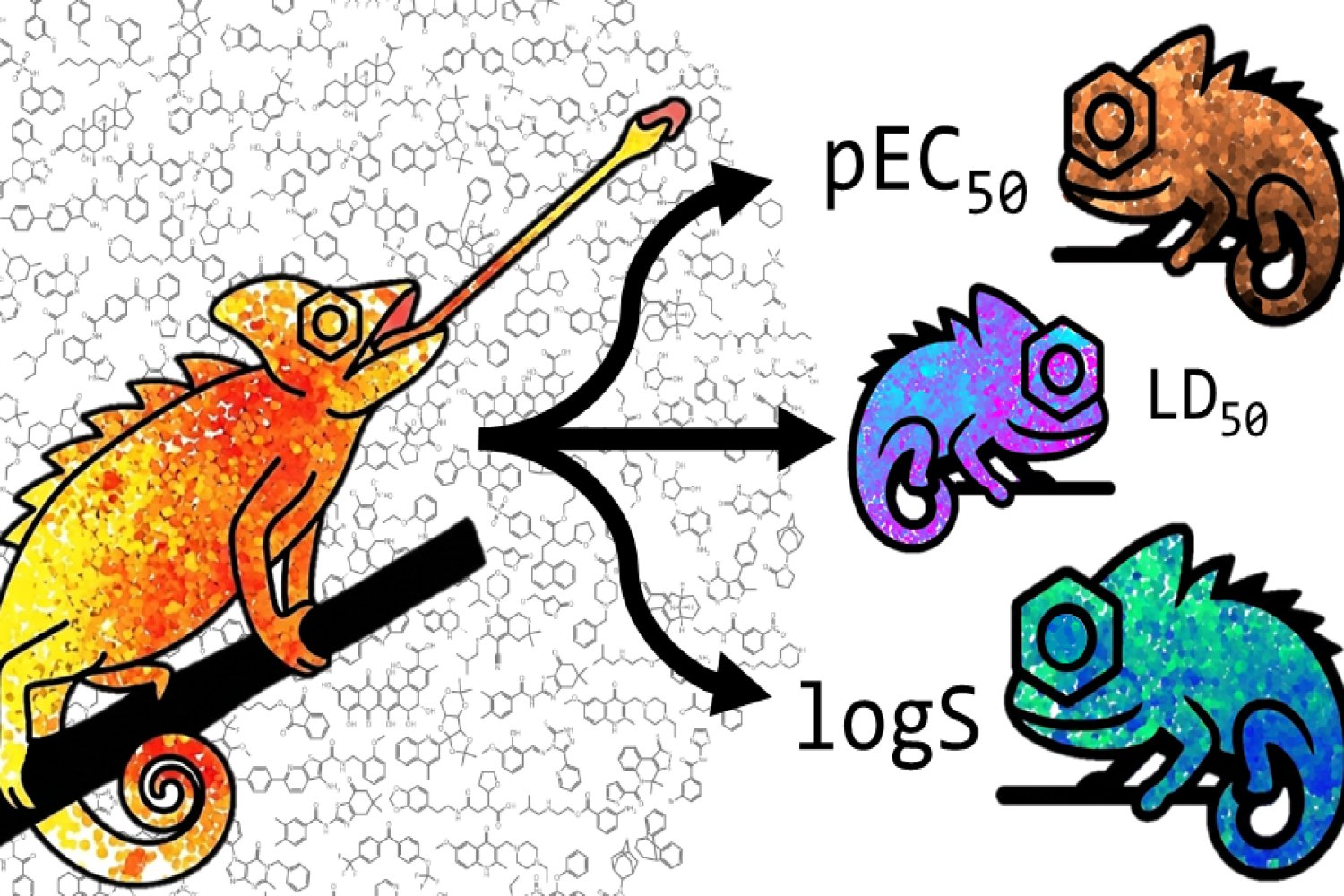
A machine-learning approach called CheMeleon provides a practical way to develop new drugs or other molecules with much less detailed, expensive experimentation.
We use cookies to run the site and, with your consent, for analytics and to show ads.
See our Cookie Policy.