Across these three observations, 2MWT distance increased while side-to-side differences in stance duration and the exploratory propulsion index were present at each session, which cannot be attributed to weight loss specifically, because time since arthroplasty, rehabilitation exposure and repeated testing varied together with body mass.
Abstract
Background and Clinical Significance: Longitudinal observations that combine major postoperative weight loss with limb-specific gait assessment after total knee arthroplasty (TKA) are uncommon. This case report describes three single-trial instrumented assessments in one patient and is intended as a descriptive observation; it does not establish causality, measurement stability, mechanical loading, or a clinically meaningful persistent deficit; Case Presentation: A man in his early sixties at the first assessment had undergone left TKA for end-stage osteoarthritis and subsequently underwent Roux-en-Y gastric bypass. Three assessments were available from approximately 31 to 67 months after TKA. Body mass was 120, 88, and 69 kg (body mass index 43.03, 31.55, and 24.74 kg/m2), while two-minute walk distance (2MWT) was 67.8, 105.1, and 118.1 m. The third walk test was launched in the software’s six-minute module and stopped at 1 min 58 s, so 118.1 m is the distance accumulated over 118 s and was neither adjusted nor extrapolated to 120 s. The operated limb showed longer stance duration than the non-operated limb by 3.04, 5.28, and 2.05 percentage points, and a proprietary propulsion index was lower on the operated side by 18.18%, 17.95%, and 14.06%; the direction of both differences was the same at every session but the magnitude was not, and the index has no published calculation or post-TKA interpretive threshold. Each session comprised one trial, and the third-session gait means were based on only five operated-limb and four non-operated-limb steps. Valid Timed Up and Go (TUG) totals were available for sessions 1 and 2 (13.41 and 14.95 s); the available source documentation did not contain a valid session-3 TUG result. Vendor-derived walk-test speed was excluded from primary interpretation because its calculation could not be reconciled with distance divided by test duration; Conclusions: Across these three observations, 2MWT distance increased while side-to-side differences in stance duration and the exploratory propulsion index were present at each session. These co-occurring changes cannot be attributed to weight loss specifically, because time since arthroplasty, rehabilitation exposure and repeated testing varied together with body mass. The findings are descriptive and hypothesis-generating; confirmation requires prospective studies with repeated trials per session, an adequate number of analysed steps, and validated kinetic or limb-specific outcomes.

Background: The choice between fixed-bearing (FB) and mobile-bearing (MB) prostheses in total knee arthroplasty (TKA) remains controversial, and longitudinal evidence based on objective instrumented assessment is limited. Objectives: To compare global spatiotemporal gait performance and ambulation capacity across three...
Andrei Machado Viegas da Trindade, Leonardo Pinheiro Rezende, Helder Rocha da Silva Araújo et al.· Journal of Functional Morpho...· 0 citations
Knee osteoarthritis (KOA) is a leading cause of disability, and total knee arthroplasty (TKA) improves pain and functional mobility, although gait impairments may persist postoperatively. This study investigated longitudinal changes in patient-reported outcomes, muscle strength, and gait performance using an instrument...
Elina Gianzina, Christos K. Yiannakopoulos, Andreas G. Bourantanis et al.· Italian National Conference...· 0 citations
Functional gait asymmetry can be quantified using vertical ground reaction forces (vGRF). Although gait characteristics in healthy and post-total hip arthroplasty (THA) populations have been separately described, direct comparisons between young adults, older adults without THA, and uncomplicated THA patients remai...
S. Babu, M. Brevadt, Oliver R. Boughton et al.· Journal of Orthopaedics· 0 citations
Background and Objectives: Total knee arthroplasty (TKA) reliably reduces pain and improves self-reported function, yet objective mobility may remain impaired in older adults. We examined the relationship between inertial-sensor-based mobility and the Western Ontario and McMaster Universities Osteoarthritis Index (WOMA...
Andrei Machado Viegas da Trindade, Leonardo Pinheiro Rezende, Helder Rocha da Silva Araújo et al.· Journal of Functional Morpho...· 0 citations
Background/Objectives: Guided growth changes frontal-plane gait mechanics in idiopathic genu valgum, but the durability of these adaptations through skeletal maturity remains uncertain. This study examined their long-term course. Methods: Seventeen participants (31 treated limbs) underwent three-dimensional gait analys...
P. Scheider, Ghanem El-Isa, Sebastian Farr et al.· Journal of Clinical Medicine· 0 citations
Background/Objectives: Wearable powered gait orthoses are prescribed as assistive equipment, on the premise that torque at an impaired joint improves walking while the device is worn; the device also adds mass. Where a hip module and a knee–ankle–foot module can be worn together, the combined configuration places the m...
Yeo Joon Yun, C. Moon, Ki-Hoon Kim et al.· Applied Sciences· 0 citations
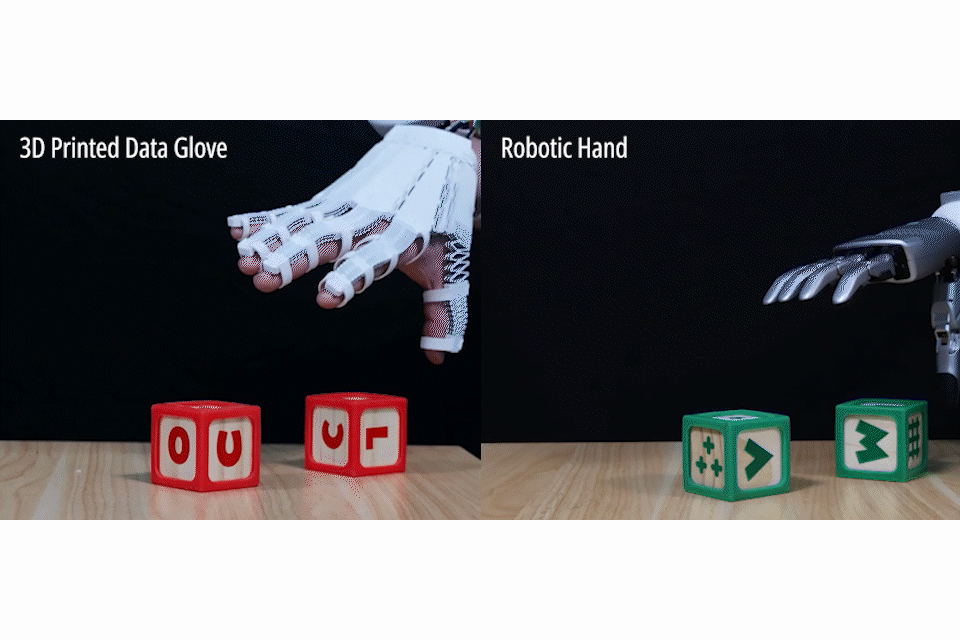
“X-Hinges” helps design and 3D print items like lamps and gloves with an interactive twist: automatically embedded sensors that perceive and adaptively respond to human contact.
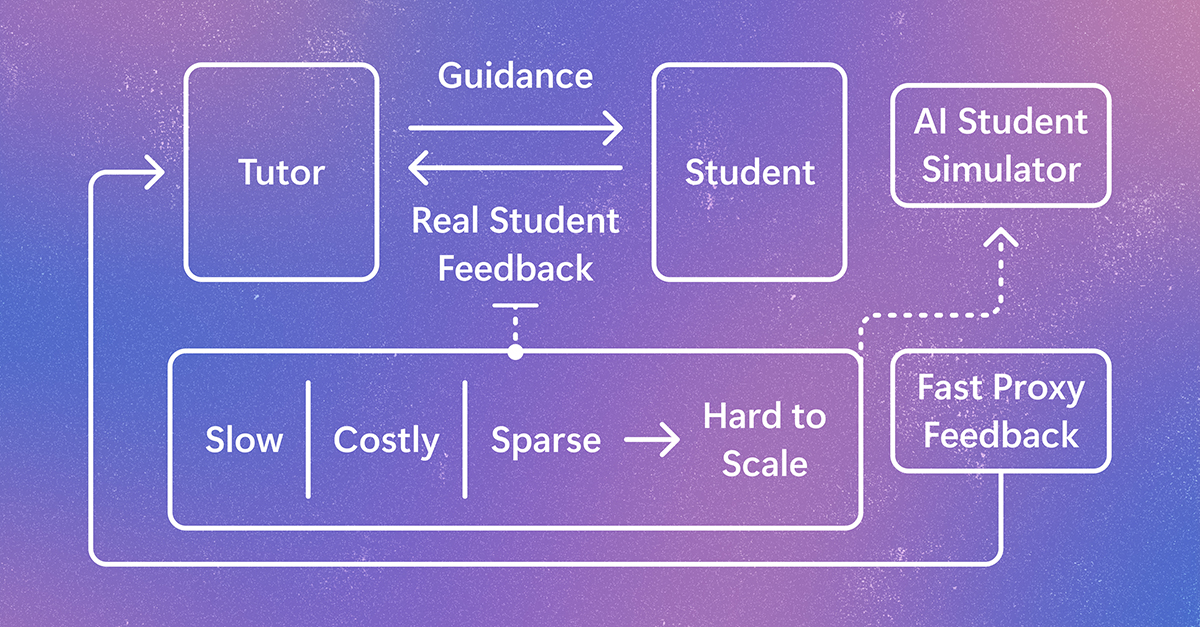
StudentSim is a research system for evaluating and improving AI tutoring tools before they are tested with learners. It models how individuals may engage with tutors, giving feedback to improve tutor performance across subjects like chess, writing, and mathematics. The post Simulating student learning for better AI tutoring appeared first on Microsoft Research.
We use cookies to run the site and, with your consent, for analytics and to show ads.
See our Cookie Policy.