A scalable ML framework that efficiently learns from quantum many-body data by leveraging the exponential decay of correlations prevalent in noncritical systems is proposed, and it is rigorously proved that the GLQK substantially improves the sample complexity in the system size $n$ over the existing shadow kernel.
Abstract
Machine learning (ML) holds great promise for extracting insights from complex quantum many-body data obtained in quantum experiments, potentially solving certain classically intractable problems. However, addressing large-scale problems still requires significant amounts of data that exceed the capabilities of near-term quantum devices. We propose a scalable ML framework, the Geometrically Local Quantum Kernel (GLQK), that efficiently learns from quantum many-body data by leveraging the exponential decay of correlations prevalent in noncritical systems. For learning an unknown polynomial of quantum expectation values, we rigorously prove that the GLQK substantially improves the sample complexity in the system size $n$ over the existing shadow kernel, by constructing a feature space from local quantum information at the correlation length scale. This improvement is particularly notable when each term of the target polynomial involves few local subsystems. Remarkably, for translationally symmetric data, the GLQK achieves constant sample complexity, independent of $n$. Numerical experiments on two quantum many-body tasks corroborate these theoretical results, demonstrating the high scalability of the GLQK. Beyond the polynomial setting, we further show that it can efficiently learn certain non-polynomial functions. Our framework establishes new avenues for utilizing experimental data to advance the understanding of quantum many-body physics.

This paper investigates developing real-world perception for active agents, proposes Gibson Environment for this purpose, and showcases a set of perceptual tasks learned therein.
F. Xia, Amir Zamir, Zhi-Yang He et al.· 2018 IEEE/CVF Conference on...· 1,069 citations· ⚡112
This publication proposes a definition and a classification of agile software development approaches and analyses ten software development methods that can be characterized as being "agile" against the defined criterion.
P. Abrahamsson, O. Salo, Jussi Ronkainen et al.· arXiv.org· 727 citations· ⚡54
The study shows that agile practices improve both informal and formal communication, but indicates that, in larger development situations involving multiple external stakeholders, a mismatch of adequate communication mechanisms can sometimes even hinder the communication.
M. Pikkarainen, Jukka Haikara, O. Salo et al.· Empirical Software Engineeri...· 401 citations· ⚡48
The results indicate that software engineering work practices are chosen opportunistically, adapted and configured to provide value under the constrains imposed by the startup context.
Nicolò Paternoster, Carmine Giardino, M. Unterkalmsteiner et al.· Information and Software Tec...· 394 citations· ⚡54
The possibility of inferring high-dimensional data inference in a model that consists of a prior and an auxiliary differentiable constraint given some additional information is considered, thereby allowing a range of potential applications in adapting models to new domains and tasks.
Alexandros Graikos, Esmeralda S. Whitammer, N. Jojic et al.· Neural Information Processin...· 316 citations· ⚡15
Related blog posts
MIT News · Artificial Intelligence· news.mit.eduOct 2, 2026
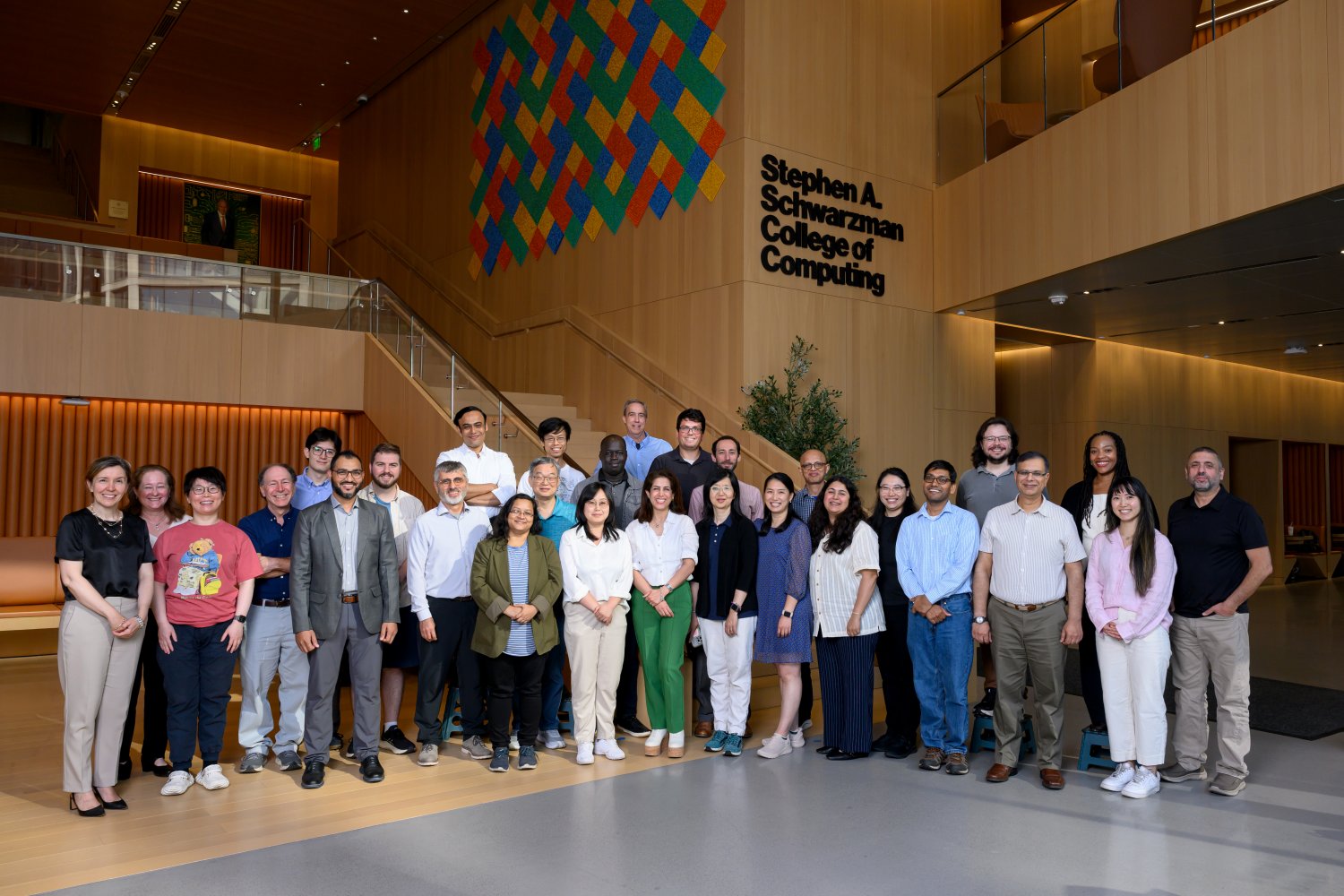
A weeklong summer workshop brought higher education faculty to campus to explore how AI and machine learning materials can be adapted for their classrooms.
MIT News · Artificial Intelligence· news.mit.eduAug 27, 2026
A new machine-learning framework aims to improve the success rate of computational protein design while moving away from results that reproduce sequences found in nature.
Microsoft Research Blog· microsoft.comAug 20, 2026
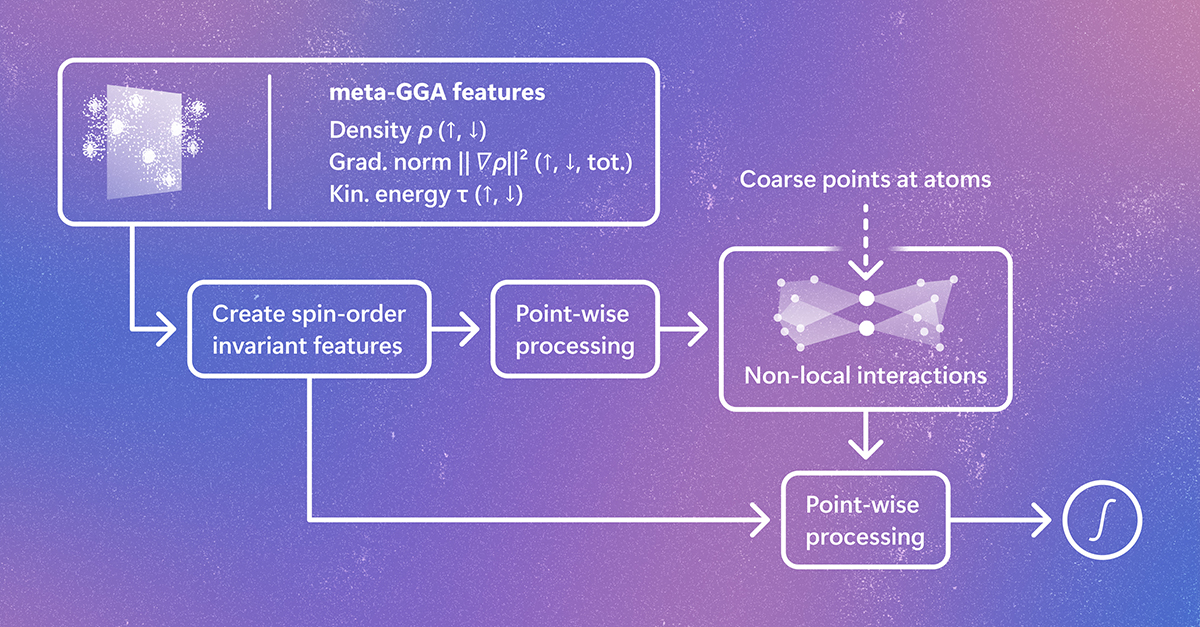
Skala 1.1, the updated deep-learning exchange-correlation functional from Microsoft Research, provides greater accuracy, expanded accessibility across the computational chemistry ecosystem, and a living benchmark to track computational performance. The post Broadening access to Skala creates a faster path to predictive DFT appeared first on Microsoft Research.
We use cookies to run the site and, with your consent, for analytics and to show ads.
See our Cookie Policy.